Wainwright fire turns a training accident into a test of Canada’s live-fire risk controls
Four soldiers were killed and 39 injured after fire overtook a live-fire exercise at CFB Wainwright. The unresolved issue is whether safeguards accounted for a contained range fire becoming a fast-moving threat.
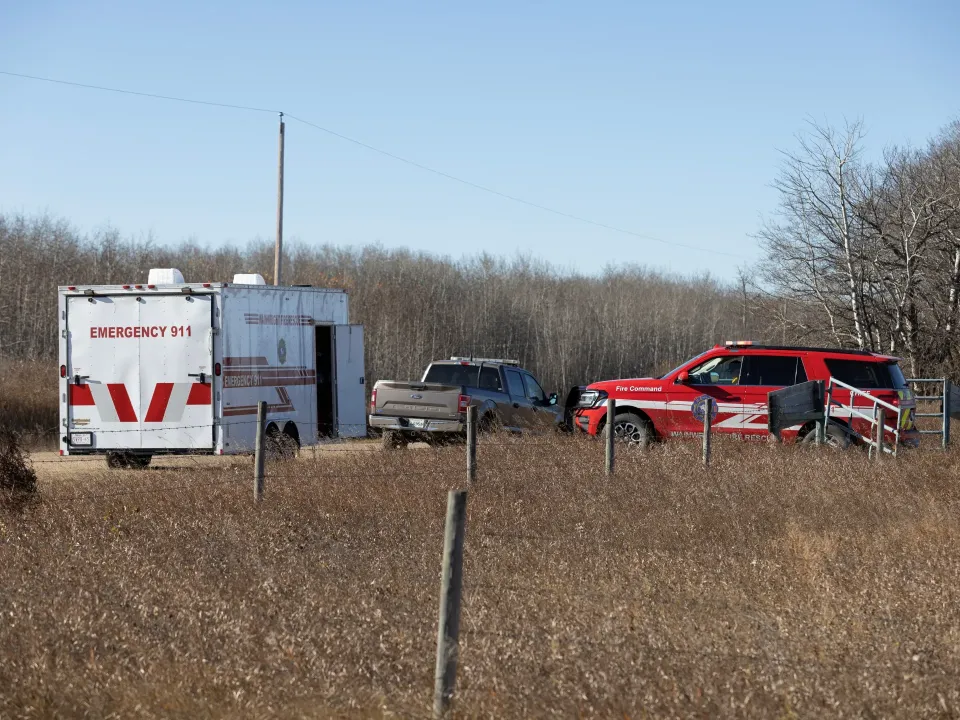
Overview
The Wainwright tragedy is becoming a test of how the Canadian Army manages hazards that can shift faster than conventional range controls. Officials have established that a fire began during training on an automatic grenade-launcher range, remained in an area where direct firefighting was restricted and intensified after the wind changed. That sequence does not establish negligence. It does, however, focus the inquiry on whether monitoring, training-stop thresholds, evacuation arrangements and weather assessment formed an adequate system for a rapidly changing threat. (canada.ca)
Facts
- The fire-related incident occurred at approximately 4 p.m. MDT on October 17, 2026, while members of 3rd Battalion, Princess Patricia’s Canadian Light Infantry were conducting live-fire training during Exercise APOLLO SHOOTER. (canada.ca)
- Sergeant Morgan Wong and Privates Shaun Farrell, Aidan Goulding and Hayden Lykkemark were killed. Another 39 Canadian Armed Forces members were injured. (canada.ca)
- Military police said the fire was reported on an automatic grenade-launcher range and remained within Permanent Danger Area 2, restricting direct suppression and leading personnel to monitor it. (canada.ca)
- The military said a subsequent change in wind direction and velocity sharply increased the fire’s intensity and speed. Officials reported no indication that natural-gas infrastructure was involved. (canada.ca)
- In the Canadian Armed Forces’ October 22 update, 27 injured members remained hospitalized and 12 had been released. Approximately 28 civilian burn-care specialists were transported from Toronto to Edmonton. (canada.ca)
Main narrative
The first official accounts left open what ignited the grass. By October 22, the Canadian Forces Provost Marshal had narrowed the sequence: a fire was reported on an automatic grenade-launcher range during routine training, remained inside a designated danger area where firefighters could not directly attack it and was monitored until changing wind intensified its speed. The fire then overtook an administrative area used by soldiers conducting another part of the exercise. (canada.ca)
That clarification shifts the central analytical question. Ignition is important, but live ammunition and combustible terrain are known features of range activity. The more consequential issue is how the Army managed the interval between identifying the fire and its transition into a mass-casualty threat.
A range danger area exists to protect personnel from unexploded or active munitions. Restricting firefighters from entering such ground may therefore have been necessary. But that protection creates a second-order risk: a fire that cannot be directly suppressed must be monitored, contained or accompanied by measures that protect personnel elsewhere if conditions deteriorate. The investigation must determine whether those measures were connected into one responsive system rather than treated as separate range, weather and training procedures.
Maj.-Gen. Wade Rutland said personnel had considered the fire sufficiently contained before a sudden wind shift drove it roughly a kilometre toward soldiers in less than a minute. (apnews.com) That reported speed is a substantial counterpoint to any premature claim that commanders simply ignored an obvious danger. An extreme change can overwhelm even reasonable precautions. The relevant standard is not whether the final movement could have been stopped once it began, but whether foreseeable changes in prairie conditions had been incorporated into earlier decisions about training, positioning and evacuation.
The investigation therefore needs to reconstruct information available before the fire accelerated: observed and forecast winds, the fire’s location and behaviour, who received updates, and what thresholds would have suspended activity. It must also examine whether soldiers in the section-attack area had warning, transport, escape routes or protected ground sufficient for a fire moving at the speed described.
Two processes will address different parts of that problem. Military police are investigating independently of the Armed Forces chain of command to determine whether criminal or service offences may have occurred. The Armed Forces also plans a separate Board of Inquiry to establish how the incident developed and identify lessons that could prevent recurrence; its terms of reference were still being developed on October 22. (canada.ca) Until those inquiries report, the evidence supports scrutiny of the control system, not a finding of individual or institutional fault.
Context / evidence
CFB Wainwright is one of the Canadian Army’s busiest bases and its preferred training ground for field-force units based in Edmonton. (canada.ca) About 84 soldiers were divided between grenade training and an area used to practise attacks on simulated enemy positions; the fire overtook the latter area. Soldiers were preparing for rapid-response duties and future participation in Operation REASSURANCE in Latvia. (apnews.com) These facts explain the operational value of realistic training, but not whether the risks on October 17 were managed appropriately.
Impact
The observed consequences are already severe: four deaths, 39 injuries and a sustained demand for specialized burn care. The October 22 deployment of civilian specialists from Ontario demonstrates that the response extends beyond normal base medical capacity. (canada.ca) The Armed Forces said 3rd Battalion would continue training, so the incident has not produced a publicly announced halt to the unit’s preparation. Its operational effect will depend on recovery times, personnel availability and any restrictions imposed on live-fire activity; those effects have not yet been quantified publicly.
Outlook
The decisive indicators will be the Board of Inquiry’s terms of reference and any reconstructed timeline showing weather reports, fire observations, command notifications and decisions to continue or halt training. Investigators will also need to establish what evacuation routes and fallback areas were available once the wind changed, and whether direct-suppression restrictions had operational alternatives. Policy changes involving weather thresholds, firefighting access, range scheduling or mandatory pauses would indicate that the Army identified a systemic vulnerability. An absence of immediate changes would not, by itself, establish that existing safeguards were adequate.