Special Reports
Saudi Arabia’s Alliance Gap: What the Reported Houthi Strikes Reveal About Its Defenses
A reconstruction of the disputed incident record, the Houthi capability chain and the difference between foreign military support and an integrated defensive guarantee.
October’s reported attacks exposed limits in Saudi Arabia’s defences, but conflicting incident data and secret command records prevent a simple verdict on why weapons got through.
The available record points to a conversion gap: Saudi Arabia has extensive military support, but dispersed Houthi capabilities, geography, possible interceptor pressure and uncertain allied integration leave exploitable limits without proving a single cause for any penetration.
- Contemporaneous accounts describe repeated October 2026 attacks on Riyadh’s international airport and other Saudi targets, but they conflict over the airport attack count and death toll. One report put the toll from a Saturday strike at at least 13; another later account cited at least 12 deaths across a three-day period. Those figures cannot safely be combined without primary incident records.
- The available technical reporting supports a capability chain built from imported commercial components, specialized assistance, local assembly and accumulated operational experience. It does not establish that the Houthis are fully self-sufficient, that every weapon was supplied by Iran, or that Tehran directed the reported October attacks.
- Saudi Arabia has extensive foreign military relationships, but the public record reviewed here does not show that they form a single binding or fully integrated defence system. Geography, possible interceptor pressure and the difficulty of stopping every incoming weapon provide plausible explanations, while evidence tying a specific penetration to a specific partner or command failure remains absent.
12 / 13 Competing reported death tolls
An October 16 commentary cited at least 12 deaths across three days; the Wall Street Journal reported at least 13 deaths from the October 10 strike. Different time windows may be involved.
300+ Reported injuries
The October 16 commentary reported more than 300 injuries; no consolidated health-authority tally was available for comparison.
3 / at least 4 Conflicting airport attack counts
One account described three attacks in three days, while the Journal reported at least four strikes. The periods and counting methods were not aligned.
127 Facilities and launch platforms the coalition said it destroyed
This is an official Saudi-led coalition claim; the available account did not provide a timeframe or independent assessment.
2,000+ km Range of a reported planned missile project
Anthropic was reported as identifying attempted AI assistance for the project. The figure does not establish that a working missile was completed or deployed.
The Attacks That Put Saudi Defenses to the Test
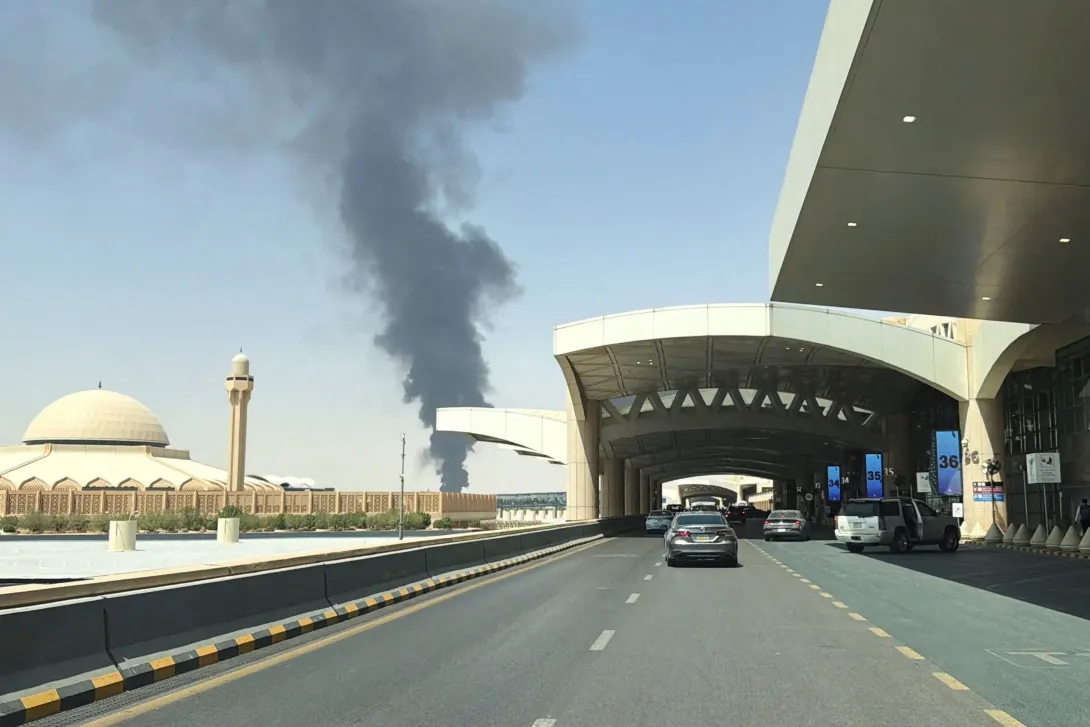
The clearest dated account begins on Saturday, October 10. The Wall Street Journal reported on October 12 that at least one Houthi missile struck King Khalid International Airport in Riyadh that Saturday, damaging two terminals, killing at least 13 people and injuring hundreds. It said Saudi authorities reported further attacks on the closed airport on Sunday, when a projectile caused a terminal fire, one death and additional injuries. The newspaper also reported that the airport had been struck at least four times, but the precise period covered by that count was not clear.
A commentary published on October 16 offered a different accounting: three airport attacks in three days, at least 12 deaths and more than 300 injuries. The discrepancy cannot be resolved from the available material. The reports may use different time windows, casualty cut-off times or definitions of an attack, but that is an inference rather than an established explanation. The tolls should therefore remain separately attributed; neither “12” nor “13” can be presented as the final overall count, and the reported Sunday death should not simply be added to either figure.
, in an article published October 15 and updated October 16, said the Houthis had attacked the Riyadh airport and hit Saudi Aramco’s headquarters during the preceding week. It also carried a Saudi-led coalition statement that some missiles had been intercepted. The account did not provide enough primary documentation to determine the exact attack time, weapon or damage associated with the reported headquarters strike. Reports of earlier attacks on pipelines and refineries are relevant context but should not be conflated with the headquarters claim.
The operational consequences are similarly bounded. The Journal described the airport as closed during the Sunday attacks, while the later commentary said it was closed for the foreseeable future. No primary airport or airline notice in the record establishes how long the disruption lasted or its status on October 18. What the accounts do establish is the central problem for examination: reported weapons reached critical infrastructure despite Saudi Arabia’s advanced defensive equipment and network of foreign military relationships. They do not establish which sensor, interceptor, command decision or partner was responsible for any penetration.
The incident record establishes repeated penetrations, but not a final toll or a cause for each defensive failure.
A Dispersed Arsenal Against a Vast Defensive Problem
The most plausible explanation is not a single breakthrough technology but a chain of capabilities. Commercially available components can be acquired through dispersed supply routes; specialized technology and know-how can fill gaps; technicians can assemble or modify systems locally; and repeated operations can improve deployment. Each link requires separate proof. Evidence that a component was commercially sourced does not establish who ordered it, while evidence of local assembly does not demonstrate independence from foreign expertise or supplies.
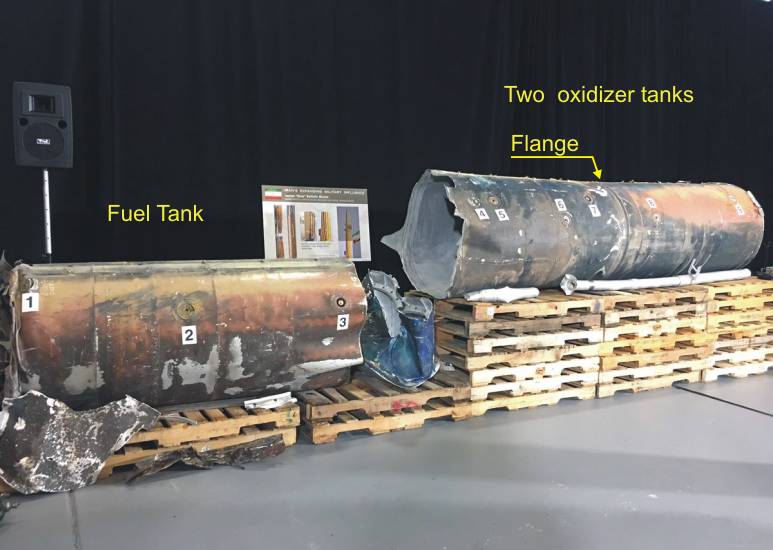
reported that Conflict Armament Research had examined a shipment seized by Yemen’s internationally recognized government and assessed that Houthi forces were trying to build advanced medium-range ballistic missiles using parts shipped from China. Without the underlying report and seizure documentation, the shipment date, chain of custody and precise basis for the assessment cannot be independently tested here. Even if confirmed, Chinese commercial origin would not itself show Chinese state involvement. It would support the narrower finding that the acquisition network was not limited to finished Iranian weapons.
The Iranian role is supported in the accounts primarily through expert assessments and Saudi coalition allegations. Analysts described more than a decade of Iranian weapons, financing, training and technical help, including assistance from the Islamic Revolutionary Guard Corps and Hezbollah. Tehran has denied arming the Houthis in violation of the UN embargo. The available record is consistent with Iranian assistance contributing to local assembly and operational learning, but it does not establish complete Houthi self-sufficiency or direct Iranian control over the October launches.
A separate reference to an Anthropic threat report said actors in northern Yemen used the Claude system to seek help with software for a guided rocket, a planned ballistic missile with a range exceeding 2,000 kilometres and a proposed hypersonic-glide variant. That is evidence of attempted technical assistance, not proof that any of those systems was completed, tested or used. Requests made to an AI model cannot substitute for recovered hardware, flight telemetry or a documented launch.
On the defensive side, scale matters. Saudi Arabia must distribute radar coverage and interceptors across a territory far larger than Israel or an individual US base. Experts cited by also pointed to operational experience, possible saturation and pressure on regional interceptor stocks following wider conflict. The coalition claimed that it had intercepted missiles and destroyed 127 Houthi weapons-storage sites and launch platforms, but supplied no denominator, timeframe or independent damage assessment in the available account. Those claims may indicate substantial defensive and offensive activity; they do not reveal how many weapons were launched, how many were stopped or why particular weapons reached their targets.
Evidence of local assembly and diversified sourcing is not the same as proof of self-sufficiency or foreign operational control.
Many Partners, No Single Shield
Saudi Arabia’s partnerships differ in legal force and operational purpose. A weapons sale is not a security guarantee; a deployed battery does not necessarily cover every target; intelligence support does not confer authority over an interception; and political solidarity does not establish a joint command. Treating all relationships as one alliance therefore overstates what the public record demonstrates.
An October 16 policy commentary described a “Mecca Agreement” signed with Pakistan and Turkey in August, under which an attack on one party would be treated as an attack on all. It also said Turkey’s parliament had not ratified the agreement. No agreement text, signature record or parliamentary documentation was available here to confirm its provisions or legal status. The same account reported that Pakistan already had about 8,000 troops, combat aircraft, drones and a Chinese-made air-defence system in Saudi Arabia, and that Turkey was supplying equipment, intelligence and technical help. Those deployment figures require primary confirmation.
The US relationship is more substantial in the accounts. Patriot and Terminal High Altitude Area Defense systems were described as central to Saudi missile defence, alongside US training, weapons, technical assistance and intelligence. The commentary also cited a $142 billion defence-sales announcement in May 2025, a later strategic agreement and a major non-NATO ally designation. Even if each measure is confirmed, none alone proves that Washington undertook to stop every attack or placed all supporting assets under a unified Saudi command.
Reported European roles were narrower: Italian air-defence systems, French forces assigned to protect energy infrastructure and British air-to-air refuelling. The commentary said these efforts were integrated with US activity, but offered no command chart, rules of engagement or coverage data. It also reported requests for additional defences and said no partner had openly committed to an offensive campaign inside Yemen. That distinction may constrain deterrence, but the prescription that partners should impose greater costs is an argument, not evidence that offensive action would stop launches.
Accountability must therefore remain tied to demonstrated authority. Saudi decision-makers determine how national assets are prioritized, while foreign governments decide what forces, munitions and permissions they provide. Yet no public engagement record shows which unit detected or engaged a particular incoming weapon. The documented costs—reported deaths, injuries and airport disruption—were borne principally by civilians and transport users. The available evidence supports scrutiny of integration and readiness, but not blame against a named partner for a particular impact.
More partners can add capacity without creating a binding guarantee, common command or complete territorial coverage.
What the Strikes Do—and Do Not—Prove
The attacks do not prove that Saudi systems were universally ineffective. The coalition said it intercepted some missiles, and successful engagements may have prevented a much larger toll. Nor does the available record establish whether the incoming weapons were ballistic missiles, cruise missiles, drones or a combination in each incident; whether they approached from Yemen; or whether debris from interceptions caused any reported damage. Launch locations, flight paths and engagement decisions remain undisclosed.
Claims of dwindling interceptor stocks are consequential but insufficiently quantified. The accounts provide no verified inventory, expenditure rate or resupply schedule. Command-and-control records that could show whether allied sensors and batteries exchanged targeting data are also absent. Without them, saturation, radar gaps, interceptor scarcity, operator error and target-prioritization decisions remain competing possibilities rather than findings.
The material responses are uneven. Iran denies unlawfully arming the Houthis. A Houthi spokesman reportedly reiterated that Saudi airports were targets and the group described its attacks as retaliation for Saudi actions. The Journal said Saudi press officials did not respond to its request for comment, while the coalition publicly emphasized interceptions and strikes on Houthi facilities. No substantive response from the airport operator or Saudi Aramco appears in the reviewed record.
The next evidentiary tests are concrete: a consolidated casualty and incident ledger; authenticated damage imagery; airport operating notices; identification of recovered weapons; verified interceptor resupply; publication or ratification of partnership agreements; new deployment announcements; and evidence of clearer command arrangements. Documented diplomatic contacts could also show whether the parties are pursuing de-escalation. Until such records emerge, the structural vulnerability is more supportable than any incident-specific explanation.
The strikes reveal exposure; they do not identify which system, decision or partner allowed a particular weapon through.
Repeated penetrations are not, by themselves, proof that Saudi Arabia’s alliances or air defences failed. No missile-defence network provides complete coverage. Saudi Arabia’s size forces planners to distribute sensors and interceptors among cities, energy installations, military sites and transport infrastructure. If a salvo combined different weapons or approach paths, a small number of impacts could coexist with many successful interceptions. The coalition’s claim that it intercepted missiles therefore matters, even though the available record does not provide totals that would permit an effectiveness rate to be calculated.
Allied support may also have prevented greater harm without being publicly visible. Intelligence sharing, maintenance, early warning and command assistance can affect an engagement without appearing in casualty or damage reports. Until launch data, interceptor records and command logs are available, it would be premature to treat each impact as evidence against a particular system or partner. The better-supported criticism is narrower: public commitments do not yet demonstrate a comprehensive, integrated shield.
The record supports a moderate-confidence finding that Saudi Arabia’s problem is not an absence of equipment or foreign relationships, but the uncertain conversion of those resources into continuous, nationwide protection. Reports of diversified Houthi sourcing and technical learning, combined with Saudi Arabia’s scale and possible interceptor pressure, provide a credible explanation for persistent exposure.
Confidence is low on incident-specific causation. There is no public basis for saying that a named ally, command decision or weapons system caused a particular penetration. The judgment should be revisited if primary incident logs, interceptor data, agreement texts or integrated-command records become available.
Confidence: Moderate on the structural finding; low on the cause of individual penetrations