Special Reports
Saudi Arabia’s Defense Surge Is Not Yet a New Fiscal Order
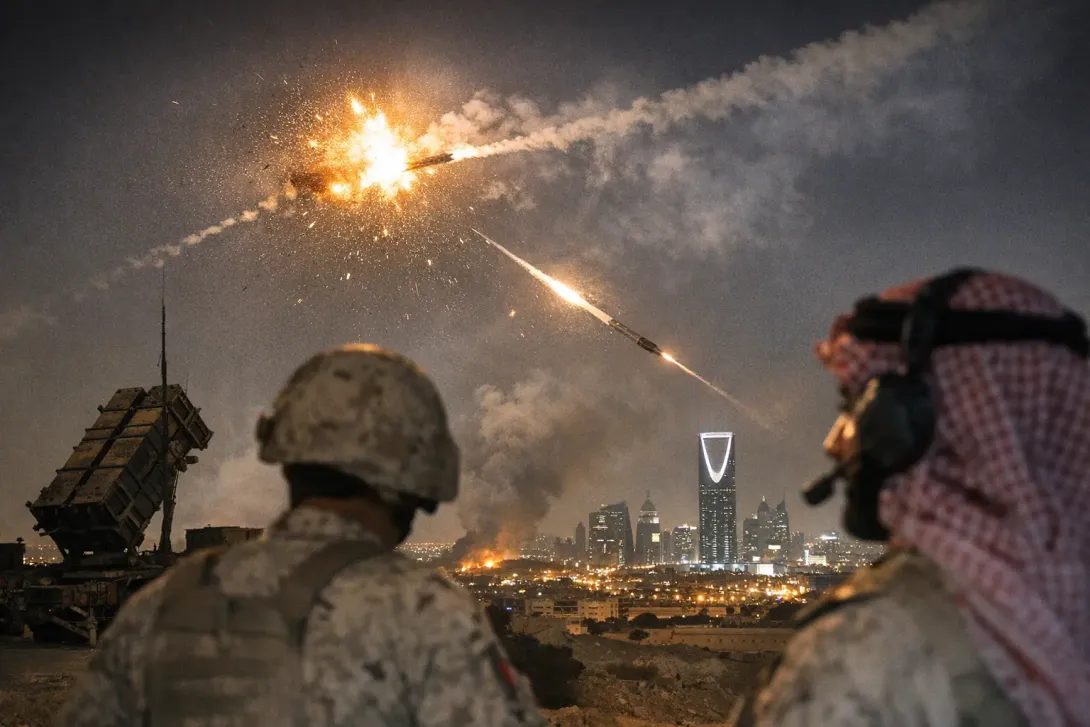
The kingdom’s accounts document faster defense payments and heavier borrowing, while leaving the composition, cause and long-term trade-offs of the increase unexplained.
Military cash spending rose 26% in the first quarter of 2026, but a near-flat prewar allocation and slower first-half growth leave the scale of any lasting shift unresolved.
Saudi Arabia accelerated military cash expenditure as war reached the Gulf, but the public accounts do not yet prove that the conflict caused the full increase or created a permanent defense-first fiscal regime.
- Saudi military expenditure reached SAR64.713 billion in the first quarter of 2026, 25.9% above the same period of 2025. By mid-year, however, cumulative spending of SAR124.574 billion was 12% higher year on year, indicating that the first-quarter growth rate did not continue unchanged. (mof.gov.sa)
- The increase cannot be treated as a wholly new war budget. Hostilities began on February 28, while the 2026 military allocation had been set at SAR239.796 billion before the conflict—only 0.3% above the government’s SAR239 billion estimate for 2025. (imf.org)
- What is demonstrated is a broader fiscal squeeze. First-quarter expenditure rose 20%, the deficit reached SAR125.713 billion, and the entire gap was financed through borrowing. The unresolved question is whether security costs will eventually displace identifiable development or investment spending. (mof.gov.sa)
SAR64.713bn Q1 military expenditure
Up 25.9% from SAR51.399 billion in Q1 2025. (mof.gov.sa)
26% Q1 military spending growth
A cash-expenditure increase, not a measure of operational war costs. (mof.gov.sa)
SAR386.685bn Total Q1 expenditure
Up 20% year on year, showing that the spending surge extended beyond the military sector. (mof.gov.sa)
SAR125.713bn Q1 budget deficit
Financed entirely through borrowing, with no reserve financing recorded. (mof.gov.sa)
−3% Change in oil revenue
Oil receipts fell to SAR144.720 billion in Q1. (mof.gov.sa)
+2% Change in non-oil revenue
Non-oil receipts reached SAR116.252 billion. (mof.gov.sa)
SAR1.667tn Public debt at Q1 end
Up from an opening balance of SAR1.519 trillion. (mof.gov.sa)
SAR124.574bn H1 military expenditure
Up 12% year on year and equal to about 52% of the annual allocation. (okaz.com.sa)
A Defense Surge, but Not Yet a New Spending Regime
Saudi Arabia paid SAR64.713 billion through the military sector in the first three months of 2026, against SAR51.399 billion a year earlier. The 25.9% increase is a verified movement in government cash expenditure, not an estimate of weapons used, contracts signed or the operational cost of particular attacks. (mof.gov.sa)
The subsequent result complicates a simple wartime-spending narrative. Military expenditure reached SAR124.574 billion in the first half, about 12% above the comparable 2025 period and roughly 52% of the full-year allocation. The growth rate therefore moderated substantially after the opening quarter. (okaz.com.sa)
The public-interest question is not whether defense payments accelerated—they did—but whether that acceleration will enlarge the annual military envelope or force identifiable trade-offs with diversification, infrastructure and public services. The available accounts do not yet establish either outcome.
The accounts establish acceleration; they do not yet establish a new fiscal order.
| Military expenditure | |
|---|---|
| Q1 2025 actual | 51.399 |
| Q1 2026 actual | 64.713 |
| H1 2026 actual | 124.574 |
| FY2026 allocation | 239.796 |
What the Budget Can—and Cannot—Prove
This examination covers public fiscal and security records for January through June 2026. The December 2025 budget, 2025 military-spending estimates and earlier fiscal figures are used as baselines, not as evidence that every earlier contract or payment was reviewed.
The Ministry of Finance reports on a cash-accounting basis. Its tables can show when money was paid and assign it to a broad function such as military, health or education. They cannot show whether a payment bought interceptors, funded maintenance, covered salaries or settled an older procurement obligation. (mof.gov.sa)
A material claim is treated as verified only when supported by a primary record or credible corroboration. No inference is made about classified operations, undisclosed contracts or named civilian programs outside the examined record. The absence of detail is a limitation, not evidence that emergency costs did or did not occur.
Cash accounts show the sector receiving payment, not the operational purpose of every riyal.
One Month of War Inside a Three-Month Quarter
The timing is central. The regional war began on February 28, and Saudi Arabia said attacks directed at Riyadh and the Eastern Province were intercepted that day. The conflict therefore occupied roughly the final month of a quarter whose expenditure totals cover January, February and March. (spa.gov.sa)
During March, Saudi authorities reported damage from intercepted drones near the Ras Tanura refinery, another attempted strike on the refinery, attacks directed toward the Shaybah oil field and a drone targeting Riyadh’s Diplomatic Quarter. On March 27, officials reported debris falling near a military site without injuries. (spa.gov.sa)
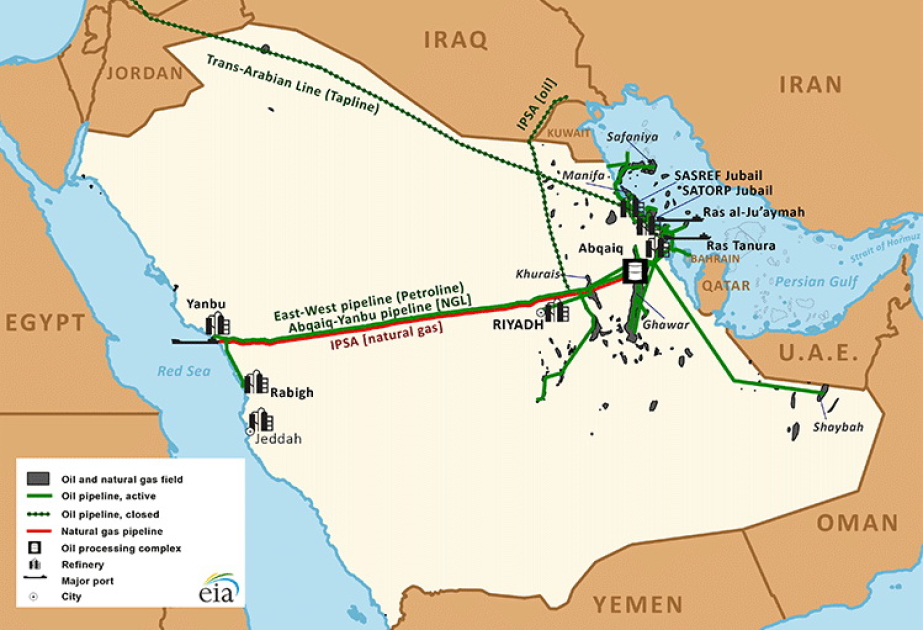
These incidents created demands for air defense and infrastructure protection while maritime traffic through the Strait of Hormuz approached a standstill. They establish an operational shock. They do not reveal which military invoices were generated by that shock or whether those invoices were paid before March 31. (imf.org)
The security shock is documented; its precise bill is not.
The Quarter in Six Numbers
Military expenditure was SAR64.713 billion, up 26%, but it was not the only rapidly rising category. Total government expenditure reached SAR386.685 billion, 20% above Q1 2025. Spending on goods and services rose 52%, capital expenditure 56% and subsidies 170%, without documentary evidence assigning those increases to defense. (mof.gov.sa)
Revenue moved in the opposite direction overall. Oil revenue fell 3% to SAR144.720 billion, while non-oil revenue rose 2% to SAR116.252 billion. The resulting deficit was SAR125.713 billion, and public debt stood at SAR1.667 trillion at quarter-end. (mof.gov.sa)
The first-half update is the necessary control on the opening-quarter figure. Military expenditure of SAR124.574 billion was 12% higher year on year—still elevated, but less than half the Q1 growth rate. That pattern is consistent with acceleration, front-loading or both; it does not by itself distinguish among them. (okaz.com.sa)
The military increase was exceptional, but it occurred inside a much broader spending expansion.
| Year-on-year change | |
|---|---|
| Military expenditure | 26 |
| Total expenditure | 20 |
| Oil revenue | -3 |
| Non-oil revenue | 2 |
A High-Spending State Meets a New Shock
Saudi Arabia was already one of the world’s largest military spenders. SIPRI estimated 2025 expenditure at $83.2 billion, up 1.4% in real terms, placing the kingdom eighth globally. The figure is an estimate under SIPRI’s methodology and should not be directly substituted for Saudi cash-budget totals. (sipri.org)
The government’s December 2025 budget allocated SAR239.796 billion to the military sector, against an estimated SAR239 billion for 2025—an increase of only 0.3%. War began on February 28; the Q1 accounts appeared on May 5, followed by the Q2 and mid-year releases in July. (budget.mof.gov.sa)
Macroeconomic data were also revised as fuller information arrived. GASTAT’s April flash estimate put Q1 growth at 2.8%; its June national-accounts release raised the figure to 3.0%. The change reflects the normal difference between an early estimate and a later release, not conflicting measures of the same vintage. (stats.gov.sa)
The shock struck a state that was already spending heavily on defense.
How the Shock Moves Through the State Balance Sheet
Military payments enter the sectoral ledger alongside all other government spending. When expenditure exceeded revenue in Q1, the Ministry of Finance recorded a SAR125.713 billion deficit. Its financing table shows that borrowing covered the full shortfall; no drawdown from government reserves was recorded for the quarter. (mof.gov.sa)
The National Debt Management Center said on May 5 that approximately 90% of the kingdom’s 2026 funding needs had been secured before the regional events. It added that any additional requirement would primarily be met through private channels and domestic markets, indicating that financing capacity had been positioned in advance. (ndmc.gov.sa)
Physical infrastructure softened—but did not eliminate—the revenue shock. The IMF reported that the East–West Pipeline enabled crude to be redirected to Yanbu and reached capacity by late March. That buffer helped sustain exports, but it does not connect the broad Q1 increases in goods, subsidies or capital spending to defense. (elibrary.imf.org)
Security pressure reaches the balance sheet through both expenditure and disrupted revenue.
Riyadh’s Case—and Its Missing Detail
Before the attacks, Saudi Arabia said its territory and airspace would not be used to target Iran. After strikes on Riyadh and the Eastern Province on February 28, it condemned Iran and said it would take necessary measures to defend its population and territory. (spa.gov.sa)
The debt center’s case is that proactive financing preserved flexibility. PIF’s published 2026–30 strategy similarly stresses long-term direction, selective capital allocation and investment efficiency rather than a wholesale abandonment of economic transformation. (ndmc.gov.sa)
The cited public materials do not disclose which components produced the Q1 military increase, whether supplementary military appropriations were approved, or whether named civilian programs were delayed. Nor do they quantify how much spending was directly related to combat operations, air-defense replenishment or accelerated procurement.
Saudi institutions describe resilience and flexibility, but not the composition of the surge.
The Strongest Alternative: Timing, Not a War Budget
Only about one month of the quarter followed the February 28 outbreak of war, while the accounts recognize payments when cash moves. A large Q1 increase could therefore reflect front-loaded execution, milestone payments or previously contracted systems as readily as a supplementary operational response. (imf.org)
The annual military allocation was only 0.3% above the 2025 estimate, first-half growth moderated to 12%, and overall Q1 government spending rose 20%. Those facts weaken any claim that the military result alone proves an enduring wartime reordering of the budget. (budget.mof.gov.sa)
A further conflict in the record remains unresolved. Saudi Arabia said it would not permit attacks on Iran from its territory or airspace; Iran later alleged in a UN letter that U.S. aircraft transited Saudi airspace for strikes. The letter proves the allegation was made, not that the alleged flights occurred. (spa.gov.sa)
Payment timing remains a credible explanation for part of the Q1 jump.
What Would Prove a Lasting Shift
The decisive tests are still ahead: Q3 and full-year military execution against the SAR239.796 billion allocation, any supplementary appropriations, the military share of total spending, and disclosed procurement or replenishment. Execution materially above the allocation would be stronger evidence of a structural shift. (mof.gov.sa)
The first-half deficit of about SAR160 billion was already nearly 97% of the SAR165.4 billion full-year assumption. Later oil revenue, spending restraint or additional borrowing could change the final position, so the early deficit should be treated as pressure—not a forecast of the year-end result. (arabnews.com)
Evidence of lasting reprioritization would also require identifiable consequences: delayed civilian projects, altered PIF commitments, sustained domestic or private-channel borrowing, or an increased defense share in later budgets. Without those signals, the stronger conclusion remains temporary acceleration within an existing high-spending framework.
A durable defense-first order must be demonstrated in later allocations and identifiable trade-offs.
The strongest alternative explanation is administrative rather than strategic. Saudi Arabia’s military category includes capability development, hospitals, education, training, maintenance and military facilities. First-quarter cash payments may therefore reflect invoices and contracts arranged before the war, not solely emergency operations. (mof.gov.sa)
War may still have accelerated payments or generated unreported operational costs. But the near-flat prewar allocation, slower first-half growth and absence of a program-level breakdown in the fiscal documents reviewed mean the accounts cannot distinguish emergency expenditure from scheduled execution. (budget.mof.gov.sa)
The verified finding is substantial but bounded: Saudi Arabia accelerated military cash expenditure during the opening quarter of the war while financing a much wider deficit through debt. The security shock and fiscal pressure are independently documented.
A permanent defense-first fiscal order is not established. That judgment would require later execution above the prewar allocation, supplementary funding or demonstrable reductions elsewhere. Until such evidence appears, the most defensible interpretation is wartime acceleration inside an already expansionary, deficit-financed state budget.
Confidence: Moderate: expenditure, deficit and financing totals are strong; causal attribution and program-level composition remain weak.