New Balance turns NYC Marathon week into a runner-engagement platform
The footwear company is using mandatory runner touchpoints, exclusive merchandise and year-round programming to make the marathon partnership more than a race-day sponsorship, though its commercial return remains undisclosed.
Overview
New Balance’s 2026 New York City Marathon activation shows how a sportswear brand can turn event sponsorship into an integrated runner-engagement platform. The key mechanism is not simply visibility along the course: mandatory expo attendance for participants gives the company access to a concentrated audience, while official merchandise and the permanent New Balance Run Hub extend that relationship beyond race day. That structure creates opportunities for sales, product discovery and brand identification, but available records do not establish conversion rates, incremental revenue or return on sponsorship spending.
Facts
- The 2026 TCS New York City Marathon is scheduled for Sunday, November 1, in New York City, according to New York Road Runners.
- The marathon expo runs from October 29 through October 31 at the Jacob K. Javits Convention Center, with runners required to collect their materials in person.
- NYRR describes New Balance as its official athletic footwear and apparel partner and lists more than 114 expo exhibitors and vendors across more than 300,000 square feet.
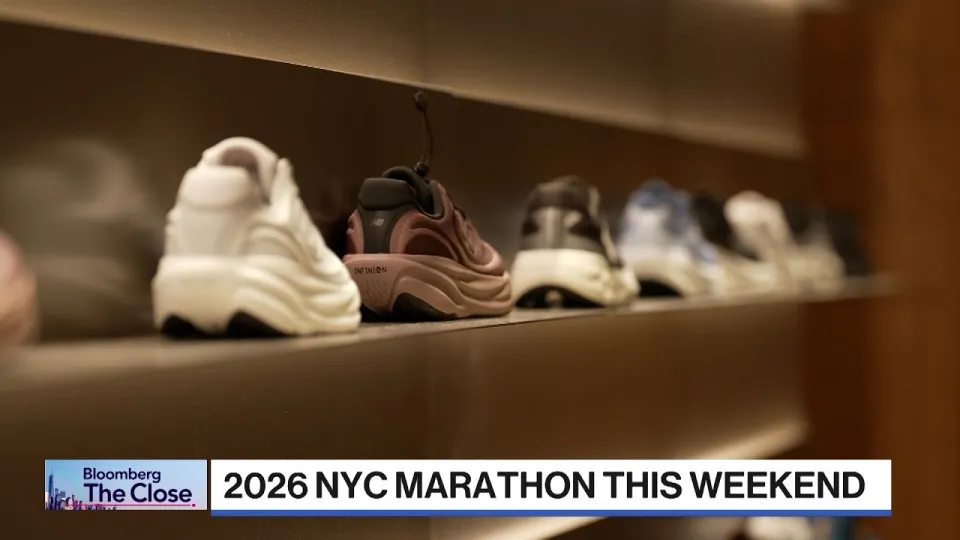
- New Balance President and CEO Joe Preston told Bloomberg on October 29 that more than 300 company associates were in New York for race week, including 200 retail staff at the expo.
- New Balance and NYRR announced their multi-year alliance in December 2015, with full engagement—including the marathon sponsorship—beginning in 2017.
New Balance’s marathon-week strategy is built around a controlled sequence of runner interactions. The company gains visibility from its official-partner status, but the more consequential asset is access to participants at points where they are preparing, collecting required materials, shopping or recovering.
Every registered runner must visit the expo personally to obtain a bib and race materials. That requirement brings the event’s participant base through a venue where New Balance has presenting-partner status, a large retail presence and the official marathon collection. Preston’s statement that 200 retail workers were staffing the expo indicates the activation is being treated as a substantial commercial operation rather than a symbolic display. The record does not show how many of those employees were working simultaneously or what sales targets, if any, were assigned.
The causal mechanism has three parts. First, mandatory bib pickup supplies concentrated foot traffic without New Balance having to create the audience independently. Second, official apparel connects merchandise to participation and achievement: race-branded and finisher products allow runners to express an identity associated with the event. The 2026 collection also marks the 50th anniversary of the marathon’s five-borough course, giving the merchandise a commemorative element. Third, the NYRR RUNCENTER featuring the New Balance Run Hub provides a permanent location for product trials, retail and community programming, extending contact beyond the expo’s three-day window.
That combination makes the partnership more deeply embedded in the participant journey than conventional course signage. It places the brand around preparation, race identity and post-event recognition. For NYRR, the arrangement also integrates an apparel supplier and retailer into services that the organization already provides to runners.
The credible alternative is that New Balance is primarily deploying a large workforce to serve predictable peak demand at one of running’s biggest gatherings. Under that interpretation, the expo crowd reflects the marathon’s strength rather than evidence that the sponsorship itself is creating new demand. The available reporting cannot distinguish between purchases that the partnership generated and purchases that runners would have made from another official supplier.
No cited record provides 2026 sales, customer-acquisition costs, brand-recall measurements or incremental revenue. Nor do the records establish the current duration or financial terms of the relationship. The evidence therefore supports a judgment about the platform’s design and access—not its profitability or effectiveness compared with alternative marketing investments.
Context / evidence
NYRR’s October 22 race-week announcement provides the strongest public evidence of scale: it lists more than 60,000 registered athletes, says the expo received more than 160,000 visitors in 2025 and identifies New Balance as the official collection provider. Preston’s lower expectation of more than 100,000 expo visitors over three days may use a different counting method or reflect a conservative 2026 forecast; the records do not reconcile the figures. The original 2015 alliance covered sponsorship, youth programming, licensing, e-commerce and retail rights, supporting the interpretation that the relationship was designed as a year-round platform rather than a single-event media purchase.
Impact
For runners, the immediate observed effect is a centralized journey combining required bib collection, official apparel, product displays and other expo services. For New Balance, the arrangement supplies repeated contact with committed runners and accompanying visitors during a period of unusually high interest in footwear and race merchandise. NYRR gains a partner operating across apparel, retail space and event presentation. Broader claims—such as improved runner loyalty, higher product adoption or increased participation—remain plausible implications rather than demonstrated outcomes in the available evidence.
Outlook
The partnership’s measurable test comes after the scheduled November 1 race. Useful indicators would include final expo attendance, merchandise availability or sell-through, use of product trials, subsequent traffic at the New Balance Run Hub and any disclosed runner-engagement data. A renewal or revised partnership announcement would clarify how NYRR and New Balance value the platform after an alliance first announced in 2015. Without those records, the defensible judgment is that New Balance has built extensive access to runners—not that this access has necessarily produced a positive financial return.