Nvidia after Huang: strong results buy time, but succession and security oversight define the risk
Nvidia’s founder-led model has become its central succession challenge. Strong quarterly results indicate near-term execution remains intact, but the permanent CEO choice and unresolved security review will determine whether continuity extends to strategy and trust.
Overview
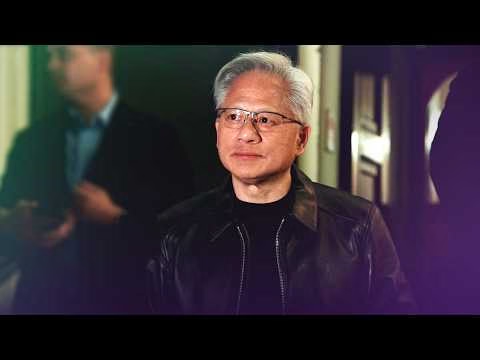
Jensen Huang’s departure creates strategic and governance risk for Nvidia, but the evidence does not yet establish an operational breakdown. The company’s November 17 results and continued product shipments indicate that established plans are still being executed under interim CEO Colette Kress. The harder test is whether Nvidia can replace Huang’s combination of technical direction, customer influence and investor credibility while resolving an independent investigation whose findings have not been published.
Facts
- Nvidia’s board accepted Huang’s resignation as president, CEO and director on November 11, 2026; the company disclosed it on November 12. (sec.gov)
- The board appointed Chief Financial Officer Colette Kress as interim CEO and said it would consider internal and external permanent candidates. (sec.gov)
- Nvidia reported third-quarter fiscal 2027 revenue of $115.8 billion, covering the quarter that ended October 25, before Huang’s departure. (investor.nvidia.com)
- The November 17 earnings release said the Vera Rubin NVL72 platform had shipped and identified Kress as interim CEO and chief financial officer. (investor.nvidia.com)
- Nvidia established a board committee on November 17 to oversee national-security policy, export controls and global trade risk. (nvidianews.nvidia.com)
Huang’s exit matters because Nvidia was not merely led by a founder; its strategy, product narrative and external relationships were closely associated with him throughout the company’s rise. He helped translate technical architecture into a broad platform proposition spanning chips, networking and software. His removal from both management and the board therefore creates a key-person problem that cannot be answered simply by showing that factories, engineering teams and sales operations continue working.
The immediate evidence nevertheless supports continuity rather than paralysis. Kress has been Nvidia’s chief financial officer since 2013, giving the interim leader detailed knowledge of capital allocation, supply arrangements, forecasts and major customers. The company’s first results after the leadership change reported $115.8 billion in quarterly revenue and said Vera Rubin NVL72 systems had shipped. (investor.nvidia.com) Those results demonstrate the strength of the operation Kress inherited, but they are not evidence that the transition caused the performance: the reporting period ended October 25, more than two weeks before the board accepted Huang’s resignation.
The causal risk instead runs through future decisions. Nvidia must maintain a rapid product cadence while managing scarce manufacturing capacity, changing export rules and customers that are developing their own accelerators. A permanent CEO will need enough technical authority to adjudicate engineering priorities and enough commercial credibility to persuade customers that Nvidia’s roadmap remains coherent. Selecting a primarily operational leader could protect execution but weaken the founder-style technical narrative. Selecting an outside technologist could restore that authority while creating integration and retention risks.
Nvidia’s governance response indicates that the board sees the issue as broader than ordinary succession. On November 17 it established a standing National Security and Export Control Oversight Committee. The company said its national-security and trade-compliance teams would report to that committee and to Kress for day-to-day operations. (nvidianews.nvidia.com) This can strengthen escalation and board scrutiny, but forming a committee does not establish what happened, whether information was exposed or whether existing controls failed.
There is also a credible alternative to the key-person thesis: Nvidia may already be institutionalized enough to absorb Huang’s departure. Its products are created by large engineering organizations, its software ecosystem produces switching costs, and its current commercial momentum was built through commitments extending beyond one executive. The post-transition earnings release supports that interpretation, as does the absence so far of a company-announced roadmap interruption. But an absence of documented disruption is not proof that none will emerge. No permanent successor has been named, the investigation remains unresolved, and the quarter reported after the transition largely reflects work completed beforehand. The bounded judgment is therefore that Nvidia has demonstrated operational resilience, not that it has completed a successful succession.
Context / evidence
The official records leave an important distinction. Bloomberg described Huang as ousted following reports of affairs, including an alleged connection to a suspected Chinese intelligence operative. Nvidia’s regulatory filing records a resignation accepted by the board but does not state a cause. (bloomberg.com) Earlier, the board said Huang had been targeted by a foreign-intelligence effort and opened an independent investigation, while also saying it had no reason at that point to believe national security or company secrets had been compromised. No public findings have yet resolved those allegations. (nvidianews.nvidia.com)
Impact
The observed financial impact began with volatility: Nvidia shares fell as much as 13% on November 12 before reducing the loss to about 5% as investors assessed the leadership change. (finance.yahoo.com) For customers and suppliers, the practical issue is whether product allocations, support and delivery schedules remain predictable. For employees, prolonged uncertainty could affect retention and decision-making authority. Nvidia’s strong results reduce immediate liquidity or demand concerns, but they do not remove strategic uncertainty surrounding the permanent leadership structure and investigation.
Outlook
The strongest continuity scenario would combine an orderly permanent appointment, unchanged product milestones, stable customer commitments and published findings that contain the security issue. A more disruptive scenario would emerge if the search becomes prolonged, senior technical leaders leave, customers diversify orders or the investigation identifies compromised information or deficient controls. The next meaningful evidence will come from the board’s CEO selection, updates to the investigation and whether future results sustain the growth and roadmap claims inherited from the Huang era.