Pentagon faith adviser’s posts put religious-neutrality safeguards under pressure
CNN’s findings raise a defense-governance question: whether the Pentagon can expand religious-affairs policymaking while maintaining equal treatment across a pluralistic force.
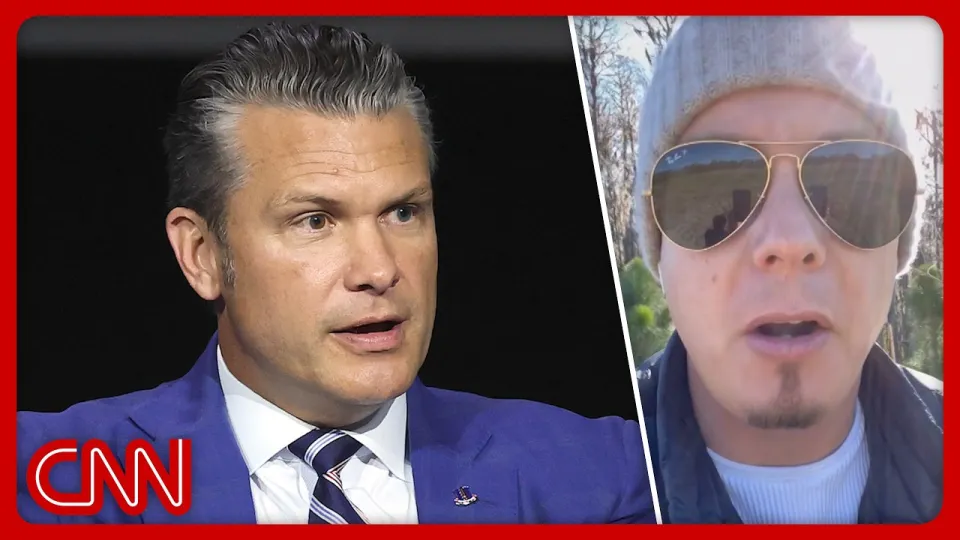
Overview
The central issue is not whether a Pentagon adviser may hold or express conservative religious beliefs. It is whether Ryan Higgins’ reported statements about Muslims, LGBTQ people, race and church-state separation are compatible with an influential role shaping religious policy for a diverse military. CNN established a substantial public record and reported access to Defense Secretary Pete Hegseth, but the extent of Higgins’ influence remains disputed and no discriminatory Pentagon decision has been attributed to him. The immediate test is therefore institutional: whether transparent authorities, review procedures and pluralistic safeguards constrain the new religious-affairs operation.
Facts
- CNN reported on October 27, 2026, that its journalists reviewed hundreds of Ryan Higgins’ social-media posts, livestreams and blog entries spanning years. The material included a June 2026 statement that separation of church and state “does not exist,” derogatory commentary about several protected groups and posts made after he joined the Pentagon. (transcripts.cnn.com)
- The Pentagon described Higgins as a valued senior adviser focused on troops’ spiritual health and establishing an Office of Religious Affairs. CNN said several sources credited him with influencing Hegseth’s messaging and priorities, while other sources characterized him as one adviser among many. (transcripts.cnn.com)
- Defense Department policy calls for religious accommodation while identifying readiness, unit cohesion, good order and discipline as governmental interests. Its military equal-opportunity instruction requires dignity, respect and freedom from prohibited discrimination, including discrimination based on race, religion or sexual orientation. (esd.whs.mil)
CNN’s investigation places two kinds of evidence side by side. The first is direct and attributable: journalists examined hundreds of public posts, videos and archived entries in which Higgins promoted an explicitly Christian conception of the United States and made disparaging statements involving Muslims, immigrants, LGBTQ people, women and Black political figures. The second concerns institutional capability: multiple CNN sources said Higgins helped shape Hegseth’s messaging and policy priorities, including Christian nationalist themes in speeches and public appearances. The Pentagon itself confirmed that Higgins serves as a senior adviser and is involved in establishing an Office of Religious Affairs. (transcripts.cnn.com)
Those findings support scrutiny of Higgins’ access, but they do not establish that he controls policy. CNN reported disagreement among its sources about his weight inside Hegseth’s team. Nor does the available reporting identify an accommodation request, promotion, assignment or disciplinary decision that Higgins changed because of an individual’s religion, race, sex or sexual orientation. Treating his posts as proof of an already implemented discriminatory program would therefore go beyond the evidence.
The more defensible concern is about institutional design. A religious-affairs office inside the Pentagon would operate in a system where commanders possess unusual authority over subordinates’ working conditions and where service members may depend on the military for access to worship. Advice from such an office could affect guidance, complaint handling, religious displays, chaplain support and the framing of accommodation decisions. If its remit is broad and its internal checks weak, an adviser’s conception of which beliefs are legitimate could influence decisions even without a written directive endorsing one faith.
Existing policy offers a measurable baseline. Defense Department instructions normally favor accommodation of sincerely held religious practices but permit restrictions tied to mission accomplishment, readiness, cohesion, discipline, health and safety. They also require consistent procedures and place responsibility for decisions within specified command structures. A separate equal-opportunity instruction says service members should be treated with dignity and respect in an environment free from prohibited discrimination. (esd.whs.mil) The relevant question is consequently not whether religion may appear in military life; Pentagon policy already recognizes and protects religious exercise. It is whether the department administers those protections without preferring or disparaging particular communities.
A credible counterpoint is that officials retain personal speech and religious rights, and old or inflammatory posts do not by themselves demonstrate misconduct in office. Higgins could also be one participant in a larger process subject to military lawyers, commanders and established policy. That argument reduces the basis for declaring a policy failure now. It does not remove the governance risk created when the Pentagon publicly praises an adviser without answering detailed questions about statements directly relevant to the population his work is intended to serve.
The bounded judgment is therefore procedural rather than constitutional: the reporting has exposed a mismatch between Higgins’ documented public rhetoric and the pluralistic responsibilities associated with religious-affairs work. Whether that mismatch becomes a defense-management problem depends on his actual authority and the safeguards around it—details the Pentagon’s response did not clarify.
Context / evidence
The armed forces must protect religious exercise in circumstances where deployment and command authority can limit ordinary access to worship. That makes military religious support necessary, but also makes denominational neutrality operationally important. The Pentagon’s accommodation instruction places decisions within defined command channels and requires consistent, evidence-based treatment of comparable requests. Its equal-opportunity framework separately ties nondiscrimination to readiness. (esd.whs.mil) These records do not determine whether Higgins violated a rule; they establish the standards against which any policy influence should be assessed.
Impact
The observed consequence is intensified scrutiny of Hegseth’s management team and the emerging Office of Religious Affairs; the Pentagon’s defense of Higgins confirms that the department is treating his work as valuable rather than distancing itself from it. (transcripts.cnn.com) The plausible operational effect is on trust. Muslim, LGBTQ, female and minority personnel could question whether religious concerns or complaints will receive impartial treatment. That effect has not been measured in the available reporting. It would become observable through formal complaints, accommodation outcomes, retention data, climate surveys or evidence that commanders changed their handling of religious matters.
Outlook
The controversy becomes operationally significant if it changes policy, access or treatment. Key indicators are whether the Pentagon publishes the Office of Religious Affairs’ charter; identifies its leadership and decision authority; retains established accommodation procedures; consults representatives of multiple faiths and nonreligious personnel; and discloses how advisers are vetted for roles affecting equal opportunity. Congressional requests, inspector-general activity or documented complaints would create additional evidence. As of the October 30, 2026, reporting cutoff, the Pentagon had defended Higgins, but the available record did not establish a personnel action or show that the disputed posts had produced a specific departmental decision.