Israel and US votes mark decision points for renewed Iran strikes
The Israeli and US election calendars may end a political pause around Iran, but voting outcomes will shape coordination more than determine whether fighting resumes.
Overview
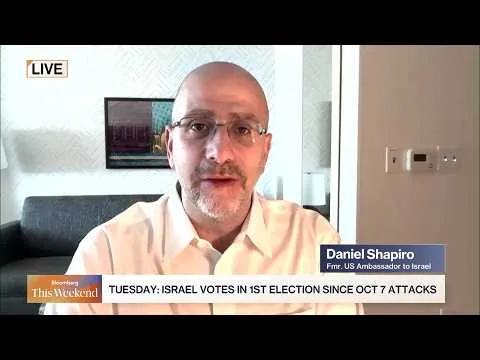
Daniel Shapiro’s warning is best understood as identifying a decision window, not predicting an inevitable post-election attack. Israel votes on October 27, while the US midterms follow on November 3. Once those contests pass, leaders will face fewer immediate electoral constraints on military action. Yet escalation will still depend on operational orders, Iranian responses, diplomacy and Israel’s coalition formation. A change of Israeli leadership could improve bilateral coordination without removing the strategic disputes driving the conflict.
Facts
- Israel’s Central Elections Committee schedules voting for the 26th Knesset on October 27, 2026, with publication of results scheduled for November 4. (gov.il)
- The US general election is scheduled for November 3, 2026, under the federal rule placing congressional elections on the Tuesday after the first Monday in November. (uscode.house.gov)
- In an interview published by Bloomberg Television on October 25, former US Ambassador to Israel Daniel Shapiro warned that renewed operations against Iran could intensify regional and global economic pressures.
- President Donald Trump said on October 8 that the US would not resume strikes against Iran before the November 3 midterms, while leaving open the possibility of later military action. (apnews.com)
- Iranian Foreign Ministry spokesperson Esmail Baghaei said messages continued to pass between Tehran and Washington through intermediaries, although negotiations appeared stalled. (apnews.com)
Main narrative
Shapiro’s assessment connects two political transitions to one unresolved military question. Elections can delay decisions because governments facing voters must weigh battlefield objectives against casualties, energy prices and economic disruption. They do not settle the underlying conflict. The immediate analytical question is therefore whether the votes remove restraints on escalation or create space for a different diplomatic approach.
The US calendar provides the clearest timing mechanism. Trump has publicly ruled out renewed strikes before November 3, establishing a temporary political boundary rather than a lasting military commitment. Reports that US and Israeli planners have prepared options for operations after the midterms indicate contingency planning, not a final authorization. ABC News reported on October 22 that Israeli sources expected any strikes to follow the US vote; the White House separately said the US would not attack before it. (abcnews.com)
Israel’s election introduces greater uncertainty. A Netanyahu-led coalition could preserve continuity in military planning, but it would also retain the personal and policy tensions that Shapiro says have strained relations with Washington. A government led by Netanyahu’s opponents might improve consultation and political trust with the US. That could support Shapiro’s proposed reset, especially over objectives, sequencing and the limits of military action.
Leadership change would not, however, automatically produce strategic reversal. The Israeli campaign has focused heavily on leadership, responsibility for the October 7, 2023, security failure and military service rather than a fundamental debate over confrontation with Iran. The Associated Press reported that Israel’s previous wars against Iran retain broad domestic support. (apnews.com) A new coalition could consequently alter the management of the conflict more than its core security assumptions.
Coalition arithmetic may also prevent a rapid reset. Israelis vote for parties, and the premiership depends on assembling a parliamentary majority. If no bloc can do so, the existing government could remain in a caretaker role while negotiations continue or another election is considered. That would blur the supposedly clear post-election decision point.
The strongest counterargument to an election-centred interpretation is that events can overtake political schedules. Maritime attacks, proxy operations or direct strikes could force decisions independently of either vote. Iran’s stated willingness to communicate through intermediaries points in the opposite direction, but it does not establish that the parties have agreed on terms or resumed substantive negotiations. The elections matter because they change political constraints; they do not control the actions of every armed actor involved.
The bounded judgment is that the period after November 3 carries increased escalation risk because a declared US restraint expires and Israel’s leadership picture begins to clarify. Whether that risk becomes military action will be decided by subsequent orders, coalition outcomes and diplomacy—not by the election results alone.
Context / evidence
The economic exposure predates any new operation. The International Energy Agency describes the war that began on February 28 as causing the largest supply disruption in global oil-market history, although it warns that incomplete ship-tracking data make current transit volumes difficult to measure. (iea.org) The World Bank estimated on October 6 that regional output would contract by 2.1% in 2026 and linked rising food prices to higher shipping costs and strained supply chains. Those are institutional estimates, not measured consequences of a future strike. (worldbank.org)
Impact
The consequences would extend beyond the forces directly involved. The World Bank already attributes lost Gulf export revenue, weaker aviation and logistics activity, and higher food-price pressure to the conflict and disruption around the Strait of Hormuz. (worldbank.org) Renewed operations could plausibly increase shipping delays, insurance costs and energy-market volatility, but their scale would depend on targets, duration and Iran’s response. For civilians, the most immediate observable risks would be new missile attacks, airspace restrictions, displacement and additional pressure on household fuel and food costs across the region.
Outlook
The first indicator will be whether Israel’s election produces a workable coalition or leaves the existing government serving in a caretaker capacity. After November 3, observable tests include changes in US public messaging, deployments or exercises, Israeli cabinet decisions and explicit military warnings. Diplomatic signals also matter: sustained intermediary contacts, a negotiating timetable or agreements affecting maritime security would weaken the post-election escalation case. Conversely, further attacks on commercial shipping, widening proxy strikes or formal confirmation of operational orders would indicate that political timing is giving way to renewed combat.