Why is covering Ethiopia’s renewed Tigray fighting so difficult?
How insecurity, communications disruption, restricted access and competing narratives complicate reporting on renewed fighting in northern Ethiopia.
The Short Answer
Covering Ethiopia’s renewed Tigray fighting is unusually difficult because danger, disrupted communications and competing political narratives obstruct the basic work of verification. A correspondent may witness shelling or displacement while remaining unable to establish the wider battlefield picture or independently test each side’s claims.
Focal Verification
The explanation separates Tawakel’s eyewitness account from broader claims established by dated public records. African Union and IGAD statements confirm renewed hostilities, while press-freedom reporting documents longer-term access, intimidation and censorship problems affecting Ethiopian journalists. (igad.int)
Focal Facts
- The Pretoria agreement ended the 2020–2022 federal-TPLF war on November 2, 2022. (static.au.int)
- The African Union and IGAD reported renewed military escalation on September 23, 2026. (igad.int)
- Tawakel’s team reported from northern Ethiopia for about two weeks and spent three days in Mekelle. (aljazeera.com)
- The account was published on October 19, 2026. (aljazeera.com)
Key Actors
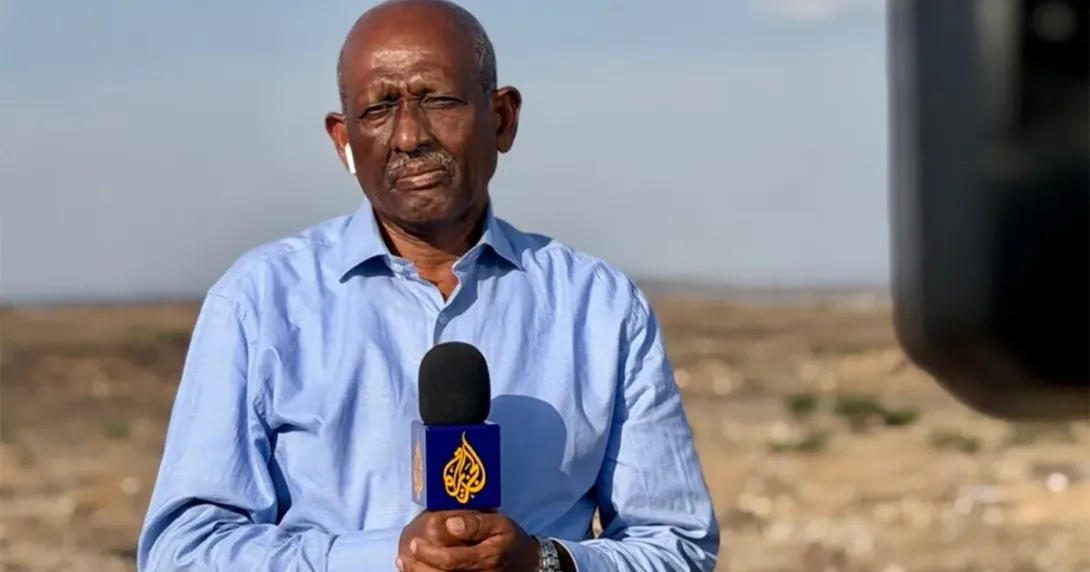
- Mohammed Taha Tawakel — Al Jazeera correspondent whose notebook records the team’s journey through Afar, Amhara and Tigray.
- Ethiopian federal government and allied forces — One side in the renewed northern fighting and the force that regained Mekelle.
- Tigray People’s Liberation Front — Tigrayan political and armed movement fighting federal and government-backed forces.
- Abiy Ahmed — Prime minister of Ethiopia as of October 20, 2026. (pmo.gov.et)
Focal Timeline
- The Ethiopian government and TPLF signed the African Union-facilitated Pretoria cessation-of-hostilities agreement.
- Renewed hostilities were reported in northern Ethiopia, including Tigray and Afar.
- Government-allied forces entered Mekelle after TPLF forces withdrew, according to subsequent reporting.
- Mohammed Taha Tawakel’s first-person account of the assignment was published.
Focal Evidence
Tawakel describes hearing and filming near front lines, repeatedly changing routes, interviewing soldiers and residents, and spending three days in Mekelle. His direct observations establish the conditions his team encountered, not a comprehensive account of the conflict. (aljazeera.com)
Gaps in the Record
- The notebook does not establish a comprehensive casualty or displacement count for the renewed fighting. It also does not independently resolve which party initiated particular clashes or whether Al Jazeera remained the only media team in Mekelle after its departure.
Focal Outlook
- Will journalists obtain sustained, independent access to contested areas?
- Can communications remain available as front lines shift?
- Will the parties permit credible investigation of civilian harm and alleged abuses?
Full Explanation
The central problem is not simply reaching Ethiopia’s northern conflict zone. It is determining what can be stated reliably once there. Mohammed Taha Tawakel’s account shows how physical danger, scarce communications and pressure from rival narratives narrow what reporters can observe and verify.
Why does physical access provide only a partial picture?
Tawakel’s team travelled by road from Addis Ababa through Afar and onward to Tigray. In Erbeti, shelling and the departure of residents forced the journalists to withdraw within hours. They later approached to within about three kilometres of a front line but could not see the fighting directly; they heard artillery, recorded footage and spoke briefly with soldiers before being ordered to evacuate. Roads usable in the morning could become inaccessible by evening. (aljazeera.com)
That mobility problem shapes the evidence. A reporter can accurately describe sounds, visible troop positions or families leaving a town without knowing what occurred beyond the accessible road. Front-line access arranged through one force may also expose journalists mainly to that force’s personnel and version of events.
Why is verification harder than gathering information?
War zones produce abundant claims but few dependable ways to test them. Tawakel wrote that reports received before noon needed checking again before sunset. In Mekelle, some residents welcomed incoming soldiers, others remained silent and many refused recorded interviews because they feared what might happen next. Those reactions could not responsibly be treated as a representative verdict on control of the city. (aljazeera.com)
The African Union and IGAD confirmed renewed hostilities on September 23, including disrupted civilian air services, but their statements did not establish every local battlefield claim or assign responsibility for each clash. (igad.int)
How do communications failures change reporting?
Disrupted communications affect both newsgathering and civilians’ understanding of nearby events. Tawakel said some Mekelle residents learned from Al Jazeera’s broadcast that government forces had entered their city. His live appearance also reassured colleagues and relatives amid rumours that the team had been arrested or trapped. (aljazeera.com)
When telephone and internet access is unreliable, reporters cannot easily reach additional witnesses, transmit material, check geographic details or challenge official assertions. It also becomes harder for editors outside the area to assess the team’s safety.
Why does impartial language matter so much?
Ethiopia’s conflict is accompanied by deeply polarised accounts of political authority, territorial control and civilian harm. Reporting must therefore distinguish direct observation from resident testimony and statements by combatants. That discipline does not eliminate disagreement, but it prevents a limited scene—such as one welcoming crowd or one fearful neighbourhood—from being presented as the experience of an entire city.
The risks are institutional as well as physical. CPJ documented detentions, threats and armed interference with media in Tigray before the renewed fighting, while its 2026 election reporting described censorship and intimidation around conflict coverage. (cpj.org)
Focal Update
Public-record scope runs through October 20, 2026. This explainer adds African Union, IGAD and press-freedom context to Tawakel’s October 19 first-person account without treating his team’s observations as a complete battlefield record.