Somalia strike surge exposes a widening US civilian-harm accountability gap
The expanding US air campaign in Somalia is outrunning the public mechanisms available to identify civilian harm, resolve contested cases and preserve local confidence.
Overview
The US campaign in Somalia presents an increasingly consequential mismatch: commanders possess greater freedom to strike, but the public evidence used to evaluate civilian-harm claims remains limited. Jamaame does not establish that US aircraft caused every reported death or injury. It does show that greater operational tempo, combined operations and closed military assessments can leave affected families without an authoritative account. That gap risks becoming an operational constraint if it weakens confidence in US-Somali targeting and civilian-protection systems.
Facts
- AFRICOM acknowledged US strikes near Jamaame on November 14 and 15, 2025, during an offensive involving Somali forces. Its assessment did not find it more likely than not that US operations caused the reported civilian harm. (aljazeera.com)
- A UNHCR-led monitoring network recorded 12 civilian deaths and the displacement of 22,800 people during fighting and air strikes around Jamaame from November 16 to 18, 2025. The monitoring did not attribute each casualty to a specific force. (aljazeera.com)
- Al Jazeera interviewed families reporting deaths, serious injuries, destroyed livelihoods and prolonged displacement. AFRICOM did not disclose whether its investigators interviewed survivors, relatives, hospital staff or other local witnesses. (1-e8259.azureedge.net)
- AFRICOM’s current public ledger lists 86 Somalia strikes from January through September 2026. Al Jazeera reported that an earlier version listed 84, while New America recorded 88 for the same period. (africom.mil)
- The White House’s 2026 counterterrorism strategy says President Donald Trump delegated much strike authority from the White House to combatant commanders shortly after beginning his second term. (whitehouse.gov)
Main narrative
Washington’s accelerated air campaign is intended to suppress al-Shabab and Somalia’s ISIS affiliate while allowing local forces to carry more of the ground war. The administration’s own strategy connects faster counterterrorism action to authority delegated to combatant commanders. AFRICOM’s ledger demonstrates the resulting capacity: it currently records 86 Somalia strikes through September 2026, already an unusually intensive campaign. The records establish tempo, however, not strategic effect. They generally do not reveal the intelligence supporting target selection, the weapons employed or the outcomes needed to judge whether strikes produced durable security gains. (africom.mil)
Jamaame illustrates why that distinction matters. US aircraft supported Somali operations around the al-Shabab-held town in November 2025. Families interviewed by Al Jazeera described children wounded by shrapnel, a pregnant woman and her unborn child killed, paralysis, destroyed property and flight from the area. A UNHCR-led network separately documented civilian deaths and mass displacement during several days of fighting. Those accounts establish serious civilian suffering during the operation, but the presence of Somali ground forces and multiple phases of combat prevents automatic attribution of each incident to US aircraft. (aljazeera.com)
AFRICOM says its review did not cross the “more likely than not” threshold required to attribute the reported harm to US operations. That is a finding about available evidence, not proof that no civilian harm occurred. The distinction is central. AFRICOM did not release the material it considered, and its response to Al Jazeera did not establish whether investigators interviewed the affected families or other local witnesses. The command said the assessment could be reopened if new information emerged. (aljazeera.com)
The analytical concern is therefore not simply that strikes increased or that allegations exist. It is that the campaign’s operational speed and its accountability process operate on different evidentiary tracks. The military controls sensor data, intelligence and weapons records; families hold testimony, injuries and knowledge of local movements. If an assessment relies mainly on the first category without visibly incorporating the second, its conclusion may remain unpersuasive locally even when it is internally defensible.
That credibility deficit can affect security decisions. Commanders need reliable civilian reporting to correct intelligence, refine targeting and distinguish militant networks from communities living under their control. Somali authorities also need public confidence in joint operations. The reporting does not establish that civilian harm has increased recruitment for armed groups or negated battlefield gains. It does establish conditions—unresolved deaths, medical hardship and absent public explanation—that adversaries could exploit and that protection procedures are designed to address.
Context / evidence
The campaign combines two systems with different visibility. AFRICOM publishes dates, approximate locations and intended targets, but frequently withholds assets, munitions and operational detail. Its civilian-harm process accepts reports and publishes quarterly summaries, while classified intelligence and operational reporting remain inaccessible to families and independent monitors. Meanwhile, the administration’s counterterrorism strategy calls for a light US footprint, greater partner burden-sharing and continued targeting of al-Shabab and ISIS in Africa. (africom.mil)
Counterpoint / knowledge gaps
The strongest alternative is that higher strike numbers reflect better intelligence, urgent partner requests and a greater militant threat—not looser safeguards—and that Somali ground combat or al-Shabab actions caused some reported casualties. Jamaame involved overlapping air and ground operations, so survivor testimony and casualty monitoring do not by themselves establish US responsibility. AFRICOM may also possess classified evidence that excludes its aircraft. Testing these possibilities requires strike-specific timing, coordinates, weapons data, intelligence assessments and interviews with witnesses and medical personnel. None is publicly available for Jamaame. (aljazeera.com)
Impact
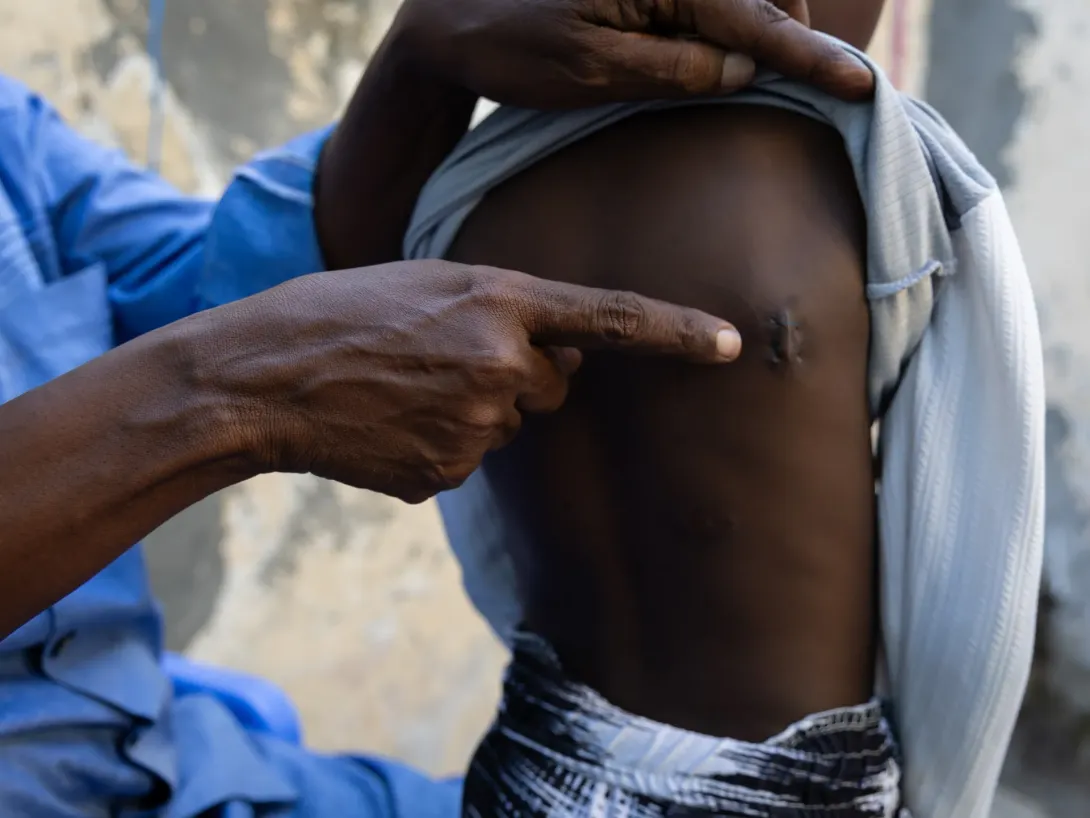
The observed consequences are clearest at household level. Abdiqadir Salah underwent surgery in September 2026 after months with shrapnel embedded near his hip; doctors removed two fragments but left another because of paralysis risk. His mother remained in Mogadishu for access to treatment and could not resume the family’s farming and livestock work. Other families described debt, separated children, lost income and continuing medical needs. These are documented burdens, regardless of which force is ultimately found responsible. (hiiraan.net)
Outlook
Three observable developments would indicate whether accountability is catching up with operations. First, AFRICOM could reopen the Jamaame assessment and document whether investigators collected local testimony and medical evidence. Second, Washington and Mogadishu could publish clearer procedures for reviewing harm during joint air-ground operations, including how responsibility is divided. Third, any acknowledgement, assistance or compensation would show that civilian-response mechanisms function beyond internal assessment. Continued strikes without comparable disclosure would widen the evidentiary gap; more detailed investigations could narrow it even if individual allegations remain unproven.