Egypt’s Saudi defence offer points to air and maritime support, not a Yemen ground war
Cairo can reinforce Saudi air, missile and maritime defence, but the available evidence supports a bounded protective mission—not an Egyptian ground campaign in Yemen.
Overview
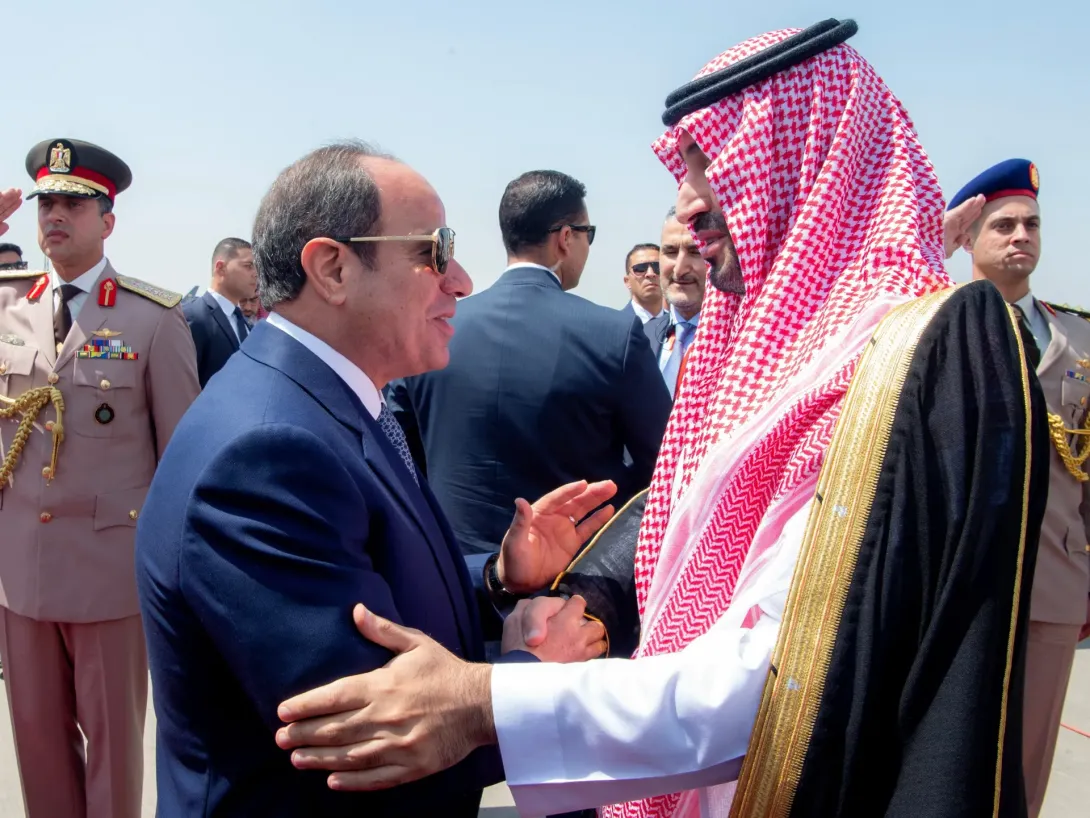
Egypt’s most plausible contribution to Saudi Arabia is a limited defensive package: air and missile-defence support, counter-drone operations, intelligence sharing and naval protection in the Red Sea. That judgment goes beyond Cairo’s verified pledge, which did not specify forces or equipment. Such assistance could relieve pressure on Saudi coverage and interceptor stocks while signalling regional solidarity, but it would not eliminate mobile Houthi launch capabilities inside Yemen. The decisive constraint is political and operational scope: defending Saudi territory is materially different from joining offensive operations or deploying ground forces into Yemen. ([presidency.eg](https://www.presidency.eg/en/%D9%82%D8%B3%D9%85-%D8%A7%D9%84%D8%A3%D8%AE%D8%A8%D8%A7%D8%B1/%D8%A3%D8%AE%D8%A8%D8%A7%D8%B1-%D8%B1%D8%A6%D8%A7%D8%B3%D9%8A%D8%A9/news18102026/?utm_source=openai))
Facts
- On October 18, 2026, Egypt’s National Defense Council pledged all necessary and possible support to protect Saudi security, territory, resources and Islamic holy sites. Its public statement did not announce a troop deployment. ([presidency.eg](https://www.presidency.eg/en/%D9%82%D8%B3%D9%85-%D8%A7%D9%84%D8%A3%D8%AE%D8%A8%D8%A7%D8%B1/%D8%A3%D8%AE%D8%A8%D8%A7%D8%B1-%D8%B1%D8%A6%D8%A7%D8%B3%D9%8A%D8%A9/news18102026/?utm_source=openai))
- President Abdel Fattah El-Sisi requested parliamentary authority for defensive action if Saudi Arabia asks Egypt for assistance. The House scheduled an emergency session for October 18. ([sis.gov.eg](https://sis.gov.eg/en/media-center/news/parliament-to-hold-emergency-session-sunday-on-sisi-s-call/?utm_source=openai))
- Under Article 152 of Egypt’s constitution, an overseas combat mission requires consultation with the National Defense Council and approval by two-thirds of the House of Representatives. ([thenationalnews.com](https://www.thenationalnews.com/news/mena/2026/10/18/egypt-pledges-support-for-saudi-arabia-as-houthis-warn-cairo-against-military-intervention/))
- Saudi Arabia has sought air-defence help from several allies amid reported pressure on its missile-interceptor inventory, according to two regional officials cited by The Associated Press. ([apnews.com](https://apnews.com/article/895320bde6dc589cebb628b63832c38a))
- Egypt previously contributed naval and air forces to the Saudi-led coalition formed in 2015 and has more recently participated in Saudi military exercises and Red Sea maritime cooperation. ([aljazeera.com](https://www.aljazeera.com/news/2026/10/18/what-help-can-egypt-offer-saudi-arabia-in-the-war-against-the-houthis))
Egypt’s offer is best understood as an attempt to add defensive depth around Saudi Arabia without assuming responsibility for the Yemen war. The immediate military problem is not a lack of Saudi combat power in the abstract. It is the strain created by protecting widely separated airports, cities, oil infrastructure, military facilities and religious sites against repeated missiles and drones. Regional officials told The Associated Press in September that Riyadh was seeking allied air-defence support as interceptor stocks came under pressure. Egyptian personnel, sensors or defensive units could therefore have value by covering selected sites, widening surveillance or releasing Saudi assets for other sectors. ([apnews.com](https://apnews.com/article/895320bde6dc589cebb628b63832c38a))
Analysts interviewed by Al Jazeera identified air and missile defence, counter-drone operations, intelligence sharing and naval escort as the most credible forms of help. This is an assessment, not confirmation of a deployment package. Egypt’s previous air and naval participation with Saudi Arabia demonstrates a capacity to contribute to coalition operations, while recent maritime cooperation provides a framework for protecting Red Sea traffic. Naval patrols, escort missions and information sharing would also connect Saudi territorial defence to Egypt’s direct interest in keeping Bab el-Mandeb and the Suez route open. ([aljazeera.com](https://www.aljazeera.com/news/2026/10/18/what-help-can-egypt-offer-saudi-arabia-in-the-war-against-the-houthis))
The distinction between reinforcement and intervention is crucial. Deploying defensive teams on Saudi territory would expose Egyptian forces to attack, but it could remain geographically and politically bounded. Sending ground forces into Yemen, by contrast, would require sustained logistics, place Egypt inside a complex civil war and revive the strategic memory of Cairo’s costly 1960s Yemen campaign. Even successful air defence would mitigate attacks rather than remove their source: mobile launchers can disperse, conceal themselves and continue operating from difficult terrain.
Cairo’s public language reflects that limit. El-Sisi framed possible action as conditional on a Saudi request and said Egypt was not seeking to attack anyone. The National Defense Council’s October 18 statement paired military support with intensified diplomatic work, leaving room for assistance ranging from political coordination to an operational deployment. Until the government identifies forces, systems and rules of engagement, claims that Egypt has entered the war—or will send troops into Yemen—go beyond the verified record. ([presidency.eg](https://www.presidency.eg/en/%D9%82%D8%B3%D9%85-%D8%A7%D9%84%D8%A3%D8%AE%D8%A8%D8%A7%D8%B1/%D8%A3%D8%AE%D8%A8%D8%A7%D8%B1-%D8%B1%D8%A6%D8%A7%D8%B3%D9%8A%D8%A9/news18102026/?utm_source=openai))
Context / evidence
The capability case rests on experience rather than a disclosed 2026 deployment plan. Egypt has operated naval and air elements alongside Saudi Arabia, joined exercises and has an immediate security interest in the Red Sea approaches to the Suez Canal. Those facts establish familiarity with coalition coordination and maritime protection; they do not prove that Egyptian units can be integrated quickly into Saudi air-defence networks. The operational demand is also clear: repeated missile and drone attacks have forced Saudi Arabia to defend airports, oil facilities, military sites, cities and holy places across a large territory. Separately, renewed fighting around Bab el-Mandeb has increased the importance of naval surveillance and escort. ([apnews.com](https://apnews.com/article/895320bde6dc589cebb628b63832c38a))
Counterpoint / knowledge gaps
The strongest counterargument is that even a nominally defensive deployment could free Saudi forces for offensive operations in Yemen, making Cairo an indirect combat participant and inviting Houthi retaliation. The Houthis have already warned Egypt against intervention. Defensive systems could also become involved across the border if launch sites are targeted under an expanded interpretation of self-defence. Material gaps prevent a firmer assessment: neither government has publicly confirmed a Saudi request, force composition, deployment timetable, rules of engagement, command structure or geographic limits. Egypt has not disclosed what equipment or interceptor stocks it could spare. These details would determine whether the initiative materially improves Saudi defence or remains primarily a political signal. ([thenationalnews.com](https://www.thenationalnews.com/news/mena/2026/10/18/egypt-pledges-support-for-saudi-arabia-as-houthis-warn-cairo-against-military-intervention/))
Impact
For Saudi decision-makers, Egyptian assistance could distribute the burden of protecting critical sites and strengthen deterrence by showing that continued attacks may draw in another major Arab military. For Egypt, a bounded mission could protect strategic relations, citizens in the kingdom and Red Sea economic interests. The observed effect so far is political: Cairo has publicly tied Saudi security to Egyptian and Arab security. Any military effect remains prospective because no detailed deployment has been confirmed. For Yemenis, a wider coalition could increase escalation and displacement if defensive cooperation expands into strikes or support for ground offensives; it could also reduce incentives for attacks if deterrence improves. ([presidency.eg](https://www.presidency.eg/en/%D9%82%D8%B3%D9%85-%D8%A7%D9%84%D8%A3%D8%AE%D8%A8%D8%A7%D8%B1/%D8%A3%D8%AE%D8%A8%D8%A7%D8%B1-%D8%B1%D8%A6%D8%A7%D8%B3%D9%8A%D8%A9/news18102026/?utm_source=openai))
Outlook
Three observable decisions will define the mission. First is whether parliament grants authority and publishes any limits. Second is whether Riyadh formally requests assistance. Third is whether subsequent announcements identify deployed units, equipment or command arrangements. A narrow scenario would involve liaison officers, intelligence, naval patrols and counter-drone or air-defence teams protecting designated Saudi sites. A broader scenario would add combat aircraft or expanded Red Sea operations, increasing escalation risks. Evidence of strikes from Egyptian platforms inside Yemen, or Egyptian ground units crossing the border, would mark a fundamental change from territorial defence to direct participation. Continued diplomacy without deployments would indicate that Cairo’s pledge is being used mainly for deterrence and alliance reassurance.