Voter Turnout Crucial in Texas Elections, Says Expert
The upcoming Texas elections may hinge on voter turnout, with changing demographics and concerns over policy playing pivotal roles.
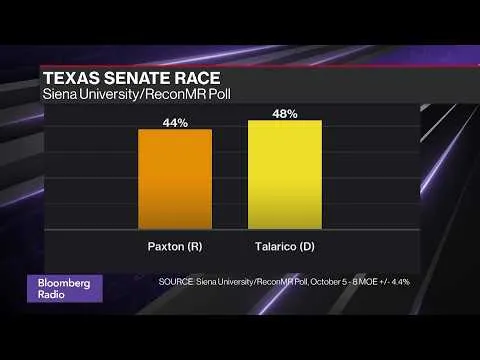
Overview
The decisive factor in the upcoming Texas elections is likely to be voter turnout, influenced by demographic shifts and concerns about policy issues like immigration enforcement. This analysis examines how these dynamics shape the political landscape, with particular attention to the role of Latino voters and the societal demand for change.
Facts
- Don Levy is the director of the Siena Research Institute.
- Levy highlighted that change is a priority for Texas voters.
- Latino voters are a key demographic in the Texas elections.
- Some voters express concerns over ICE's immigration tactics.
- The Democratic party is not seeing a notable increase in popularity in Texas.
Main narrative
The political spotlight is once again on Texas as the state's elections loom on the horizon. Voter turnout is predicted to be the critical factor determining the outcome, according to Don Levy, director of the Siena Research Institute. While the Democratic party hasn't seen a rise in its popularity, Texans' desire for change remains a significant driver, and voting is perceived as a channel to facilitate betterment in their lives.
Demographic Shifts and Latino Influence
Over recent years, Texas has experienced noteworthy demographic shifts, especially with its growing Latino population. This demographic is poised to play a decisive role in the upcoming elections. Levy highlights that Latino voters in Texas and other Sunbelt states find themselves at the crux of political strategies targeting ethnic groups that traditionally have lower turnout rates. On issues particularly pertinent to Latino communities, such as immigration, harsher enforcement tactics by ICE have been met with concern. Many voters feel these tactics overreach and infringe on personal freedoms and humane treatment principles. Such perceptions stir broader debates over immigration policy, influencing voter motivation.
The Fault Lines of Political Change
A prevalent theme among voters, Levy suggests, is the overarching desire for change, cutting across party lines. This sentiment doesn't necessarily translate to a surge in Democratic support but signals a deep-seated need among voters to see tangible improvements in their economic and social conditions. However, the challenge remains: can parties effectively mobilize this sentiment into actionable turnout?
The complexity of turnout does not solely hinge on party issues but on broader societal challenges. As demographics shift, so too must political strategies, emphasizing inclusion and addressing constituent concerns. This challenge is particularly pressing in areas with increasing diversity, where traditional campaigning must adjust to resonate with the nuanced priorities of mixed communities.
The Weight of Turnout
Turnout is the lever upon which Texas's political future might pivot. In past elections, low turnout among younger voters and minorities has often skewed results. Mobilizing these groups holds the potential to reshape the political map. Still, this task is formidable, demanding resources, outreach, and responsiveness to the community’s unique challenges and aspirations. The battle for turnout is not only a fight for immediate political gain but a broader struggle to engage citizens in the democratic process. High turnout can drive significant shifts, setting precedents for future elections and governance approaches.
Context / evidence
Don Levy's analysis forms the basis of this overview, emphasizing that Texas voters are motivated by a desire for change, though there's no significant rise in Democratic party popularity. The fight for Latino votes and concerns over immigration strategies like ICE enforcement are central issues influencing voter behavior.
Counterpoint / knowledge gaps
A credible counterpoint suggests that while turnout is vital, structural aspects like gerrymandering and voter suppression could have a greater impact on the election results, overriding demographic changes. However, detailed data on voter suppression's effects remains elusive. More precise longitudinal studies could provide insights into how these factors truly influence electoral outcomes in Texas.
Impact
The outcome of the Texas elections could significantly alter the political landscape, particularly regarding policy directions in immigration and ethnic diversity inclusion. Institutions may face increasing pressure to adapt to demographic realities, with turnout influencing future political strategy and policy-making decisions across Sunbelt states, addressing socio-economic disparities and public sentiment toward immigration enforcement policies like those of ICE.
Outlook
Future electoral outcomes in Texas hinge on whether turnout increases among key demographics like Latino voters, and how parties respond to concerns over issues like immigration enforcement.