Globalization Is Not Retreating — It Is Becoming Harder and Costlier to Navigate
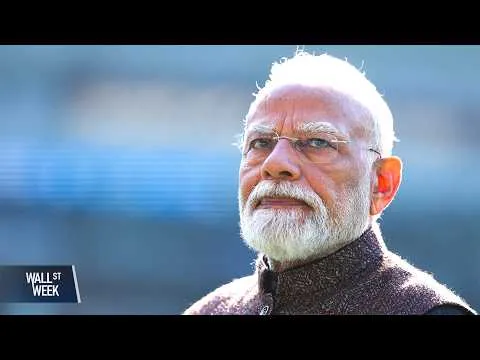
Modi’s warning in New Delhi captures a shift from efficiency-led integration toward managed interdependence. Trade remains resilient, but access to technology, energy and investment increasingly depends on security, political alignment and diversification.
Overview
Globalization is not simply reversing; it is becoming a more conditional system in which governments and companies preserve cross-border trade while reducing exposure to politically sensitive suppliers, technologies and transport routes. Narendra Modi’s October 13 warning against turning interconnected systems into geopolitical chokepoints identifies the central risk. The analytical judgment is that resilience now requires duplication, diversification and political judgment, making globalization more expensive and complicated even when headline trade continues to grow. (pmindia.gov.in)
Facts
- The Bloomberg New Economy Forum was held in New Delhi from October 13 to October 15, 2026, its first edition hosted in India. Bloomberg had announced that more than 500 public- and private-sector leaders were expected to attend. (bloombergmedia.com)
- Prime Minister Narendra Modi addressed the forum on October 13, 2026. He said supply chains, energy, minerals, technology and payment systems were being used as instruments of pressure and described former connections created by globalization as potential chokepoints. (pmindia.gov.in)
- The WTO’s October outlook forecast merchandise trade volume growth of 3.9% in 2026 and 4.1% in 2027. It forecast commercial services trade growth of 3.3% in 2026. (wto.org)
- Trade in AI-enabling products increased 67% year on year in the first half of 2026 and accounted for nearly half of the growth in global merchandise trade value, according to the WTO. (www-server1.wto.org)
- A January 2026 UN Trade and Development estimate put India’s 2025 foreign direct investment inflows at $47 billion, an increase of 73%, with investment concentrated in services, research and development, information technology and manufacturing. (unctad.org)
Main narrative
For much of the late 20th and early 21st centuries, companies treated globalization primarily as an optimization problem: locate each activity where costs were lowest, connect suppliers through predictable logistics and use global financial and technological networks to increase scale. The New Delhi debate points to a different operating environment. Efficiency still matters, but executives must also assess whether an export licence could be withdrawn, a payment channel restricted, an energy route disrupted or a technology supplier placed beyond reach.
Modi’s language about weaponization is therefore more than a criticism of protectionism. It describes how infrastructure originally designed to connect economies can confer leverage on whoever controls a concentrated node. A semiconductor fabrication cluster, critical-mineral processing base, cloud platform, shipping passage or dominant payment network can be both an engine of integration and a source of strategic vulnerability.
The corporate response is not necessarily withdrawal behind national borders. More often it involves adding suppliers, holding additional inventory, dividing production among regions and accepting some duplication in exchange for continuity. This is globalization reorganized around resilience. It can keep goods moving during a shock, as the WTO’s 2026 data indicate, but it also adds costs and requires companies to make political assumptions that conventional procurement models were not designed to handle.
India is competing within that reorganization. Its large domestic market, services sector and ambition to expand manufacturing give it a credible claim on investment seeking alternatives or additional capacity. UN Trade and Development’s preliminary estimate of a 73% rise in India’s 2025 FDI inflows is consistent with increased investor interest, but it does not by itself prove a durable relocation of global production. (unctad.org)
The strategic tension is that India is presenting itself simultaneously as a beneficiary of diversification and a defender of broadly shared globalization. Those positions can coexist if diversification produces a wider network of capable suppliers rather than closed political blocs. They become harder to reconcile if industrial policy, export controls and security restrictions lead countries to reserve critical markets primarily for allies.
The evidence therefore supports a bounded conclusion: globalization remains economically powerful, but its governance is becoming more contested. Companies are not only choosing where production is cheapest; they are deciding which dependencies are politically tolerable. Countries seeking redirected capital must consequently offer more than low costs. They need reliable infrastructure, predictable regulation, skilled labor and confidence that supply commitments can survive the next crisis.
Context / evidence
The New Delhi discussion occurred against two apparently conflicting trends. Governments are scrutinizing dependencies in semiconductors, energy, critical minerals and digital infrastructure, but aggregate trade has continued to expand. The WTO attributed stronger-than-expected merchandise trade in early 2026 partly to supply chains adjusting to energy and fertilizer disruption and partly to extraordinary demand for AI infrastructure. Alternative suppliers limited global declines even after Middle Eastern crude oil and liquefied natural gas exports fell sharply in the first half. (wto.org)
This evidence establishes adaptability, not immunity. AI-related trade is highly concentrated: the WTO estimates that the ten largest traders accounted for about 85% of exports and 80% of imports of AI-enabling goods in 2025. Its 2026 World Trade Report separately modelled a geopolitical-bloc scenario in which global GDP would be 5.1% lower and exports 18.6% lower. Those are simulated long-term outcomes rather than forecasts, but they quantify the stakes if managed diversification becomes full fragmentation. (wto.org)
Counterpoint / knowledge gaps
The strongest counterpoint is that resilient trade data may describe adaptation rather than a decisive break with globalization. The WTO says the gap between trade within and across geopolitical blocs narrowed through 2025 and into 2026, even as US-China decoupling accelerated. Nearly three-quarters of merchandise trade was still conducted under most-favoured-nation treatment in early 2026. (www-server1.wto.org)
Evidence about corporate responses in the supplied Bloomberg item is limited. It does not identify the business leaders, quantify supply-chain changes or show whether announced diversification produced lower risk or higher returns. India’s estimated FDI increase also does not establish that investment displaced from another country moved directly to India. The thesis would be tested by company-level data on supplier concentration, inventories, capital expenditure and production transfers, alongside finalized FDI figures and sector-specific project completion rates.
Impact
The observed effect is a redistribution of attention and capital toward resilience, alternative suppliers and strategically important technologies, rather than a documented collapse in international commerce. The concentration of AI trade means its rapid growth can lift global totals while leaving many economies outside the most valuable supply networks.
For companies, the plausible implication is higher expenditure on redundant capacity, compliance, inventories and risk monitoring. For governments, investment promotion increasingly overlaps with energy, technology and national-security policy. India may gain factories, research operations and export capacity if announced investments are completed, but the reporting record does not establish the scale of resulting production or employment. Smaller economies face the greatest risk if competing standards and preferential blocs make market access depend more heavily on political alignment.
Outlook
Three observable paths matter. In an adaptation scenario, supplier diversification and alternative transport routes continue while aggregate trade meets the WTO’s 2026 and 2027 forecasts. In a concentration scenario, AI investment supports headline growth but leaves countries and companies dependent on a small group of technology producers. In a fragmentation scenario, additional tariffs, export controls, payment restrictions and investment screening deepen bloc-based trade.
India’s position should be judged through realized manufacturing investment rather than announcements alone. Indicators include finalized FDI inflows, new export capacity, the share of imported components in strategic industries, logistics performance and whether projects progress from approval to production. Globally, the clearest tests will be the share of trade receiving most-favoured-nation treatment, changes in inter-bloc trade and the geographic concentration of AI, energy and critical-mineral supply chains.