Special Reports
Yemen’s Renewed Fighting Pushes Children Out of School
One child’s move from lessons to market work reveals how warfare reaches education through displacement, road closures, lost income and rising costs.
In south-west Yemen, renewed fighting is turning displacement, closed schools and disrupted trade into a household survival crisis that is pushing children towards work.
The September 2026 escalation converted military pressure into educational exclusion by displacing families, closing schools and disrupting the roads and incomes on which household survival depends; the mechanism is well supported, but its child-labour prevalence and individual strike responsibility remain unproven.
- Renewed fighting in south-west Yemen is removing children from education through connected pressures: displacement, school closures, lost livelihoods, disrupted roads and rising household costs. The effect extends beyond schools directly exposed to violence.
- The documented experience of 13-year-old Muneer Farie supports this mechanism. After his family fled al-Wazeyah for Ash Shamayatayn, he and his brother began selling low-cost goods rather than attending school. IOM data corroborate substantial movement along the same displacement corridor. (theguardian.com)
- The evidence does not establish the prevalence of newly induced child labour or responsibility for the reported missile near a Taiz school. Yemen’s pre-existing poverty and education crisis remain major causes; the September escalation has sharply intensified them.
130,000+ People displaced by late September
A late-September UN and reporting snapshot; subsequent IOM updates rose sharply.
73,494 Displaced people hosted in Taiz
IOM update published September 21, covering movements through September 20.
3.2 million Children already out of school
UNICEF estimate for the period before the latest escalation.
600+ Pupils affected by one reported closure
The enrolment figure for Musaab Ibn Umayr school has not been independently verified.
184,000+ Displaced between August 1 and October 4
IOM estimate published October 5; its October 7 update subsequently reached 201,217.
Central Finding
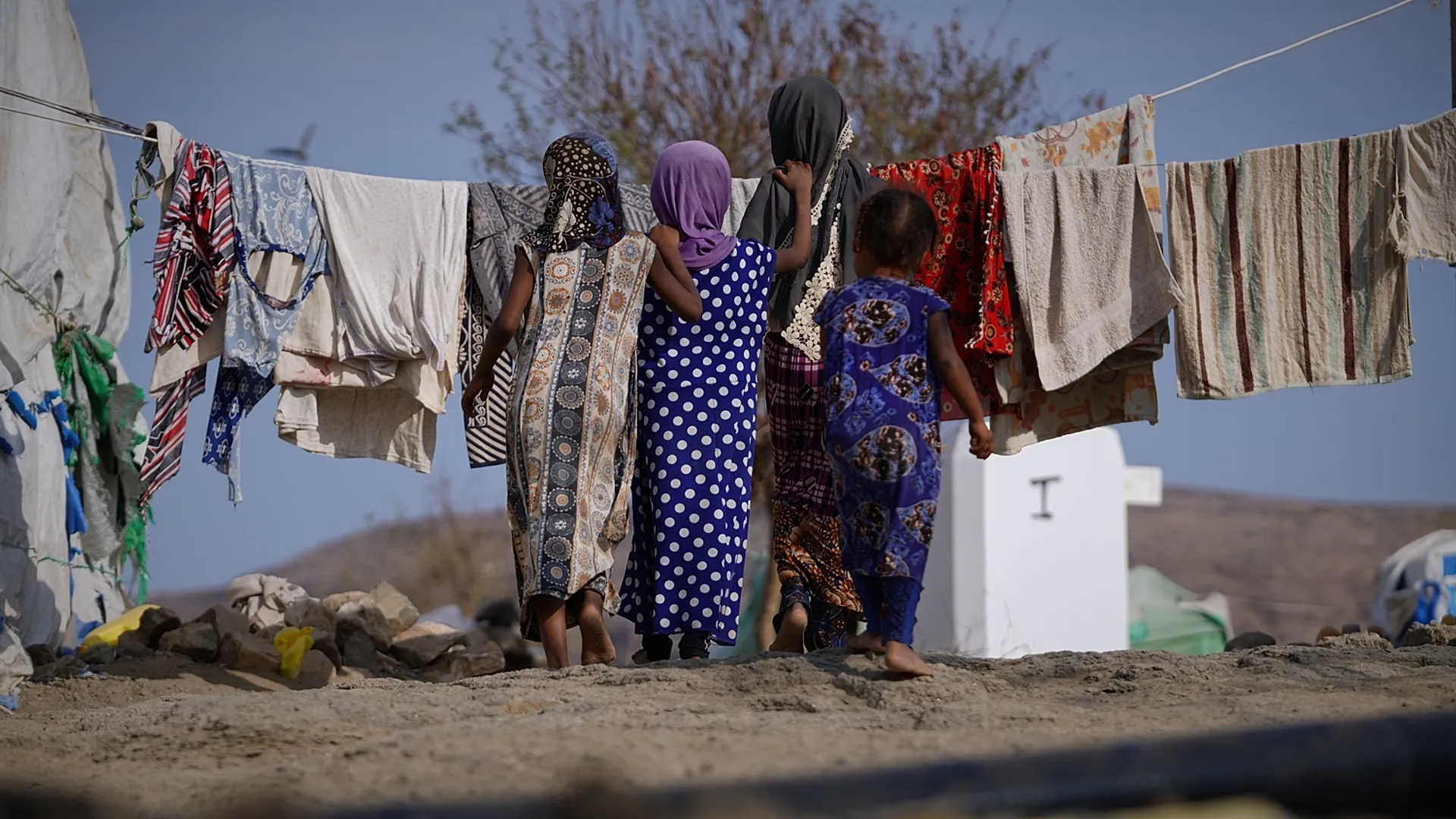
Muneer Farie’s mornings once belonged to school and his afternoons to helping his farming family with livestock. After fighting reached the area around his village in al-Wazeyah, the 13-year-old fled with his family. He and his brother now sell socks and other inexpensive goods near a displacement camp instead of attending lessons. (theguardian.com)
His experience illustrates a wider finding: warfare excludes children from education not only by striking classrooms. It removes them by making homes unsafe, closing schools, destroying household income and raising the cost of food and transport until a child’s earnings become part of a family’s survival strategy.
A Taiz headteacher reported closing Musaab Ibn Umayr school after an explosion nearby terrified pupils, interrupting education for more than 600 children. This new disruption falls upon a country where UNICEF estimated that around 3.2 million children were already out of school before the escalation. (unicef.org)
“For now, I will keep working until the war ends.” ([theguardian.com](https://www.theguardian.com/world/2026/sep/28/yemen-fighting-houthis-families-flee-displacement))
Scope & Evidence Standard
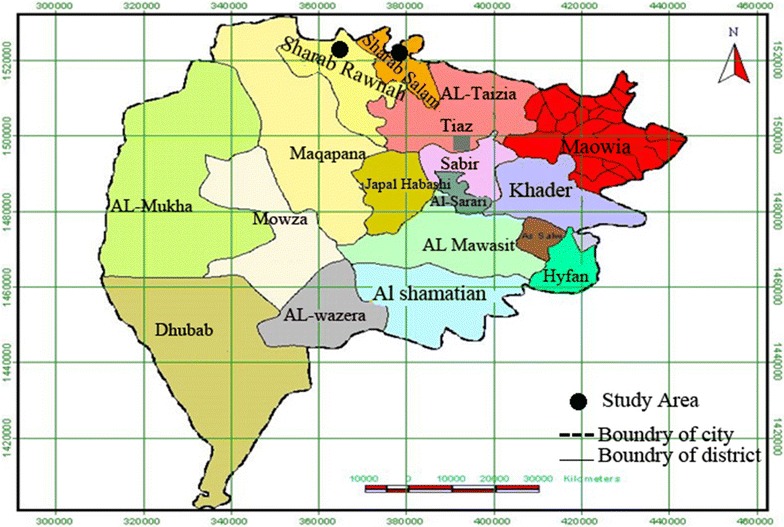
This report examines civilian effects in Taiz and adjoining south-western routes from the early-September offensive through October 7, 2026. Its principal human accounts were published on September 28; displacement totals have been updated with dated IOM releases because the population movement continued rapidly. (theguardian.com)
First-person testimony is treated as evidence of individual experience, not proof of regional prevalence. IOM tracking corroborates large movements from Al Waziyah and into districts including Ash Shamayatayn, but it does not independently identify Muneer’s family or confirm the precise camp where they stayed. (dtm.iom.int)
The available record establishes widespread displacement, interrupted schooling and pressure on household resources. It does not establish who fired the projectile reported near the school, quantify a definitive increase in child labour, verify every territorial claim or provide a complete commodity-price series for Taiz.
The evidence establishes disruption and hardship, not responsibility for every reported strike.
Original Reporting & Human Stakes
Muneer had hoped to become the first teacher in his family. As fighting approached, distant explosions and gunfire entered the school day. His family left al-Wazeyah with livestock and essential belongings, travelled south-west and arrived at a displacement site in Ash Shamayatayn without money or basic supplies. (theguardian.com)
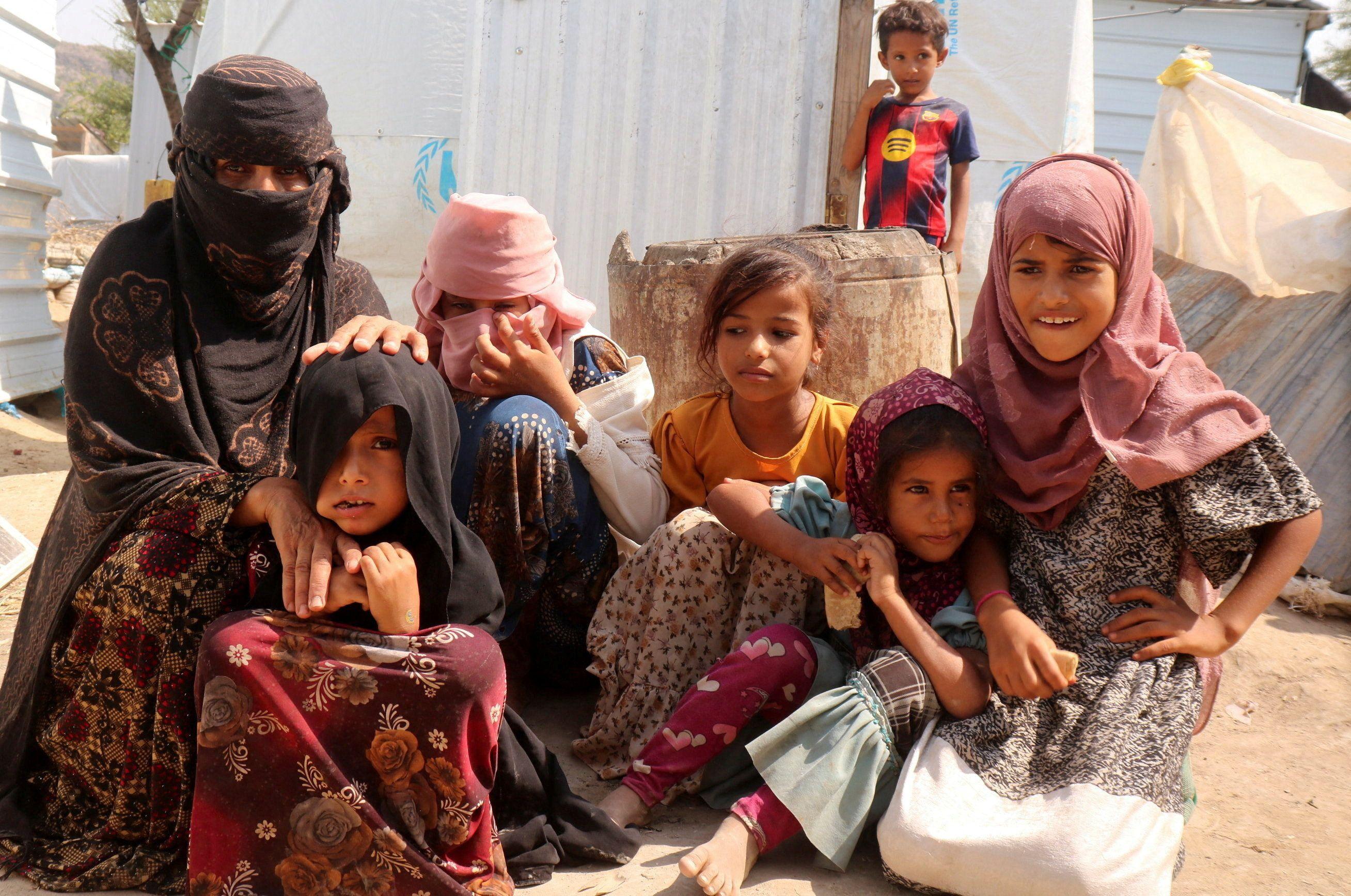
The family of eight crowded into a small tent. Muneer’s father, Ghaleb Farie, asked his sons to work because the household lacked enough food, water and other necessities. Their market sales are modest, but the decision reveals the altered calculation: education carries a future return, while food and water require income immediately.
Elsewhere in Taiz, principal Abdulwasea Abdu tried to keep his school open until the nearby explosion produced panic and signs of distress among children. Carpenter Essam Nabil reported that harder-to-obtain goods were becoming less affordable. Asaad, a worker in Saudi Arabia, described being forced back onto a longer and costlier route through Aden. (theguardian.com)
For displaced households, a child’s future income can be displaced by the need for cash today.
Evidence & Key Findings
By late September, UN and published reporting described more than 130,000 people as newly displaced. An IOM update published September 21, covering movements through September 20, placed the cumulative total since the broader escalation began in June at 129,438, including 73,494 people hosted in Taiz. (dtm.iom.int)
The education measures describe a different dimension. UNICEF estimated that around 3.2 million children were already out of school before the latest fighting. The reported closure of Musaab Ibn Umayr school added more than 600 pupils to the immediate disruption, although that local count has not been independently confirmed. (unicef.org)
IOM reported on October 5 that more than 184,000 people had been displaced between August 1 and October 4. By the October 7 verification cutoff, its latest release put the figure at 201,217 people, or 33,776 households. The later totals update an accelerating count; they do not contradict the earlier snapshots. (iom.int)
The rising totals are successive measurements of a moving crisis, not competing estimates.
| People displaced | |
|---|---|
| Mid-Sep | 76000 |
| End-Sep | 145000 |
| Oct 4 | 184000 |
| Oct 7 | 201217 |
Context & Timeline
Houthi forces captured Sanaa in September 2014. A Saudi-led coalition intervened in March 2015 after the internationally recognized government requested assistance against the Houthi advance. The ensuing war fragmented institutions, damaged infrastructure and displaced millions. (yemen.un.org)
The UN-mediated truce began on April 2, 2022, and was extended until October 2. It then expired without renewal. Even so, the parties generally avoided a return to full-scale war, and front lines remained comparatively quiet well beyond the formal agreement. (un.org)
That restraint broke under the 2026 escalation. The Houthis advanced along the Red Sea coast and towards strategic routes around Taiz. In early October, the internationally recognized government announced an operation intended to recover Houthi-held territory, while battlefield control around Mocha and the Taiz corridors remained contested and rapidly changeable. (apnews.com)
The 2022 truce expired; the restraint it produced lasted much longer.
| Conflict timeline | |
|---|---|
| Sanaa seized, 2014 | 1 |
| Saudi-led intervention, 2015 | 2 |
| Truce begins, Apr 2022 | 3 |
| Truce expires, Oct 2022 | 4 |
| Houthi advance, Sep 2026 | 5 |
| Government operation, Oct 2026 | 6 |
Mechanism & Accountability
The first link is exposure. The Houthi advance, resistance by government-aligned forces and Saudi air operations brought missiles, airstrikes and ground fighting closer to populated areas. The available evidence supports responsibility among the belligerents for creating the broader danger, but not attribution of the projectile reported near the school. (theguardian.com)
The second link is displacement and closure. Families flee with limited assets; schools suspend classes when staff judge attendance unsafe. A displaced household then faces new shelter, water and food expenses while losing land, livestock access, wages or established customers. IOM warns that such conditions can drive harmful coping strategies, including child labour. (iom.int)
The third link runs through transport and prices. Fighting severed or disrupted major routes connecting Taiz with Mocha and Aden, increasing journey times and constraining commercial movement. Taiz already faced high prices and weak purchasing power before September, so the latest closures act upon little remaining household resilience. (apnews.com)
The classroom is lost after several systems fail, not only when a school is struck.
| Pressure intensity | |
|---|---|
| Fighting | 1 |
| Displacement | 2 |
| School closure | 3 |
| Road disruption | 4 |
| Income squeeze | 5 |
| Child work | 6 |
Responses & Right of Reply
Presidential Leadership Council chair Rashad al-Alimi said the government operation was intended to recover territory held by the Houthis. Saudi military spokesperson Turki al-Malki asserted the kingdom’s right to take measures to deter Houthi attacks. (apnews.com)
The Houthis have presented their cross-border campaign as targeting Saudi interests and have claimed missile and drone attacks on oil facilities and other sites. Some claims were published without supporting evidence, and they do not answer questions about civilian protection in areas of Houthi ground advances. (apnews.com)
UNICEF and IOM have called for civilian protection, safe humanitarian access and expanded assistance. None of the available public positions specifically addresses the reported school closure, road-related household costs or what measures the parties took to keep children safely in education. (unicef.org)
Strategic objectives have been stated more clearly than safeguards for children and displaced families.
Counterevidence, Unknowns & Limits
The September escalation did not create Yemen’s education crisis. UNICEF’s 3.2 million figure predates it, while earlier 2026 assessments found steep increases in Taiz rice and diesel prices. Long-running conflict, economic collapse and underfunded services had already reduced families’ ability to keep children in school. (unicef.org)
The strongest supportable conclusion is therefore that renewed fighting intensified existing deprivation and introduced immediate new shocks. It displaced specific families, closed at least one reported school and disrupted routes, but no representative survey yet shows how many children newly entered employment or how long they will remain there.
Important records remain absent: verified enrolment and reopening data for Musaab Ibn Umayr school, forensic evidence concerning the nearby explosion, comparable commodity prices before and after each road closure, and systematic testimony from girls. Camp counts may also miss families living with hosts or in informal sites.
Muneer’s case demonstrates a mechanism; it does not measure its national prevalence.
Consequences & What Comes Next
The most immediate indicators are practical: whether schools reopen safely, major roads remain accessible, staple prices stabilize and new displacement slows. Camp access to water, shelter and cash also matters because families unable to meet basic needs are more likely to depend on children’s work.
Education recovery requires more than unlocking existing classrooms. Displaced communities may need temporary learning spaces, replacement materials, rehabilitated buildings and psychosocial care for children exposed to explosions and flight. UNICEF reports that these are already elements of its Yemen response. (unicef.org)
Muneer said he would work until the war ended. That statement sets a harder test than changes on a military map: whether security, road access and assistance arrive soon enough for his withdrawal from education to remain temporary. If households continue to require children’s earnings, territorial movement alone will not constitute civilian recovery.
Recovery begins when families can survive without replacing a child’s classroom with a workplace.
Yemen’s education and household crises did not begin in September 2026. Millions of children were already out of school, Taiz markets faced high food and fuel costs, and prolonged conflict had eroded livelihoods and public services. The renewed offensive is therefore better understood as an accelerant than as the sole cause of child labour and educational exclusion. (unicef.org)
That qualification does not break the reported causal chain. The timing of Muneer Farie’s flight, his immediate move into market work, the school closure and the rapid increase in displacement all indicate a distinct new shock. What remains unproven is how representative his experience is and how many children entered work specifically because of this escalation. (theguardian.com)
The evidence supports with high confidence the finding that renewed fighting has intensified educational exclusion through displacement, insecurity and economic pressure. The connection is visible in household testimony and consistent with IOM and UNICEF assessments of harmful coping risks.
Confidence is moderate on the narrower proposition that the escalation has produced a broad, measurable rise in child labour. Muneer’s case is credible and causally coherent, but representative data are not yet available. Improvement should be judged by school return and household independence from children’s earnings, not by territorial claims alone.
Confidence: High confidence in the disruption mechanism; moderate confidence in the scale of newly induced child labour.