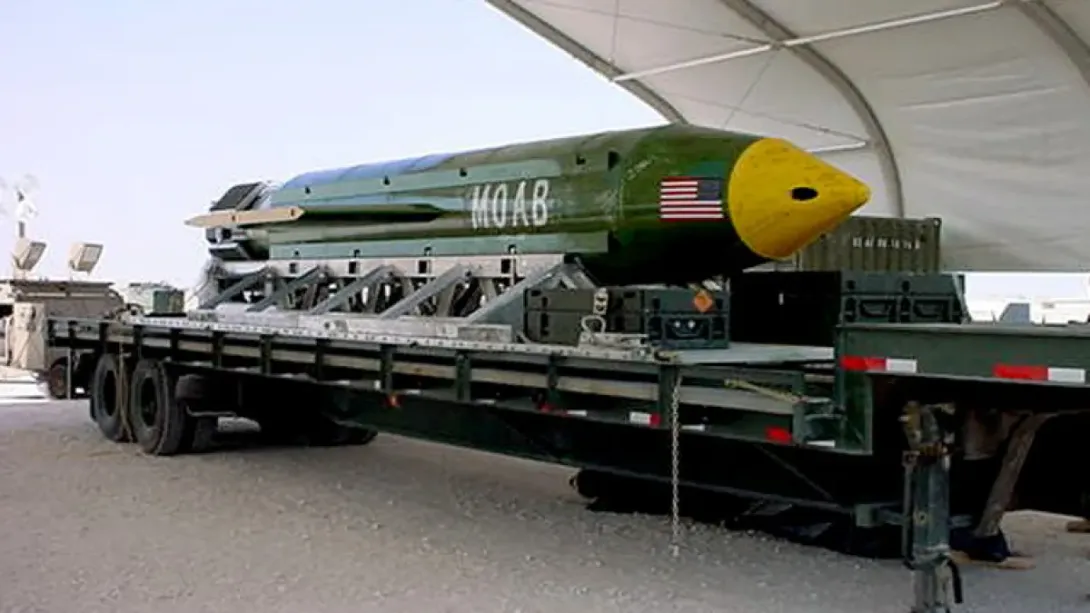
What is the ‘Mother of All Bombs’ US could use in Iran?
Discover what the Massive Ordnance Air Blast (MOAB), known as the 'Mother of All Bombs,' entails and its potential implications.
The Short Answer
The 'Mother of All Bombs' (MOAB) is a large-yield bomb designed for destroying surface targets such as bunkers and tunnels. Its potential use in Iran remains speculative and raises questions about military strategy and humanitarian impact.
Focal Verification
Information is based on Department of Defense records and publicized military usage.
Focal Facts
- MOAB is a large-yield, non-nuclear bomb.
- Used first in combat in Afghanistan in 2017.
- Weighs 21,600 pounds and guided by GPS.
- Equivalent to 11 tons of TNT in explosive power.
Key Actors
- MOAB — Massive Ordnance Air Blast
- US Air Force — Responsible for MOAB deployment
- Iran — Potential target of MOAB deployment
Focal Timeline
- MOAB Developed
- First Operational Use in Afghanistan
Focal Evidence
The development and operational use of the MOAB have been documented by the US Department of Defense and observed in military actions, particularly in Afghanistan.
Gaps in the Record
- Potential use in Iran
- Long-term environmental effects
Focal Outlook
- What would be the strategic objectives of using MOAB in Iran?
- How do international laws view the use of large-yield bombs?
- What are the potential humanitarian impacts if used in populated areas?
Full Explanation
The Massive Ordnance Air Blast (MOAB), often referred to as the "Mother of All Bombs," is one of the most powerful non-nuclear weapons in the US arsenal. Its large yield and devastating capability are designed for destroying surface targets like bunkers and tunnel complexes. As tensions between the US and Iran occasionally rise, discussions speculate on the potential use of such weaponry.
What Makes MOAB Unique?
The MOAB, developed by the US Air Force Research Laboratory, was introduced in 2003. It is a 21,600-pound GPS-guided munition with an explosive yield equivalent to 11 tons of TNT. The bomb is distinctive for its size and lethal radius, with the capability to obliterate targets within a large surface area. Unlike precision-guided missiles, the MOAB is designed to cover extensive land zones, ideal for situations where broad surface destruction is required.
How Has MOAB Been Used?
The first use of the MOAB in combat was recorded on April 13, 2017, during a strike against ISIS positions in Afghanistan's Nangarhar Province. This operational deployment aimed to destroy tunnel networks and bunkers. The strike was reported to have killed multiple insurgents and demonstrated the bomb's strategic capability in penetrating and destroying fortified positions.
Could MOAB Be Used in Iran?
While there is no confirmed plan for using the MOAB against Iran, its capabilities make it a theoretical option against specific installations deemed strategic by military planners. Iran's vast array of hardened military infrastructure, including underground bunkers, aligns with MOAB's designed targets. However, military strategists must weigh potential civilian casualties and international ramifications.
What Are the Consequences of Using the MOAB?
Deploying the MOAB can lead to significant humanitarian and environmental impacts. The detonation of large-yield weapons, especially in populated areas, risks high civilian casualties and extensive property damage. Furthermore, such a move could escalate international tensions and potentially violate international humanitarian laws depending on usage cases.
Why Is MOAB's Use Controversial?
The controversy surrounding the use of the MOAB stems largely from its potential for causing mass destruction and civilian casualties. Advocacy groups and geopolitical analysts often debate its deterrent value against the humanitarian cost. Moreover, the strategic necessity of employing such a powerful bomb in a complex geopolitical environment like Iran's remains contentious, calling into question the proportionality and ethical implications of its use.