Trump’s Russia sanctions waiver exposes Congress’s leverage problem
The bipartisan backlash is politically significant, but the law Congress passed gave the president broad discretion to suspend its central penalties, leaving lawmakers with few immediate remedies.
Overview
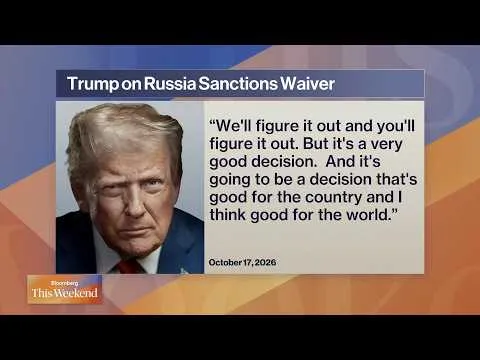
Trump’s waiver of new Russia sanctions has exposed a gap between Congress’s declared policy and the authority it actually retained. The backlash is bipartisan, but the central analytical judgment is that lawmakers constrained their own leverage by approving a broad national-interest waiver sought by the administration. That matters because congressional criticism, however forceful, does not itself restore the sanctions. The dispute is therefore becoming a test not only of Republican unity over Ukraine, but of whether Congress is willing and able to revise the legal discretion it recently delegated.
Facts
- The Lindsey O. Graham Sanctioning Russia and Iran Act became law on September 18, 2026, and directed the executive branch to review and impose specified sanctions and trade measures.
- Section 115 permits the president to waive any sanction, restriction or duty under the act after submitting a national-interest certification and an explanatory report to Congress.
- An executive order released late on October 16 waived duties and specified sanctions under the act. It said the required certification and report had been submitted.
- The order states that the waivers remain effective until the president or designated administration officials determine that further action is appropriate.
- On October 13, 12 senators, including six Republicans, urged Trump to rescind the Russian diesel arrangement and implement the new sanctions authorities.
- The House and Senate were in recess when the waiver was announced and were not scheduled to return until after the November 3 midterm elections.
Main narrative
The immediate political story is a Republican break with Trump over Russia. Senators Thom Tillis and John Cornyn publicly condemned the waiver, while an earlier letter opposing the diesel arrangement united Republican senators with Democrats. Bloomberg News White House correspondent Jeff Mason described the decision as producing criticism across party lines and adding strain to Washington’s relationship with Ukraine.
The deeper institutional story is less favorable to Congress. Lawmakers passed a measure intended to compel economic pressure on Russia, but they also authorized the president to waive its sanctions, restrictions and duties after making a national-interest certification. Trump used that provision immediately before the bulk of the law’s measures were due to operate. The order did not set a fixed expiration date; instead, it left restoration of the waived measures to a later executive-branch determination.
That structure turns the dispute from a straightforward confrontation over compliance into an argument over delegated discretion. Critics can plausibly say the waiver defeats the policy Congress overwhelmingly endorsed. They cannot as easily say that the waiver authority was hidden or absent. The administration publicly highlighted presidential discretion before passage, and lawmakers enacted the provision despite warnings that Trump might use it broadly.
This distinction affects what happens next. Bipartisan disapproval may damage the administration politically, particularly because diesel prices and the November 3 elections have connected foreign policy to household costs. It may also complicate Republican candidates’ efforts to present a unified position on Russia and Ukraine. But public objections do not automatically reactivate the waived measures.
Congress could pass a new restriction or attempt to block the diesel arrangement, but timing and presidential veto power favor the White House. Both chambers were away when the order was issued, limiting the possibility of an immediate legislative response. Even after lawmakers return, opponents would need agreement not merely that Trump made the wrong decision, but that Congress should reclaim authority it recently chose to delegate.
The waiver therefore exposes a recurring legislative problem: large bipartisan majorities can express a policy preference while leaving the decisive implementation choice with the president. Unless the current backlash produces a change in law, oversight or funding, the practical Russia policy will remain the administration’s policy, not the position implied by Congress’s original vote.
Context / evidence
The institutional weakness was visible before the waiver. A July 28 administration policy statement supported the sanctions bill while emphasizing that it preserved “full Presidential discretion on waivers.” The enacted statute subsequently allowed waivers based on a national-interest certification, without requiring advance congressional approval.
Congress nevertheless presented the law as a means of increasing pressure on Russia and major purchasers of Russian energy. Before the October 18 implementation deadline, senators from both parties pressed the State and Treasury departments to target revenue channels and Russia’s sanctions-evasion fleet. After Trump announced the diesel arrangement, a separate bipartisan group of 12 senators argued that relaxing restrictions would offer little price relief while weakening pressure on Moscow. These records establish a genuine policy split, but they also show that the executive discretion now being criticized was part of the enacted framework.
Counterpoint / knowledge gaps
The strongest counterpoint is that Trump is using authority Congress knowingly granted, rather than simply disregarding the statute. The administration explicitly sought full presidential discretion over waivers while the bill was being debated. The White House now argues that imposing sanctions would obstruct negotiations for a Russia-Ukraine peace agreement. On that reading, flexibility was part of the law’s design, and sanctions can be restored if diplomacy fails.
What remains unclear is the administration’s evidentiary basis. The executive order says a certification and explanatory report were submitted to Congress, but the reporting reviewed for this analysis does not establish their full contents or whether lawmakers will release them. It is also too early to measure the diesel arrangement’s effect on prices, Russian revenue or negotiations. Those outcomes would test whether the waiver served the stated national interest or primarily removed pressure from Moscow.
Impact
For Ukraine, the observed institutional consequence is that the additional US pressure anticipated under the September law has been suspended rather than activated. The record reviewed does not establish the waiver’s battlefield or diplomatic effects.
For Congress, the episode shifts attention from rhetoric to procedure. Members who oppose the waiver must decide whether to demand the underlying national-interest justification, rewrite the waiver authority or accept that the president is exercising discretion they approved. For the administration, the waiver preserves negotiating and economic flexibility but makes it responsible for demonstrating that sanctions relief advances peace or affordability. Failure to show either result could widen the Republican split and weaken congressional trust in future sanctions legislation.
Outlook
The next decision point comes when Congress returns after the November 3 elections. A durable challenge would require more than statements: lawmakers could advance legislation restricting the waiver, block the diesel arrangement, demand the administration’s certification and report, or use hearings and appropriations to raise the political cost of continued relief. Any measure facing a presidential veto would require an unusually broad and disciplined coalition.
The clearest indicators will be whether Republican leaders schedule votes, whether committees seek the waiver’s supporting record, and whether the administration restores any penalties or uses pre-existing sanctions authorities against Russian revenue networks. If criticism produces no institutional action, the episode will confirm that the statute functions chiefly as a menu of presidential options. If Congress narrows the waiver, it would mark a substantive reassertion of legislative control over Russia policy.
Sources
- Implementing the Lindsey O. Graham Sanctioning Russia and Iran Act of 2026
- United States Code, Title 22, Chapter 115
- Senate Amendment to H.R. 5334 — Statement of Administration Policy
- Bipartisan senators call on Trump to rescind Russian diesel deal
- Trump’s decision to waive Russian sanctions outrages Congress
- Trump Faces GOP Backlash Over Russia Sanctions