Rishikesh Kumar’s case tests whether IIT support connects care, housing and academics
The death of IIT Delhi student Rishikesh Kumar has shifted attention from whether counselling exists to whether medical, academic, housing and grievance systems work together.
This article discusses suicide.
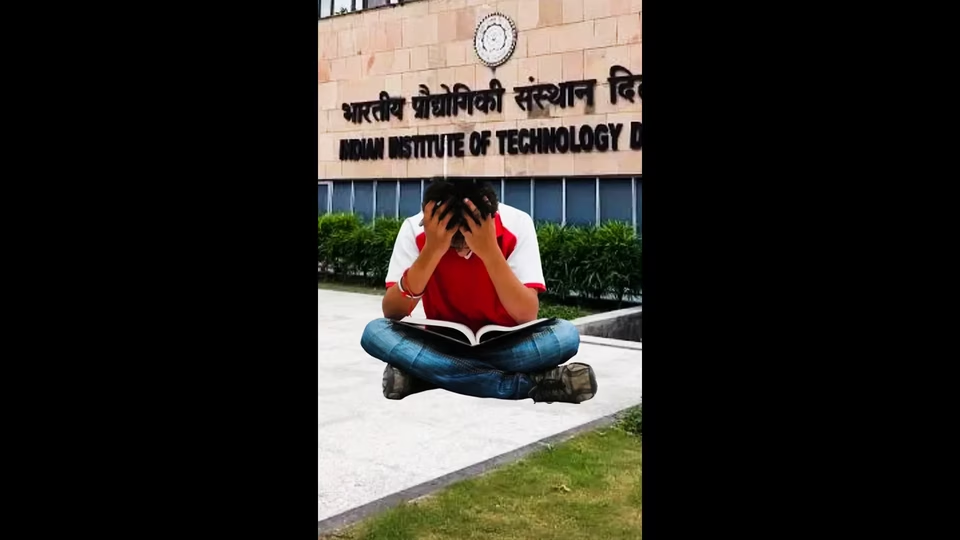
Rishikesh Kumar reached an institution that represents one of India’s most powerful educational aspirations. He joined IIT Delhi’s MSc physics programme in July 2025, lived in a campus hostel and, according to the institute, performed well during his first semester. After experiencing mental-health difficulties in March 2026, he received treatment and withdrew from the following semester. He returned in July, but died on August 22 after falling from a campus building. Al Jazeera’s November 28 report returned attention to his death and to the support available inside India’s elite technical institutions. (aljazeera.com)
The analytical question raised by Kumar’s case is narrower than whether IIT Delhi had counselling. The institute says that it had 15 on-campus counsellors, one full-time psychiatrist and two part-time psychiatrists when he died. It also says Kumar received counselling and treatment support in July and August, that medical advice called for continued parental supervision, and that his requests to withdraw from the January-May and July-November semesters were approved. Those facts indicate that parts of a support system were operating. They do not establish whether the system responded adequately to his circumstances as a whole. (home.iitd.ac.in)
That distinction matters because a student returning after serious illness does not interact with a counselling service alone. Re-entry can involve medical advice, academic status, project allocation, accommodation, communication with relatives, financial pressures and decisions about how much independence the student can safely exercise. If those functions operate separately, each office may complete its formal task while the student still encounters an unmanageable sequence of decisions.
Kumar’s family and protesting students alleged that his difficulties included accommodation and academic-project arrangements. IIT Delhi offered a different account centred on the medical support provided and the approval of his semester withdrawals. These positions are not necessarily complete opposites: it is possible for clinical support and academic flexibility to have been provided while disagreements remained about how a return to campus should be managed. But the public record does not permit a finding that any particular decision caused Kumar’s death. Delhi Police registered an abetment-of-suicide case against unidentified people after protests, while IIT Delhi established an external inquiry. (indiatoday.in)
The inquiry’s aftermath supports a bounded institutional judgment. IIT Delhi said the committee, chaired by retired Delhi High Court judge Mukta Gupta and including an AIIMS expert and student representatives, submitted its report but required the detailed document to remain confidential. The institute subsequently announced additional clinical recruitment, an independent student grievance ombudsperson, staff sensitisation and a review of its mental-health and wellness policy. Most significantly, it promised formal re-entry protocols combining counselling, academic coordination and peer support for students returning from extended leave. (home.iitd.ac.in)
Those measures do not prove what happened in Kumar’s individual case. They do, however, identify the kind of organisational gap that can exist even on a comparatively well-resourced campus: the absence of a clearly owned pathway connecting treatment with everyday academic life. A referral to a psychiatrist answers a clinical need. A semester withdrawal provides administrative relief. Neither automatically determines where a returning student will live, how unfinished work will be resumed, who monitors changing needs or where the student can challenge a decision without approaching the same hierarchy that made it.
The problem extends beyond IIT Delhi, although conditions differ widely among Indian institutions. The Supreme Court established a national task force in March 2025 to examine student mental health, discrimination, academic pressure, financial burdens and institutional accountability. Its interim report argued that suicide cannot be reduced to a single mental-health diagnosis and described campus support as fragmented and insufficiently evaluated. (api.sci.gov.in)
The task force’s preliminary institutional survey received responses from 2,119 higher-education institutions, only 3.5% of those approached. More than 70% of respondents appeared to have no full-time mental-health provider, fewer than 4% reported an established suicide-risk management protocol, and fewer than one in five reported a formal link with nearby professional services. The task force explicitly cautioned that the low and uneven response made these findings non-representative. The figures therefore cannot describe every Indian campus, but they identify practical weaknesses requiring better national measurement. (cdnbbsr.s3waas.gov.in)
A credible counterpoint is that institutions cannot eliminate suicide risk, and no support model can guarantee an outcome. Students may also avoid available services because of stigma, privacy concerns or fear that disclosure will affect their academic standing. The task force itself describes suicide as a complex interaction of personal vulnerability, social pressures, discrimination, financial strain, isolation and triggering events. Institutional accountability should therefore not be confused with an assumption that one administrator, policy or missed intervention explains every death.
The appropriate test for IIT Delhi’s reforms is implementation rather than the number of programmes announced. Evidence would include whether additional clinicians are hired, whether the ombudsperson is demonstrably independent, how quickly students obtain care, and whether every return from extended medical leave receives a coordinated plan covering study, housing and follow-up. Publication of anonymised data on service use, waiting times, grievances and re-entry outcomes would make assessment possible without exposing individual medical information.
IIT admission carries a cultural promise that exceptional performance opens a stable path to achievement. Kumar’s death does not by itself explain the pressures experienced across the IIT system. It does challenge a narrower assumption embedded in that promise: that reaching an elite institution means a student will be able to navigate its systems when illness interrupts the expected path. Counselling capacity is essential, but the stronger protection is continuity—someone, and some accountable process, connecting care to the conditions in which a student must continue living and studying.