Putin's Strategy: Testing NATO Unity Amid Ukraine Crisis
Heather Conley's insights on Putin's strategy reveal a calculated push against NATO's resolve as tension escalates over Ukraine.
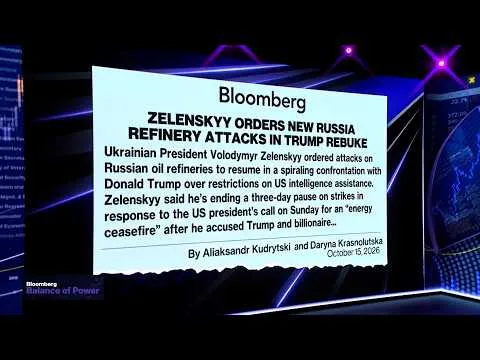
Overview
Heather Conley argues that Russian President Vladimir Putin is testing NATO's unity by intensifying pressure on Ukraine. As uncertainty over US intelligence sharing and support grows, this moment is crucial for assessing NATO's cohesive response. Conley's insights carry significant implications for global security and the balance of power in Europe.
Facts
- Heather Conley is a senior fellow at the American Enterprise Institute (AEI).
- Conley is also a senior advisor at Evenflow Macro LLC.
- She previously served as Deputy Assistant Secretary of State in the Bureau of European and Eurasian Affairs.
- Conley asserts that Vladimir Putin sees an opportunity to test NATO's unity over Ukraine.
- Russian military actions are reportedly threatening Ukraine's economy and approaching NATO territory.
- There is growing uncertainty about the consistency of US support for Ukraine.
Main narrative
Russian President Vladimir Putin is reportedly seeking to exploit perceived cracks within NATO by intensifying pressure on Ukraine. Heather Conley, a senior fellow at the American Enterprise Institute and a seasoned expert in European and Eurasian affairs, contends that recent Russian actions near NATO borders indicate a deliberate strategy to probe the alliance’s unity. With the shadow of uncertainty over the consistency of US support to Ukraine, these developments are closely watched as potential signals of larger geopolitical shifts.
US Support and NATO Cohesion
Conley argues that the rising frequency of Russian attacks threatening Ukraine's economic stability also serves to test the alliance's resolve. The specter of shifting US intelligence-sharing policies and access issues, such as with Starshield, further complicates the scenario. US political dynamics play a significant role in shaping NATO's collective actions, especially as internal debates over military aid and international commitments continue.
Amid these tensions, Putin seems intent on assessing whether internal disagreements might lead to a weakening of NATO's unified stance. Conley's assessment highlights these maneuvers as part of a broader attempt to recalibrate the balance of power in Europe. This is particularly poignant given the strategic importance of Ukraine and its proximity to several NATO members.
Economic and Military Ramifications
The economic vulnerability of Ukraine, exacerbated by ongoing military actions, underscores the urgency of Conley's concerns. Should these pressures continue unabated, they risk undermining Ukraine's ability to sustain itself economically and militarily. This could lead to a more significant security dilemma for NATO, compelling the alliance to consider more robust defensive measures or diplomatic interventions.
Addressing these threats involves not only coordinated military deterrence but also diplomatic strategies aimed at reaffirming solidarity among member states. Conley's insights suggest that these challenges must be met with a unified response to preserve the integrity of the alliance and maintain stability in the region.
Context / evidence
Conley's comments were made during an interview on Bloomberg's 'Balance of Power,' where she highlighted the strategic implications of Putin's actions for NATO's cohesion. Her assertion that Russia is testing NATO comes in the context of growing concerns over the alliance's internal dynamics, particularly as US political commitment to Ukraine fluctuates. The proximity of Russian attacks to NATO borders is a critical aspect, signaling potential risks of wider conflict.
Counterpoint / knowledge gaps
The chief counterpoint to Conley's perspective is the argument that NATO remains robust and well-coordinated, as evidenced by recent joint military exercises and public reassurances by key member states. Critics may also point out that Russian military capabilities, while significant, are not unlimited, and economic sanctions have strained Russia's resources. Additionally, some analysts believe that the risk of direct confrontation with NATO is a deterrent for Russia. The key knowledge gap remains whether internal dissent within NATO could grow due to political changes in member countries, which could affect unity and resolve.
Impact
The impact of Putin's tactics could manifest in NATO's military and political strategies. Sustained disunity could weaken the alliance's ability to respond effectively to future threats, possibly emboldening not only Russia but other global powers. Additionally, Ukraine's stability could suffer, affecting regional economies and security. Conley's analysis implies that NATO's response will be crucial in mitigating long-term geopolitical risks, ensuring that efforts are made to present a cohesive front against external pressures.
Outlook
Future scenarios hinge on NATO's response mechanisms and political developments in member countries. Monitoring US foreign policy shifts will be crucial as they directly influence NATO's collective stance toward Russian aggression.