Yemeni Forces Push for Sanaa: Sky High Ambitions, Grounded Realities
Yemeni government forces focus on capturing the capital, Sanaa, marking a potential turning point in the protracted conflict against Houthi rebels. However, the complexity of Yemeni geopolitics and military dynamics presents significant challenges to achieving a decisive victory and stabilizing the region.
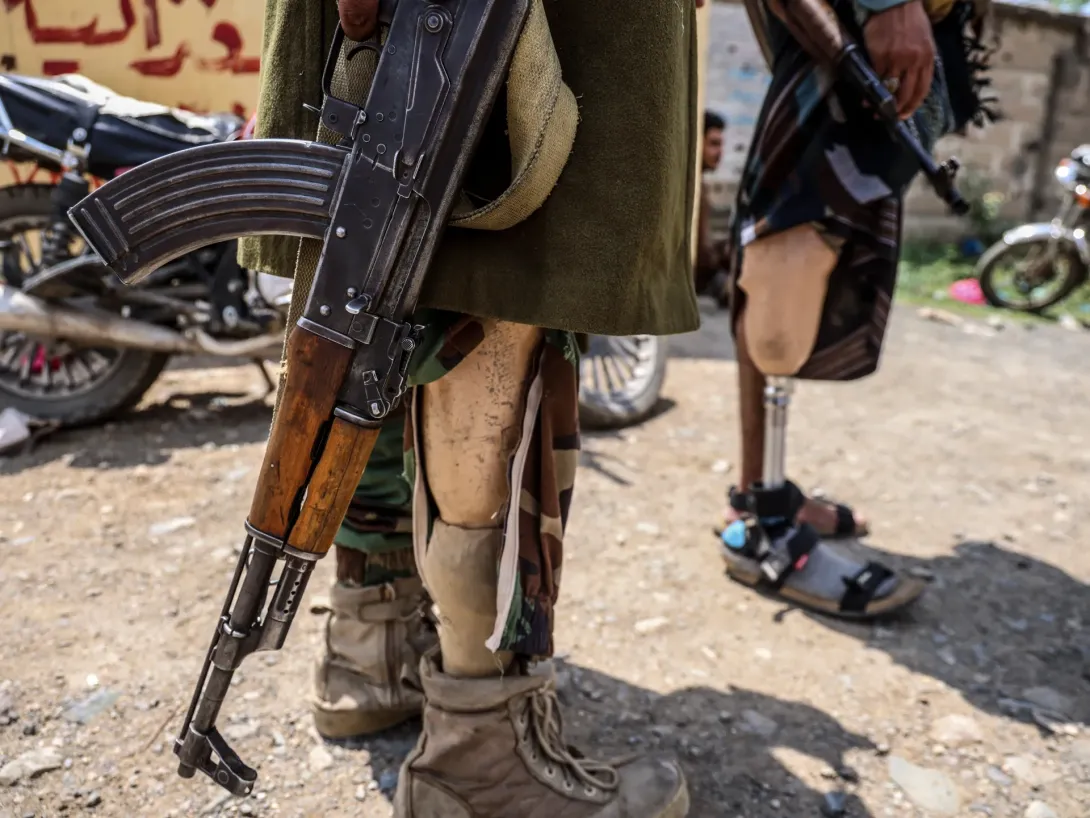
Overview
The Yemeni government's military push towards Sanaa could mark a pivotal chapter in the ongoing conflict with Houthi rebels, though achieving a decisive victory remains fraught with challenges.
Facts
- The Yemeni government forces aim to recapture Sanaa from the Houthi rebels.
- The Houthis currently control significant territories, including Sanaa.
- Regional actors like Saudi Arabia and Iran are heavily involved in the conflict.
- The conflict has caused a humanitarian crisis, with millions in need of aid.
- Previous attempts to seize control have been met with strong resistance.
Main narrative
The renewed focus of Yemeni government forces on seizing Sanaa signals a critical phase in the protracted struggle against Houthi rebels, a fight that has exhausted both sides and devastated the nation. As government troops advance, they face a formidable adversary in the Houthis, who command significant control over northern Yemen, including the capital, Sanaa, which they captured in 2014.
Forces loyal to President Abdrabbuh Mansur Hadi, backed by a Saudi-led coalition, are ramping up military efforts aimed at reversing this long-standing stalemate. The stakes are high: recapturing Sanaa would serve both as a decisive blow to the Houthis and a symbolic victory for the government. However, the path forward is fraught with obstacles. The Houthis, supported by regional power Iran, are adept in guerrilla warfare and have been able to leverage Yemeni geography — characterized by rugged mountains and dense urban settings — to mount effective defensive operations.
One critical aspect of this conflict is the intricate web of regional politics. Saudi Arabia and Iran's involvement isn't just about supporting their respective allies. Their strategies are part of broader geopolitical maneuvers in the Middle East that have deep historical roots and widespread implications. Saudi Arabia views the containment of Houthi influence as crucial to maintaining its regional hegemony, while Iran perceives its backing of the Houthis as a counter to Saudi expansionism.
However, this focus on military solutions risks neglecting the profound humanitarian disaster unfolding in Yemen. Millions remain on the brink of famine, and the constant threat of violence only exacerbates the dire need for humanitarian aid. The war has already displaced millions and strained resources across the region.
While optimism might suggest that reversing the tide for Sanaa could pressure the Houthis into peace negotiations, historical precedent cautions against expecting military victories to translate neatly into political stability. Efforts outside pure military engagement, such as diplomacy that addresses not only the intervening powers' interests but also the local grievances and tribal dynamics, are critical.
In understanding this, the international community's role becomes pivotal. Supporting diplomatic channels and providing humanitarian relief, alongside urging a ceasefire, could create an environment conducive to peace talks. However, rigid alliances and vested interests mean achieving a consensus that leads to lasting peace might remain elusive, requiring persistent and reinforced efforts. Such efforts should focus on inclusive governance structures that incorporate all elements of Yemeni society, rather than merely reinstating the status quo ante.
Context / evidence
Data from various reports suggest ongoing engagement by Yemeni government forces aiming to reclaim territory from the Houthis. The Houthis, adept in asymmetric warfare, fortified their positions over years of conflict, making military advances challenging. Additionally, regional involvements add complexity to direct military strategies, as both Iranian support for Houthis and Saudi backing for the Yemen government create additional layers to the conflict. Saudi Arabia has previously launched airstrikes targeting Houthi positions, but the geographical and logistical challenges, coupled with humanitarian consequences, remain significant.
Counterpoint / knowledge gaps
While the offensive to capture Sanaa is underway, several counterarguments and uncertainties remain. The resilience and adaptability of Houthi forces are often underestimated. They have deep-rooted support in northern Yemen and possess advanced weaponry, possibly supplied by regional backers like Iran. Historical analysis shows that external interventions often face significant difficulties due to local terrain and guerilla warfare tactics employed by the Houthis. Furthermore, a mere military victory may not ensure peace, as underlying political and tribal grievances risk prolonging instability, potentially leading to a power vacuum or new insurgencies.
Impact
The strategic success of Yemeni government forces in capturing Sanaa could significantly alter the geopolitical landscape of the Middle East, reinforcing Saudi influence while pressuring Iran to reconsider its regional strategy. However, failure to manage the humanitarian implications and underlying grievances could result in either a prolonged conflict or a temporary victory without durable peace.
Outlook
If the Yemeni government manages to sustain its momentum and capture Sanaa, the move could apply significant pressure on the Houthi rebels to reconsider their position and potentially reenter peace negotiations. Such a development might reshape the regional power dynamics, offering Saudi Arabia a strengthened geopolitical position while urging Iran to reassess its strategies in Yemen. However, achieving lasting peace will require more than military victories; addressing the deep-rooted political, tribal, and humanitarian issues is crucial. Without a comprehensive approach that includes diplomacy and reconciliation, any gains are unlikely to translate into long-term stability or peace, risking further cycles of conflict and instability in the region. The road ahead is challenging, demanding persistent international engagement and a commitment to resolving Yemen's myriad underlying issues.