Pochettino can save Manchester United, but the Liverpool rout did not reveal how
United remain 19th after a 4-0 defeat at Liverpool, but an overturned early red card makes Pochettino’s debut a poor guide to whether he can repair them.
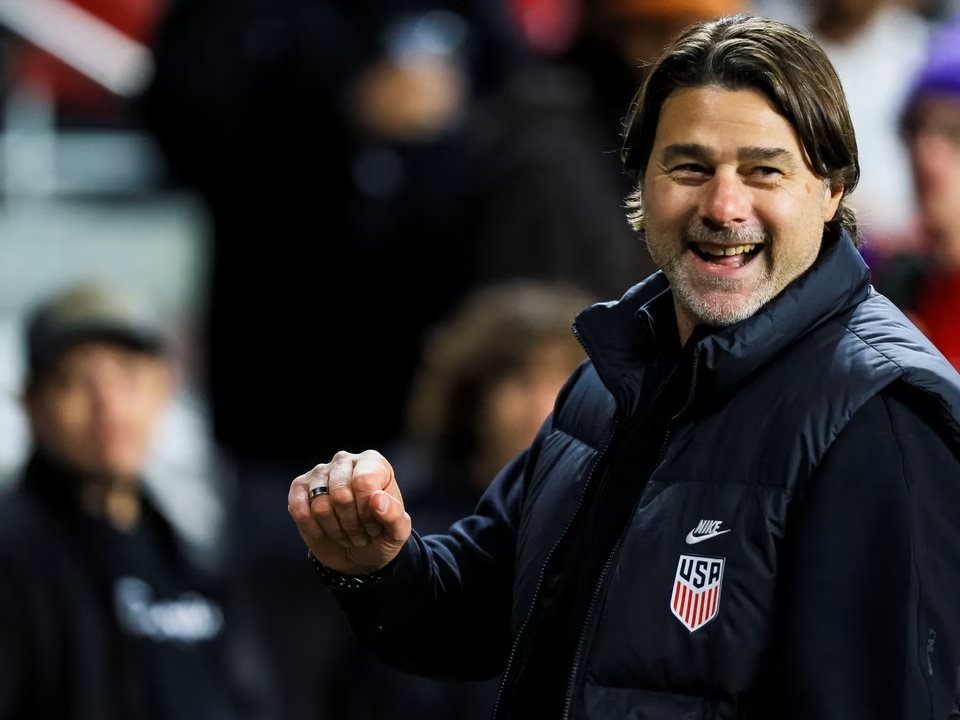
Mauricio Pochettino’s Manchester United tenure began with a 4-0 loss at Liverpool on November 22, leaving the club 19th in the Premier League with eight points from 11 matches. The result intensified an authentic relegation threat: United have won once, conceded 23 league goals and possess a negative-nine goal difference. They are not merely enduring an embarrassing position created by a crowded early table; they have accumulated points at relegation pace. (premierleague.com)
Yet the score at Anfield is a poor starting point for judging whether Pochettino can reverse that trajectory. Leny Yoro was dismissed after eight minutes, and Liverpool scored four times against the resulting 10-man side. On November 24, the defender’s suspension was removed following United’s successful claim of wrongful dismissal. That decision does not invalidate Liverpool’s victory or recover the points, but it establishes that the game’s defining intervention should not have stood. Pochettino’s first match therefore offered abundant evidence of United’s vulnerability under pressure but little clean evidence about how his intended system functions with equal numbers. (premierleague.com)
The bounded judgment is that Pochettino should be capable of keeping United up, primarily because the rescue does not require an immediate restoration of elite performance. It requires a defensive floor: fewer matches lost through exposed spaces, avoidable transitions and early concessions. His problem is urgent, but narrower than rebuilding a title contender.
The weakness predates the red card
The successful appeal offers a credible explanation for the scale of the Liverpool defeat, not for United’s season. Before Pochettino took charge, the club had won only one of its opening 10 league games. The Premier League’s own mid-November assessment identified defensive balance as the priority, while United had already fallen into the bottom three under Michael Carrick. Pochettino inherited the crisis; he did not create it. (premierleague.com)
That distinction matters because changing the formation alone will not be sufficient. Pochettino has commonly used a back four with two central midfielders and three attacking players behind a striker. United’s squad may fit that basic outline more naturally than some previous structures, but a team’s defensive security depends on the distances within it: whether midfielders protect the centre when possession is lost, whether full-backs advance simultaneously, and whether centre-backs are repeatedly forced into open-field duels.
The Yoro incident illustrated the underlying risk even though the dismissal was subsequently judged wrongful. Liverpool reached United’s defensive line with a direct pass and created an immediate confrontation near goal. The appeal changed the disciplinary judgment; it did not make the sequence a model of controlled defending. Pochettino’s first practical task is to reduce the frequency with which one pass turns possession into an emergency.
United’s scoring record suggests the recovery does not have to begin with a complete attacking reconstruction. They have scored 14 league goals, with Bruno Fernandes and Bryan Mbeumo contributing four each. Before the Liverpool match, the Premier League reported an expected-goals total of 17.6, indicating that the team had generated more attacking value than its actual return. Such models are not forecasts, and the timing of that snapshot limits comparison with the post-Liverpool table, but the figures support a cautious inference: defensive stabilisation may produce points faster than an attempt to redesign every phase at once. (premierleague.com)
A rescue needs pragmatism before philosophy
Pochettino said upon his appointment that his staff wanted to create something with their own philosophy and improve the players. The longer-term ambition is understandable, but the table changes the order of operations. United first need repeatable methods for surviving difficult periods: compactness without the ball, safer possession when opponents press and enough control to turn potential defeats into draws. (aljazeera.com)
That approach need not contradict Pochettino’s preference for aggressive football. Pressing can protect a defence by preventing opponents from making uncontested passes, but a poorly coordinated press has the opposite effect: once the first line is beaten, the opposition attacks a stretched midfield and retreating back line. Because Pochettino only began work on November 18, expecting a synchronised high press at Anfield four days later would have been unrealistic. U.S. Soccer had retained him through its November 17 match against Haiti before he formally moved to United. (ussoccer.com)
The serious counterpoint is that managerial competence does not guarantee a straightforward escape. United’s opening record is bad enough that further adaptation costs could become consequential. A squad learning new pressing triggers may initially make more errors, while the pressure attached to every match can encourage hurried tactical changes. The Liverpool dismissal also provides a convenient explanation that could obscure problems visible before the red card and throughout the preceding 10 league games.
There is nevertheless considerable uncertainty on both sides. One match under Pochettino cannot establish improvement, but it cannot establish failure either. The public record does not yet show whether he can improve United’s defensive organisation, maintain player availability or convert their attacking production into more points. Those outcomes must be measured over a sequence of league games played under normal conditions.
United’s November 28 home match against Brentford offers a more useful early test than the Anfield score. Yoro is available after the removal of his suspension, and Pochettino will have had additional training time, although a scheduled Champions League trip to Sporting on November 25 limits the preparation window. (manutd.com)
The indicators are uncomplicated: whether United concede fewer clear openings, remain structurally intact after losing possession and begin collecting points without requiring exceptional attacking performances. If those changes appear, their position can improve before Pochettino’s broader project is visible. If the same transition problems persist with 11 players and longer preparation, the relegation question will cease to be an early-season provocation and become the central test of his appointment.