Pochettino can steady Manchester United’s team, but the deeper repair sits above the head coach
Manchester United’s new head coach can improve tactics, selection and confidence, but ownership, executive accountability and capital allocation remain outside his control.
Mauricio Pochettino can plausibly make Manchester United a better football team. The evidence does not support expecting him to repair the entire institution.
That distinction matters after his first match as head coach ended in a 4-0 defeat at Liverpool on November 22. United remained 19th in the Premier League with eight points from 11 games, but the result was distorted by Leny Yoro’s eighth-minute dismissal. It therefore offered limited evidence about whether Pochettino’s methods will work over time. It did, however, expose the urgency of his task: he inherited a relegation-zone side and a schedule containing 12 matches in 47 days, leaving little uninterrupted training time for structural changes. (premierleague.com)
Pochettino officially began work on November 18 after completing his responsibilities with the United States national team. His immediate authority covers the areas normally available to a head coach: training intensity, tactical organisation, selection, player roles and the standards applied inside the squad. Those levers can have substantial effects. A clearer defensive structure can reduce the exposure of individual defenders; defined attacking patterns can improve shot quality; consistent selection can build partnerships; and credible treatment of players can restore commitment where confidence has deteriorated. (manutd.com)
The problem is that these mechanisms operate downstream from decisions made elsewhere. Recruitment determines whether the squad contains compatible players. Contract strategy affects which footballers can be retained or sold. Executive coordination determines whether the coach, sporting leadership and owners pursue the same timetable. Financial planning controls how quickly mistakes can be corrected. Pochettino can make choices within the squad he inherited, but he cannot independently redesign the ownership settlement, erase previous transfer commitments or decide the club’s long-term allocation of capital.
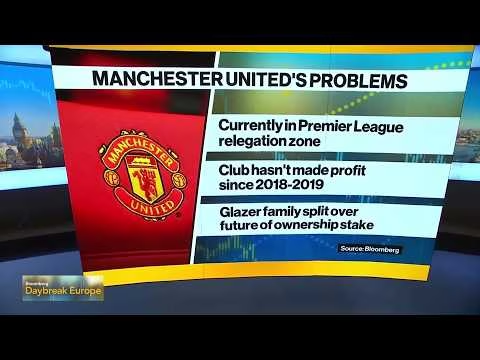
The public record shows why accountability is more complicated than the familiar claim that one manager must “fix” United. At June 30, the Glazer family’s entities controlled 67.91% of the company’s voting power, while INEOS held 28.95%. The original investment agreement gave INEOS oversight and responsibility for football operations, while Manchester United’s annual report says chief executive Omar Berrada oversees both business and football operations. This does not prove dysfunction: divided responsibilities can work when authority is clearly defined and the parties agree on strategy. It does mean that decisive institutional choices involve a governance structure extending well beyond the head coach. (ir.manutd.com)
Bloomberg reported, based on interviews with more than a dozen current and former executives, that Pochettino entered a club affected by competing egos, poor commercial decisions and conflict between its owners. That account is material but cannot be fully tested against the public record because the interview evidence and the specific disputed decisions were not disclosed in the accompanying video description. Public filings establish split ownership, layered authority and financial pressure; they do not by themselves establish a continuing personal clash or show which side caused particular decisions. (youtube.com)
There is stronger documentary evidence of strategic instability in the coaching position. Manchester United announced in May that Michael Carrick had signed a contract running to 2028. Its November 19 financial release then said Carrick had left earlier that month and Pochettino had joined. Changing coaches can be rational when results collapse or confidence in a plan disappears. But reversing a long-term appointment within roughly six months raises a legitimate question about the quality of the original assessment, the support given to the coach and the consistency of the criteria used by decision-makers. (ir.manutd.com)
Repeated resets also have financial consequences. The 2026 annual report recorded £8.2 million in exceptional costs, including costs connected to Ruben Amorim’s departure and restructuring. The preceding year’s exceptional charge included costs associated with Erik ten Hag’s exit and other football staff changes. These figures do not show that replacing either coach was wrong, and they do not isolate the full cost of managerial turnover. They demonstrate that changing direction consumes resources as well as time. (sec.gov)
United retain considerable capacity to recover. The club generated £677.6 million in revenue in the year to June 30, 2026, and reported a third-place Premier League finish for the preceding season. Its November release reiterated full-year fiscal 2027 guidance of £740 million to £760 million in revenue. Those figures challenge any suggestion that the institution is commercially exhausted. Yet the 2026 accounts also recorded a £43 million annual loss, while commercial revenue fell 4.8%. Financial scale provides options, but it does not guarantee that recruitment, contracts and executive decisions will be coherent. (sec.gov)
A credible counterargument is that football results can change the wider atmosphere. A run of victories would reduce external pressure, strengthen Pochettino’s authority and make disputed players more valuable. That is possible, and Carrick’s strong finish to the previous season illustrates how quickly simplified coaching and renewed confidence can alter performance. But a new-manager improvement would still not prove that the governance issues identified by Bloomberg had been resolved; it could temporarily conceal them.
The fair test is therefore divided. Pochettino should be judged on whether United develop recognisable patterns, improve their balance and turn underlying performance into points. The leadership should be judged on whether recruitment fits those patterns, whether public appointments survive foreseeable setbacks and whether authority is clear enough that responsibility cannot move between owners, executives and coach. Evidence of sustained alignment across several transfer windows would weaken the judgment that United’s deeper problem sits above the dugout. Another rapid strategic reversal would strengthen it.