GTA VI’s launch exposes gaming’s cultural power—and its winner-take-most economics
Rockstar’s long-awaited release has become a shared cultural event, but its extraordinary scale should not be mistaken for evidence that the wider games business is healthy.
Overview
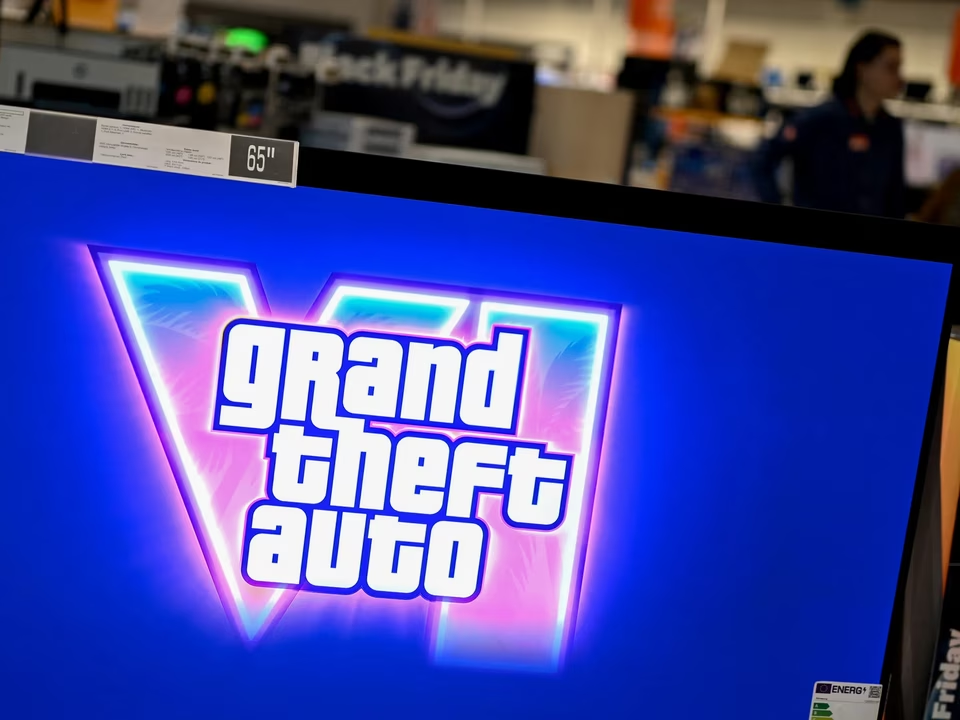
Grand Theft Auto VI’s November 19 release demonstrates that video games now command attention across entertainment, music and public life. The stronger analytical judgment, however, is that GTA VI illustrates concentration rather than universal prosperity: enormous audiences and capital increasingly gather around a small number of established properties while many game workers face instability. One day after release, the cultural reach is visible, but official launch-sales data are not yet available, limiting conclusions about its commercial record.
Facts
- Rockstar Games released Grand Theft Auto VI on November 19, 2026, for PlayStation 5 and Xbox Series X|S. (taketwointeractivesoftwareinc.gcs-web.com)
- Take-Two said Grand Theft Auto V had sold-in nearly 235 million units and the wider Grand Theft Auto series nearly 480 million before GTA VI’s release. (taketwointeractivesoftwareinc.gcs-web.com)
- On November 9, Take-Two forecast fiscal 2027 net bookings of $8 billion to $8.2 billion and described GTA VI pre-orders as unprecedented. Net bookings include digital sales, physical sell-in, licensing and other revenue categories. (take2games.com)
- The Entertainment Software Association reported that 67% of Americans aged 5 to 90 played video games for at least one hour weekly in its 2026 study. Final US consumer spending on games in 2025 was $60.8 billion. (theesa.com)
- A November 2026 GDC survey found that 34% of respondents—and 39% of US respondents—had been laid off at least once during the previous 24 months. (gdconf.com)
GTA VI matters culturally because it turns accumulated attention into a coordinated public moment. Rockstar waited more than 13 years after Grand Theft Auto V, while the previous game continued selling across successive console generations. That longevity gave the sequel several overlapping audiences: established players returning for a familiar world, younger players encountering their first new GTA release and nonplayers drawn in by the scale of anticipation.
The mechanism is cumulative. A large installed fan base reduces the risk that marketing will go unnoticed. Scarcity—only one new mainline release since 2013—raises the perceived importance of launch day. Rockstar’s open-world format then produces material that travels beyond the game itself: reviews, music, livestreams, memes and debates about its fictionalised version of Florida. The release included a separate 34-track album, illustrating how a major game can operate simultaneously as software, narrative entertainment and a music platform. (taketwointeractivesoftwareinc.gcs-web.com)
That reach is not simply promotional noise. ESA’s finding that roughly two-thirds of Americans play weekly places games within ordinary cultural life rather than a specialist subculture. US consumer spending of $60.8 billion in 2025 also shows that this attention rests on a large market extending across consoles, computers and mobile devices. (theesa.com)
The economic lesson is less celebratory. GTA VI is the product of an unusually valuable franchise, a long development cycle and a publisher able to absorb substantial cost and delay. Take-Two’s forecast of $8 billion to $8.2 billion in fiscal-year net bookings signals how important the launch is to the company’s expectations, but it is a forecast covering the full portfolio, not a verified measure of GTA VI revenue. (take2games.com)
The central inference is therefore that GTA VI exemplifies winner-take-most dynamics. As production costs and audience-acquisition pressures rise, publishers have incentives to concentrate investment in brands with established communities and predictable visibility. A spectacular hit can validate that strategy for its owner without making similarly ambitious development sustainable for smaller studios.
A credible alternative is that GTA VI could enlarge the entire market by selling consoles, attracting lapsed players and increasing interest in other games. That effect is possible, but it was not measurable one day after release. The strongest available counterevidence to an industry-wide boom is the workforce record: GDC’s November survey found repeated layoffs and continuing unemployment among respondents even as consumer participation remained high. (gdconf.com)
GTA VI consequently represents two realities at once. Games have achieved the cultural scale once associated primarily with major films and music releases. Yet the ability to produce an event of this magnitude remains highly concentrated. Its launch proves the medium’s reach more clearly than it proves the health of the institutions and workers that create it.
Context / evidence
The evidence comes from sources measuring different things. Rockstar and Take-Two establish release status, platforms, company forecasts and franchise sell-in, but their promotional claims are not independent measures of success. ESA’s participation and spending figures establish gaming’s broad US reach, although ESA is an industry association. GDC cautions that its voluntary workforce survey may overrepresent people affected by layoffs. Together, these records support the coexistence of mass demand and worker insecurity; they do not establish that GTA VI caused either industry concentration or layoffs.
Impact
For players, the observed impact is a rare synchronized release around which global conversation, criticism and related music can form. For Take-Two, GTA VI is central to a financial year in which the company expects sharply elevated bookings, although the game’s exact contribution remains undisclosed. For developers elsewhere, the implication is mixed: the launch demonstrates the audience available to games but may strengthen executive preference for expensive, established intellectual property. The reporting does not yet show whether spending on GTA VI displaced purchases of smaller titles or expanded total demand.
Outlook
The immediate test will be Take-Two’s first disclosure of verified unit sales or net bookings after launch. Longer-term indicators include player retention, spending beyond the initial purchase and whether GTA VI expands its audience rather than primarily concentrating existing demand. For the wider industry, hiring, studio closures and the financing of smaller projects will show whether a blockbuster lifts the ecosystem or merely widens the distance between dominant franchises and everyone else. Until those records emerge, claims of either industry-wide revival or unsustainable excess remain provisional.