The 2026 midterms became a Trump referendum — but not a blank check for Democrats
Democrats’ capture of both chambers validated the election’s referendum character, but voter evidence points to a demand for restraint and economic relief rather than an unrestricted Democratic mandate.
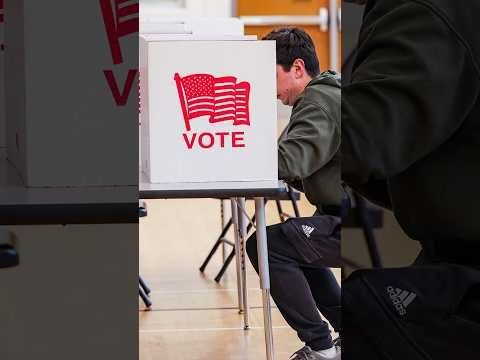
Overview
The 2026 midterms became the national judgment on President Donald Trump anticipated by Bloomberg Television’s October 28 preview. Democrats won both congressional chambers after economic discontent, concern about executive power and weak Republican candidates converged across otherwise different states. Yet the result is better understood as a mandate for checks, affordability and institutional accountability than as approval of every Democratic policy. That distinction will shape the divided government beginning in January 2027. (ap.org)
Facts
- The midterm elections were held on November 3, 2026; the Associated Press called Democratic control of the Senate that night and the House early on November 4. (ap.org)
- Democrats will hold a 56-44 Senate majority after flipping nine Republican-held seats, with Alaska becoming the final Senate contest called on November 17. (apnews.com)
- AP reported that Democrats had gained 42 House seats as of November 17. (apnews.com)
- House Democrats nominated Hakeem Jeffries for speaker on November 18 by a 251-11 caucus vote. He still requires election by the full House. (apnews.com)
- Federal campaign committee receipts reached $20.6 billion in filings through October, according to the Federal Election Commission. (fec.gov)
Bloomberg’s pre-election framing identified three possible forces: a referendum on Trump, extraordinary campaign spending and economic fallout linked to foreign conflict and data-center expansion. The outcome confirms the first two at a national level. It only partly establishes the third, because the supplied program synopsis did not identify race-level evidence showing how data centers affected particular results.
The referendum operated through institutions rather than presidential ballot choice. Voters could not remove Trump, but they could transfer Congress’s agenda-setting, investigative and appropriations powers to the opposition. Democrats’ nine-seat Senate gain was especially consequential because the chamber had appeared less vulnerable than the House. Victories in Alaska, Kansas, Mississippi, South Carolina and Texas showed that the backlash was not confined to familiar swing states. (apnews.com)
Economic pressure supplied much of the connecting mechanism. The AP Voter Poll found that voters who were highly concerned about food, health-care and gasoline costs overwhelmingly backed Democratic House candidates. Respondents also associated Trump’s tariffs and the Iran conflict with deteriorating economic conditions. Candidate selection amplified that burden: the survey found that many voters considered Republican nominees in Texas, South Carolina and North Carolina unfit, inexperienced or excessively aligned with Trump. (apnews.com)
That combination helps explain why the result exceeded a routine midterm correction. National conditions weakened the governing party, while state-level candidate vulnerabilities converted dissatisfaction into otherwise improbable Democratic victories. Record financial activity ensured that these arguments reached voters repeatedly, but spending should not be confused with persuasion: the FEC’s receipts measure captures the scale of political fundraising, not which messages changed votes. (fec.gov)
The counterpoint is that a sweeping seat gain can exaggerate ideological change. Many voters who supported Democrats still held an unfavorable view of the party, and sizable groups said neither party was equipped to handle major issues. The result therefore does not establish national consent for every progressive proposal. It establishes something narrower but institutionally powerful: voters chose an opposition Congress to constrain the president and respond to household costs.
That bounded mandate creates tension inside the victorious party. Jeffries secured overwhelming caucus support, but dissenting members pressed for stronger commitments on health care, immigration enforcement and money in politics. Senate Democrats face a leadership contest of their own. (apnews.com) Their challenge is to reconcile activist expectations with the preferences of voters who crossed party lines primarily to demand change, oversight and relief from high prices.
Context / evidence
The strongest evidence for the referendum interpretation comes from the AP Voter Poll, conducted among voters nationwide. About two-thirds said Trump’s policies had worsened the economy, while roughly seven in 10 said Congress was not doing enough to check the presidency. But only about half viewed the Democratic Party favorably, and substantial shares trusted neither party on major issues. The survey therefore supports an anti-incumbent and pro-oversight reading more strongly than a comprehensive ideological realignment. (apnews.com)
Impact
Democratic control will change who runs committees, writes spending bills and schedules confirmation votes when the 120th Congress begins. The House can initiate investigations and issue subpoenas; the Senate majority can control the confirmation calendar and committee leadership. Those powers raise the institutional cost of unilateral presidential action even when legislation cannot become law.
The practical constraint is Trump’s veto. Democratic bills will still require his signature or veto-proof congressional support, making bipartisan coalitions necessary for durable changes to tariffs, budgets or war policy. (apnews.com) Until noon on January 3, 2027, however, the existing Republican-controlled Congress retains authority, separating the election result from its implementation. (senate.gov)
Outlook
The first test comes before January: the outgoing Republican Congress can still pursue nominations and other lame-duck priorities. After January 3, attention will shift to the House speaker vote, the unresolved contest for Senate Democratic leadership and the organization of committees. (apnews.com) The clearest indicators will be whether Democrats prioritize cost-of-living legislation, investigations or both; whether Republicans provide votes to overcome procedural barriers or vetoes; and whether Trump adjusts policies on tariffs and the Iran conflict. Failure to produce tangible economic measures could quickly expose the difference between winning a protest vote and sustaining a governing coalition.