Russian satellite pattern strengthens case for outside support to Houthi strikes, but transfer remains unproven
A repeated pattern of Russian reconnaissance over Saudi targets supports concern that the Houthis and allied militias are receiving better external intelligence. It does not yet establish who transferred the information or whether it guided any particular weapon.
Overview
The available evidence strengthens the assessment that Houthi and Iraqi militia strikes are benefiting from an intelligence network more capable than the attackers’ organic surveillance alone. A private firm found Russian reconnaissance activity around every target in a 40-attack dataset, while officials told The Associated Press that Russian-derived information reached Iran-aligned groups. The central limitation is decisive: no intelligence transmission was intercepted. The pattern is therefore substantial circumstantial evidence of support, not public proof that Moscow knowingly supplied targeting data for a specific strike. (apnews.com)
Facts
- AURORAH Geosignal Intelligence said it examined 40 missile and drone attacks against Saudi Arabia by the Houthis and Iraqi militias between July 1 and October 19, 2026. The firm reported Russian government or military satellite activity around every targeted area before and after the attacks. (apnews.com)
- AURORAH said it tracked 72 Russian reconnaissance satellites using open-source and other intelligence. It did not intercept a transmission of targeting information to Iran, the Houthis or Iraqi militias. (apnews.com)
- Three officials and an intelligence analyst told AP that Iran-aligned groups had benefited from Russian intelligence; a senior Houthi figure said Iranian advisers supplied information derived from Russian satellites. (apnews.com)
- The UN Security Council said attacks on Riyadh’s airport on October 10 and 11 killed 13 people and wounded more than 300. (mandates.un.org)
The most important feature of the satellite findings is not that Russian spacecraft passed over Saudi Arabia. Reconnaissance satellites routinely survey militarily important territory, and Saudi airfields, oil facilities and transport corridors are obvious targets for observation. The more consequential claim is that several types of Russian collection systems reportedly appeared in coordinated sequences around sites before and after attacks, potentially combining optical imagery, radar observation and electronic intelligence. AURORAH identified systems including Bars-M mapping satellites, Persona optical platforms, Lotos-S1 electronic-intelligence satellites and Kondor-FKA radar-imaging spacecraft. (aljazeera.com)
That combination could improve several stages of an attack. Imagery can identify physical changes and defensive positions; radar satellites can observe through cloud or darkness; electronic surveillance can help map emitters such as radars and communications systems. Post-strike collection can then support damage assessment. Such a cycle would help explain how comparatively inexpensive missiles and drones could threaten dispersed, heavily defended infrastructure.
The September attack on Saudi Arabia’s East-West Pipeline illustrates the concern. AP reported that drones hit three pumping stations on September 10, interrupting oil flow. AURORAH said Russian satellite coverage of those sections had increased before the attack. The stations are especially important because they move crude across elevated terrain toward the Red Sea, providing an alternative export route when passage through the Strait of Hormuz is threatened. (apnews.com)
The evidence nevertheless stops short of the article’s strongest possible interpretation. AURORAH did not intercept data moving from a Russian operator to Iran or the Houthis. Orbital correlation alone cannot determine whether Moscow deliberately provided classified intelligence, whether Iranian personnel acquired commercial imagery, whether an intermediary passed information onward or whether Russian collection occurred independently of the attacks. AURORAH itself acknowledged that connecting satellite-derived intelligence to an individual missile launch would require further corroboration. (aljazeera.com)
AP’s official sourcing makes accidental coincidence less persuasive, but does not eliminate the evidentiary gap. A Saudi official, a senior Houthi figure and other sources described Russian-derived intelligence benefiting Iran-aligned groups, with Iranian advisers reportedly analysing or transmitting information. Their accounts support a plausible mechanism: sophisticated collection by an outside power, interpretation by Iran and operational distribution to partners. But anonymity prevents readers from assessing the sources’ access, and the public reporting does not expose the communications or files behind their assertions. (apnews.com)
The bounded conclusion is that the pattern raises the probability of foreign intelligence assistance and identifies Russia as a credible source. It does not yet prove a direct Russian targeting order or establish that satellite support caused the success of all 40 attacks. That distinction matters because Saudi countermeasures differ depending on the mechanism: disrupting an organised state intelligence pipeline requires diplomatic and counter-intelligence action, while commercially acquired imagery calls for different controls and faster concealment, movement and repair.
Context / evidence
The suspicion of external targeting support predates the latest Saudi strikes. A UN expert panel reported in 2024 that some Houthi attacks occurred beyond the group’s apparent radar coverage and against ships that had disabled identification signals. The panel said this suggested outside assistance in finding targets, but did not identify Russia. (documents.un.org)
The operational threat is independently visible even if the Russian connection remains unresolved. On November 16, the European Union Aviation Safety Agency extended its Saudi airspace warning through January 31, 2027, citing repeated attacks on aviation, energy and military infrastructure, including locations deep inside the kingdom. (easa.europa.eu)
Impact
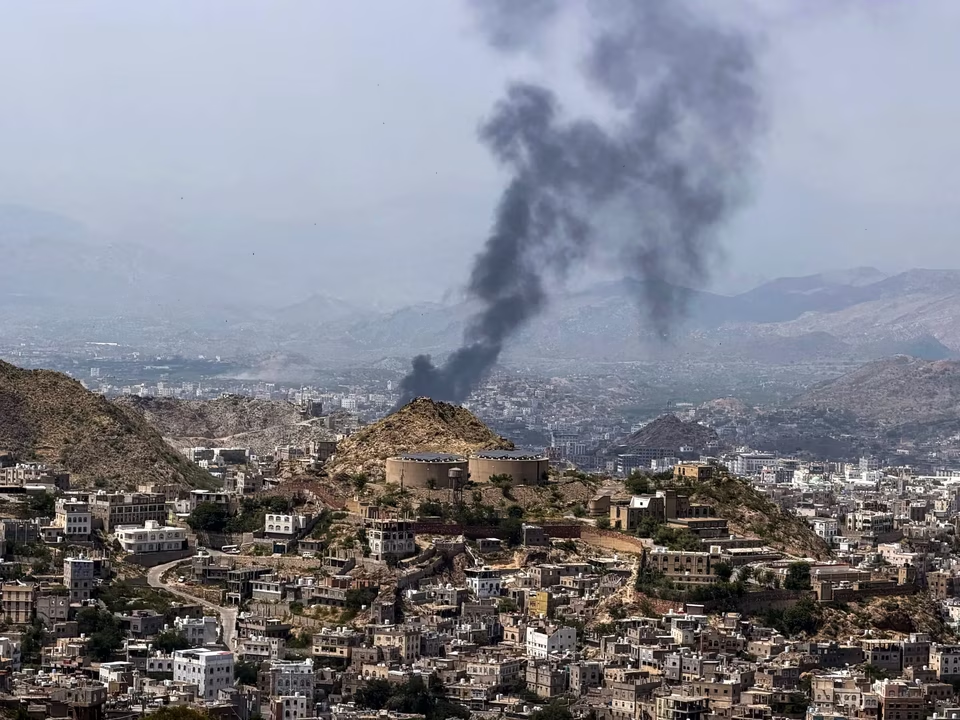
The immediate consequences are already measurable without resolving attribution. The East-West Pipeline attack temporarily interrupted a strategically important oil route, while attacks on Saudi airports killed and injured civilians and disrupted aviation. The UN Security Council has condemned strikes affecting civilian aviation and energy infrastructure. (apnews.com)
If the external-intelligence assessment is correct, Saudi Arabia faces a surveillance problem as well as an interception problem. More air-defence systems may destroy some incoming weapons but cannot prevent an adversary from mapping fixed infrastructure and selecting vulnerable components. Defensive priorities would consequently expand to deception, dispersal, electronic-security measures, rapid repair capacity and protection of the relatively small number of facilities whose loss could disrupt larger networks. This is an implication of the reported mechanism, not evidence that those measures have already been adopted.
Outlook
The attribution case would materially strengthen if investigators publish reproducible orbital data, identify unusual satellite manoeuvres, disclose intercepted communications or recover targeting files carrying traceable metadata. It would weaken if independent analysts find the same satellite coverage over comparable Saudi sites that were not attacked, indicating routine surveillance rather than strike preparation.
For Saudi Arabia, observable tests include changes to air-defence deployment, dispersion of aircraft, protection of pipeline pumping stations and restrictions around sensitive facilities. Continued precision attacks after those adjustments would suggest the adversary’s reconnaissance-to-strike chain remains effective. A Russian acknowledgment, denial addressing the specific data, or evidence of an Iranian intermediary would clarify responsibility but not, by itself, prove control over individual attacks.