Kenya’s black leopard documentary reframes the safari prize through a Maasai photographer’s lens
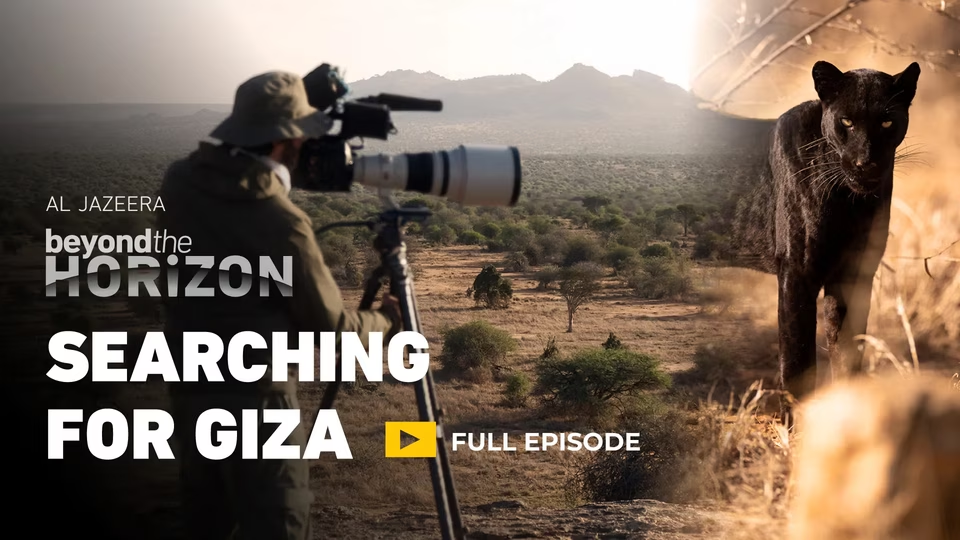
An Al Jazeera Witness documentary follows Maasai photographer Latei Moses across northern Kenya, using his search for a melanistic leopard to examine who creates the images through which visitors encounter wildlife and local communities.
Overview
“Beyond the Horizon” is more consequential for tourism as a story about representation than as a conventional wildlife quest. Its verified premise follows Maasai photographer Latei Moses searching northern Kenya for a black leopard known locally as Giza while documenting his community from his own perspective. The film therefore connects two tourism questions: how a rare animal can attract global attention, and whether residents can exercise greater authorship over the images and narratives created around their landscapes. That second contribution may ultimately be the more durable one. (aljazeera.com)
Facts
- Al Jazeera published the Witness documentary on November 16, 2026. It identifies Latei Moses as a Maasai photographer travelling across northern Kenya in search of Giza, a black leopard believed to inhabit Laikipia. (aljazeera.com)
- The film is credited to Mohtadi Ali Ahmad, Mohamad Ali Ahmad and Christelle Saade. The public synopsis does not disclose whether Moses ultimately photographs the leopard. (aljazeera.com)
- A peer-reviewed paper first published on January 29, 2019 documented photographic evidence of melanistic leopards in Laikipia County. (onlinelibrary.wiley.com)
- Laikipia Wilderness currently sells priority access to limited black-leopard sighting slots but explicitly states that bookings do not guarantee an encounter. (laikipia-wilderness.com)
Wildlife tourism often organizes attention around a promised image: the lion at sunrise, the migration crossing or, in Laikipia, the near-mythic black leopard emerging from darkness. “Beyond the Horizon” retains the suspense of that search, but its documented premise shifts the centre of the story from the animal alone to the person holding the camera.
Moses’s journey matters because tourism images do more than record a destination. They shape expectations about who belongs in a landscape, who interprets it and what visitors consider worth seeing. Al Jazeera describes the Maasai as frequently photographed through outsiders’ eyes and presents Moses’s work as an attempt to document his people on his own terms. That framing does not establish that the wider imbalance has been corrected. It does, however, make authorship part of the visitor experience rather than leaving it invisible. (aljazeera.com)
The black leopard provides an unusually powerful mechanism for attracting attention. Melanistic leopards are leopards with dark pigmentation, not a separate species. Research cameras recorded them in Laikipia during a broader study of leopard populations, leading to a peer-reviewed confirmation published in 2019. The scientific record validated the animals’ presence, but it also followed reports from people living in the region; the discovery narrative cannot accurately be reduced to outsiders revealing an animal unknown to local communities. (adminzoonooz.sandiegozoo.org)
That distinction has practical tourism consequences. Rarity can extend stays, support specialist guiding and distinguish Laikipia from better-known safari circuits. One local operator recommends that black-leopard-focused guests stay four to seven nights and offers dedicated vehicles with priority at a sighting. Yet it repeatedly warns that the animal remains wild and no encounter is guaranteed. (laikipia-wilderness.com) The business proposition therefore depends on disciplined uncertainty: visitors pay for time, expertise and access to habitat, not ownership of a photographic result.
The same operator’s rules expose the pressure created when an elusive animal becomes a destination brand. Vehicle numbers and viewing time are limited; red-filtered spotlights are used; guides may terminate encounters if the leopard shows stress; and vehicles are instructed not to interfere when the animal is hunting or feeding. These are operator-stated safeguards rather than an independent assessment of their effectiveness, but they show that commercial value and animal welfare can collide at the point of a sighting. (laikipia-wilderness.com)
The film’s central tourism insight is therefore not that every visitor should pursue Giza. It is that an ethical encounter must accept two limits. Wildlife cannot be treated as a guaranteed performance, and local people should not be treated merely as scenery within someone else’s visual story. Moses’s search joins those questions through photography: patience protects the credibility of the wildlife experience, while authorship determines whose understanding of the landscape reaches audiences.
A credible alternative interpretation is that the documentary remains, despite its reflexive framing, another global production built around an exceptionally marketable animal and an elusive final image. The available public material cannot establish how editorial authority, revenue or rights were divided among the filmmakers and Moses. Nor does it show whether viewers will absorb the representational argument rather than simply adding the leopard to a safari wish list. Those gaps prevent a stronger claim that the film has changed tourism practice.
Context / evidence
The leopard’s presence is not merely folklore. Camera-trap research conducted in Laikipia produced peer-reviewed confirmation in 2019, giving scientific support to earlier community reports while demonstrating the value of local knowledge and field partnerships. (adminzoonooz.sandiegozoo.org) Kenya’s tourism and wildlife ministry also treats conservation and destination development as connected policy areas, including plans to expand wildlife space and conservancies. (tourism.go.ke) What remains unknown is whether this particular film will alter bookings, channel revenue to local creators or improve conservation outcomes.
Impact
The immediate observed effect is cultural rather than economic: an international documentary platform has placed a Maasai photographer’s perspective at the centre of a northern Kenya wildlife story. (aljazeera.com) Plausible tourism benefits include greater interest in Laikipia, longer specialist-photography stays and demand for locally grounded guides and image-makers. Those outcomes are not yet documented. Increased attention could also intensify pressure around sightings, making vehicle limits and guide authority more important. The documentary creates an opportunity for value to flow through local storytelling, but publication alone does not prove that it will do so.
Outlook
The film’s influence should be judged through observable changes rather than online attention alone. Relevant indicators would include tourism businesses commissioning Kenyan and Maasai photographers, clear community participation in destination storytelling, transparent links between specialist wildlife fees and conservation, and continued enforcement of sighting limits. Conversely, increasingly aggressive leopard guarantees, crowded encounters or marketing that strips Moses’s authorship from the story would weaken the film’s implied alternative. The animal’s welfare and the photographer’s agency are separate tests, and responsible tourism would need to meet both.