BIG3’s scale test shifts from proving summer demand to funding durable city franchises
Ice Cube says BIG3 is ready to grow globally, but the league’s decisive test is whether new capital can turn summer audiences and city branding into durable local sports businesses.
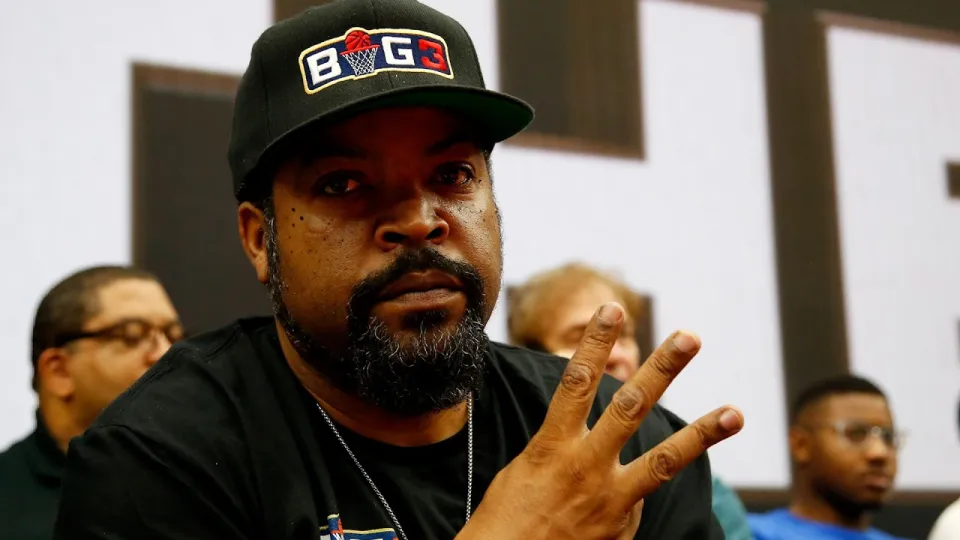
Overview
BIG3 has moved beyond the basic survival test facing a new sports league: it completed a ninth season, retained national television distribution and established eight city-branded teams. The bounded judgment is that its next phase depends less on proving interest in summer basketball than on converting that interest into repeatable local revenue, stronger media economics and international participation. A proposed public-market transaction could finance that conversion, but the transaction remains pending and public records do not yet establish sustainable franchise-level economics.
Facts
- Ice Cube told Bloomberg Television on October 29, 2026, that BIG3 was positioned to scale, describing demand for additional summer basketball and ambitions spanning professional and youth participation worldwide.
- BIG3 and Graf Global Corp. signed a business-combination agreement on June 12, 2026. The announced transaction assigned BIG3 a $290 million pre-money equity value and remained subject to shareholder approvals and other closing conditions. (sec.gov)
- A later investor presentation filed with the US Securities and Exchange Commission described the expected closing as early 2027, rather than confirming completion in 2026. It also listed a closing condition of more than $50 million in net cash. (sec.gov)
- BIG3’s 2026 season used eight city-branded teams. Boston Ball Hogs defeated Dallas Power 51-49 in the championship game on August 22. (big3.com)
- The league began its location-based transition in 2025. Bloomberg reported in December 2025 that four of its eight teams had been sold to local ownership groups and that its expansion target had shifted to 12 teams by 2027. (big3.com)
Ice Cube’s October 29 argument rests on a credible starting point: BIG3 is no longer merely a concept looking for an audience. The league launched in 2017, completed its ninth season in 2026 and maintained a place on CBS while presenting a short, summer competition built around recognizable basketball figures and a distinctive half-court ruleset. Its official results document a completed 2026 campaign across multiple US arenas, culminating in Boston’s championship victory. (big3.com)
That longevity matters because alternative sports competitions often struggle to survive long enough to establish dependable schedules, media relationships and fan expectations. BIG3 has demonstrated operational continuity. It has also identified a useful calendar position after the NBA Finals, when basketball audiences may still want live competition but the dominant US men’s league is out of season.
The question, however, is no longer simply whether people will watch. Scaling requires BIG3 to make each additional market, team and distribution agreement add more revenue than cost. The league’s shift from centrally owned, non-geographic teams to city identities is central to that mechanism. A city name can support local sponsorships, repeat ticket buyers, merchandise and owners whose commercial relationships extend beyond a single event. BIG3 announced eight newly branded city teams for 2025 after concluding that its touring model made it difficult to build attachment to individual clubs. (big3.com)
The 2026 competition still retained important features of a touring event series: several games were staged together at one arena, with teams appearing in markets other than their nominal homes. (big3.com) That arrangement can concentrate production and venue costs, but it may limit how quickly city brands acquire the habits associated with conventional home schedules. The commercial challenge is therefore to combine the efficiency of centralized events with enough local presence to make franchises valuable independently of the league brand and Ice Cube’s profile.
Capital is the bridge in BIG3’s strategy. The June transaction announcement said a public listing would provide funds and acquisition currency for expansion. The agreement valued the league at $290 million before the proposed transaction and imposed approvals, cash requirements and other conditions. (sec.gov) Ice Cube’s Bloomberg interview presented the deal as potentially closing around the end of 2026 or early 2027. The later SEC-filed investor presentation used early 2027 as the expected timing, so the listing should still be treated as proposed, not completed. (sec.gov)
Fresh capital could enlarge sales, marketing and production capacity, but money alone would not establish demand in each new market. The league previously moderated its expansion timetable: a December 2025 Bloomberg report said BIG3 had moved from an earlier ambition of 16 teams to a target of 12 by 2027. (big3.com) That revision can be read as discipline rather than weakness, because selling fewer franchises to strategically useful owners may be preferable to expanding before local economics are proven.
The credible alternative to Ice Cube’s thesis is that BIG3 has established a viable national summer media property but not yet a globally scalable franchise network. Publicly available audience and social-engagement figures indicate reach, while offering little detail about profitability, customer retention, rights fees or revenue generated by individual cities. Those gaps do not disprove the growth case. They define what the league must demonstrate next.
Context / evidence
The strongest demand evidence remains attributable to the league and its partners. A 2026 investor presentation reported about 550,000 average CBS viewers through the first eight weeks and roughly 5,000 attendees per event; it identified the attendance figure as a management estimate and the television figure as CBS data. (sec.gov) The same presentation acknowledged a fragmented professional three-on-three landscape. FIBA separately operates an international 3x3 circuit and has adjusted its ranking system for qualification toward the Los Angeles 2028 Olympics, meaning global growth in the discipline does not automatically accrue to BIG3. (about.fiba.basketball)
Impact
The city model gives supporters a clearer team identity and gives prospective owners and sponsors a geographically defined asset. Players and coaches may gain more stable opportunities if added capital supports more teams and events, although no such increase is guaranteed by the pending transaction. For investors, the proposed listing would create access to a league-level sports asset rather than a single franchise, but it would also expose them to execution, redemption and financing risks described in the transaction records. For BIG3, the practical consequence is greater pressure to disclose measurable commercial performance alongside audience claims. (sec.gov)
Outlook
The clearest near-term indicator is the proposed Graf transaction. Closing with substantial usable cash would give BIG3 resources for marketing, international distribution, youth programs and additional franchises; delay, heavy shareholder redemptions or failure to satisfy cash conditions would narrow those options. Beyond the deal, evidence of successful scaling would include completed team sales, multiyear media agreements, repeat attendance in home markets, locally generated sponsorship revenue and a documented route from youth participation to professional competition. Without those measures, audience growth and global ambitions will remain encouraging signals rather than proof of a scalable franchise system.