How NASA Tested DAVINCI for Venus’s Heat
An engineering model endured six simulated Venus descents. The result advances DAVINCI’s design, but the flight probe has not yet been built or tested.
The Short Answer
NASA says an engineering model of its DAVINCI Venus descent probe completed six heating cycles between Aug. 28 and Sept. 10, 2026. A furnace raised the temperature to 869°F (465°C) over roughly 55–60 minutes, simulating the thermal pace of descent. The ground result supports the probe’s thermal design; it is not a test of flight hardware or proof that the mission is ready to launch.
Focal Verification
NASA’s published account establishes a successful ground test of an engineering development unit under a simulated descent heating profile. It does not establish survival of the eventual flight probe in Venus’s atmosphere, final design approval, a launch date or evidence that Venus was once habitable.
Focal Facts
- Six thermal cycles were completed from Aug. 28 to Sept. 10, 2026.
- The furnace reached 869°F (465°C) over about 55–60 minutes.
- More than 100 thermal sensors monitored simulated instrument hardware.
- NASA says the engineering development unit survived each cycle.
- The mission was working toward approval for final design and fabrication.
Focal Evidence
NASA's primary source describes comprehensive thermal testing of an engineering model in a furnace, ensuring it can endure the conditions expected during the Venus descent. Over 100 thermal sensors monitored the tests, confirming the integrity of the model.
Gaps in the Record
- Final design approval for DAVINCI
Focal Outlook
- When will the final design for DAVINCI be approved?
- What further testing will be required before the probe is launched?
Full Explanation
What did NASA test?
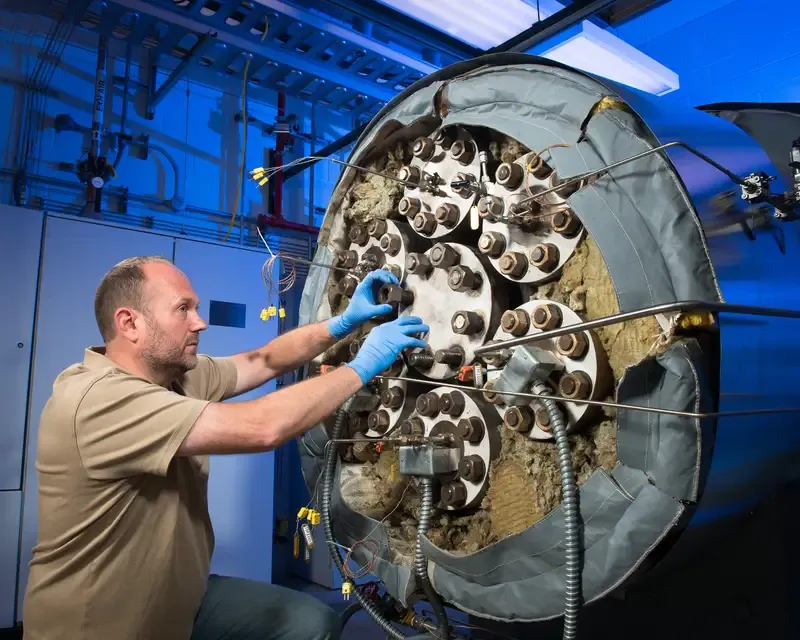
NASA did not send a probe to Venus. It tested an engineering development unit of DAVINCI’s planned descent probe on Earth. Between Aug. 28 and Sept. 10, 2026, technicians at Rex Heat Treat in Bedford, Pennsylvania, placed the roughly yoga-ball-sized vessel in a furnace. The chamber heated to 869°F (465°C) over about 55–60 minutes, following the rate of heating NASA expects during descent through Venus’s atmosphere. The team ran that cycle six times. NASA says the model came through each run intact, while more than 100 thermal sensors monitored hardware standing in for scientific instruments. NASA’s September test report describes a ground qualification step, not a completed mission.
Why does the heating rate matter?
A probe descending toward Venus does not encounter its harshest conditions all at once. Its surroundings change as it travels through the atmosphere, and the shell must limit the heat reaching the equipment inside during the time available to gather measurements. A test that simply reaches a high temperature would miss part of that challenge. NASA therefore increased the furnace heat over approximately the same period as the planned descent, repeatedly exposing the engineering model to a Venus-like thermal profile. The result gives engineers evidence about insulation and structure at the scale of the proposed vessel. It does not reproduce every feature of Venus’s atmosphere or the stresses of launch and flight.
What is DAVINCI meant to measure?
DAVINCI—Deep Atmosphere Venus Investigation of Noble gases, Chemistry, and Imaging—is designed to investigate how Venus formed and changed, including whether it may once have had conditions more like Earth’s. NASA says the planned probe would use a corrosion-resistant titanium shell. Instruments inside would sample atmospheric gases, while cameras would photograph the surface during descent and a radio would relay findings to the spacecraft overhead. Those measurements could help scientists reconstruct the planet’s atmospheric history. The heat test did not answer those science questions; it tested whether a proposed vessel can protect the instruments long enough to attempt them.
What remains unproven?
The tested object was an engineering model, not the final flight article. NASA reported in September that DAVINCI was working toward approval to enter final design and fabrication. A successful furnace campaign therefore supports a design decision, but does not establish that the flight probe has been built, passed all subsequent tests, launched or survived Venus itself. Nor can it establish that Venus was once wet or habitable. Those remain questions for future measurements and analysis. The distinction matters: a credible milestone should be reported as progress without turning a controlled test into a claim of mission success.
NASA’s October image feature shows the engineering development unit before the thermal evaluation. Image: NASA/Mike Guinto.