Myanmar’s Min Aung Hlaing rebuilds regional ties amid raging civil war
Myanmar’s junta-turned-president, Min Aung Hlaing, has resumed diplomatic engagement with regional neighbours, despite the ongoing civil war and international criticism.
The Lead
Min Aung Hlaing’s regional rehabilitation accelerates: In recent weeks, the Myanmar junta leader–turned‑president has secured welcome visits from Malaysia and several ASEAN neighbours and opened lines with global powers—including U.S. officials—despite an enduring civil war and human‑rights concerns.
Article Body
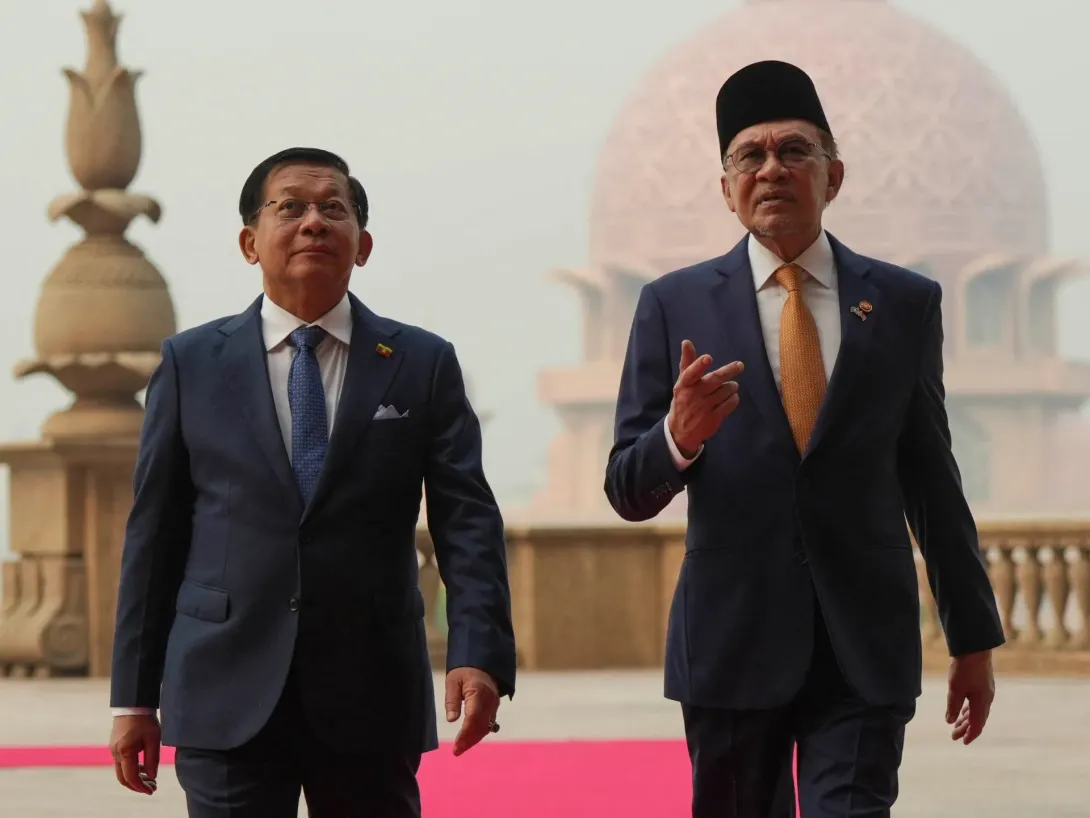
Since becoming president in April 2026 following tightly controlled elections, Min Aung Hlaing has stepped up diplomatic outreach across Southeast Asia and beyond. His month‑long visits to Thailand, Vietnam, Cambodia, Laos and especially his September and early October trip to Malaysia—where he was formally welcomed, discussed repatriation of Rohingya refugees, and pressed for ASEAN reintegration—mark a notable shift from his earlier isolation by many neighbours. Malaysia’s public support for reintegration represents a significant softening in ASEAN’s stance. [2]
Beyond the region, Min Aung Hlaing has also undertaken state visits to India, China, Russia and Belarus, and has even begun direct discussions with U.S. officials over the issue of scam centre shutdowns—despite longstanding sanctions targeting him for alleged genocide and other abuses. [2]
The diplomatic thaw comes amid escalating conflict: Myanmar is now in its fifth year of civil war, with more than 100,000 dead and millions displaced. Military offensives continue, involving intensified air raids and territorial retakes in regions like Rakhine, Chin and Sagaing. [2] Meanwhile, rights groups warn that these diplomatic overtures could embolden the junta by granting reputational cover without any commitment to peace or human rights reforms. [2]
The widening foreign engagement underscores a growing divergence within ASEAN and the broader international community—from punitive isolation toward pragmatic accommodation. Analysts caution that this trend risks weakening ASEAN’s leverage, especially over its Five Point Consensus peace plan, which the junta continues to ignore. [2]