Lagarde’s 266-day early exit turns ECB succession into a wider EU power bargain
Christine Lagarde’s departure 266 days before her term’s scheduled end accelerates a three-seat ECB leadership reshuffle while inflation and fiscal strains test the institution.
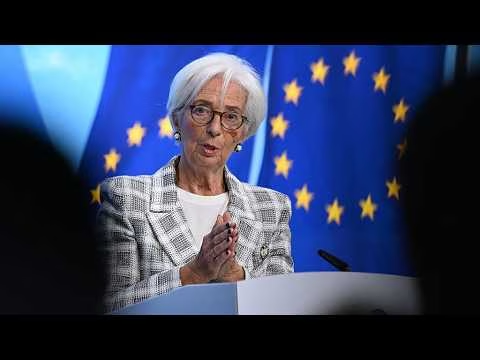
Christine Lagarde’s decision to leave the European Central Bank on February 7, 2027, rather than complete her term on October 31, removes 266 days from an eight-year mandate designed to insulate the institution’s leadership from short-term politics. The numerical difference is less important than what it does to the political calendar: euro-area governments must now choose a president alongside two other Executive Board members, turning a single succession into a broader negotiation over national representation, economic doctrine and control of Europe’s most powerful financial institution. (ecb.europa.eu)
Lagarde said she was leaving because the ECB presidency imposed an “obligation of neutrality” and she wanted greater freedom to address matters outside monetary policy. That is a direct explanation of her decision, but not evidence that she intends to seek elected office or accept another specific position. Her resignation nevertheless has an institutional consequence independent of her personal plans: it permits Europe’s current leaders to settle the succession before France’s 2027 presidential election and well before the date on which her mandate would otherwise have expired. (ecb.europa.eu)
A leadership change during an inflation test
The succession is occurring while the ECB faces a policy mix that gives its president substantial influence over communication and coalition-building. At its October 29 meeting, the Governing Council kept the deposit rate at 2.50%, the main refinancing rate at 2.65% and the marginal lending rate at 2.90%. September inflation was 3.8%, compared with the ECB’s 2% medium-term target, while energy inflation reached 18.9%. The bank also reported tighter financial conditions, a fall in corporate loan demand and mortgage rates of 3.6% in August. (ecb.europa.eu)
Those figures do not establish that a new president would immediately change interest rates. ECB decisions are collective, the bank has reiterated that policy will remain data-dependent and meeting-by-meeting, and both declared candidates have extensive central-banking experience. But the combination of above-target inflation, weaker demand and fiscal uncertainty creates room for disagreement over which risks deserve priority. The presidency matters most when the Governing Council must reconcile those competing concerns, explain a contested decision or assemble support for measures addressing financial fragmentation across member states. (ecb.europa.eu)
The official contest initially contains two candidates: Pablo Hernández de Cos of Spain and Klaas Knot of the Netherlands. Selection requires more than a bilateral agreement among the largest governments. Euro-area states propose candidates, the Eurogroup seeks agreement, the Council makes a recommendation, and the European Council consults both the European Parliament and the ECB Governing Council before appointing the president. The final vote requires at least 16 of the euro area’s 21 countries, representing at least 65% of its population. (consilium.europa.eu)
In formal terms, that procedure protects the appointment from control by any one capital. In political practice, the threshold encourages package deals because governments can exchange support across several senior posts. This succession is unusually suited to such bargaining. Isabel Schnabel’s Executive Board term ends in early January 2027, Lagarde leaves in February and Philip Lane’s term ends on May 31. Eurogroup President Kyriakos Pierrakakis has said the three appointments could be considered together to facilitate consensus. (ecb.europa.eu)
Bundling the positions could produce a balanced board by distributing nationalities, policy orientations and responsibilities across the package. It could also make the substantive debate harder to observe. A government may support a presidential candidate not only because of that person’s monetary views but because the overall arrangement secures another position for its preferred nominee. The appointment procedure therefore combines safeguards for institutional independence with negotiations that are unavoidably political.
Continuity is credible, but not automatic
The strongest counterpoint to concerns about politicisation is the ECB’s structure. The president does not set rates alone; the Governing Council includes the six-member Executive Board and the governors of euro-area national central banks. Executive Board members receive non-renewable eight-year terms, reducing their dependence on governments after appointment. Lagarde also argued that the institution would continue operating without a decision-making vacuum. (ecb.europa.eu)
That case for continuity is persuasive on day-to-day operations. It is less complete when applied to crisis leadership. Presidents influence which compromises become possible, how the bank communicates the boundary between monetary and fiscal responsibility, and how forcefully it defends independence when national governments demand relief from market pressure. Those functions cannot be reduced to a simple hawk-versus-dove comparison, particularly when inflation and financial-stability risks may point toward different policy responses.
The November 26-27 European Council agenda included renewal of the ECB leadership “with a view to a timely decision.” The invitation established that leaders intended to address the issue; it did not itself establish that an appointment had been completed. As of the November 26 review cutoff, the authoritative public record identified Hernández de Cos and Knot as the candidates but did not establish a final choice. (consilium.europa.eu)
Lagarde’s early departure therefore does not imply an immediate break in ECB policy. Its clearer effect is to compress the timetable and widen the transaction: Europe’s governments are choosing three board members while the bank manages inflation above target, tighter credit and political pressure around public finances. The succession will be judged not only by who becomes president, but by whether the appointment process produces a leadership team capable of preserving collective decision-making without disguising the political bargain that created it.