Iran and Qatar put Hormuz and energy supplies on Moscow talks agenda
The talks linked Iran-Qatar relations and regional diplomacy to concerns over the Strait of Hormuz and continuity of global gas supplies.
The Lead
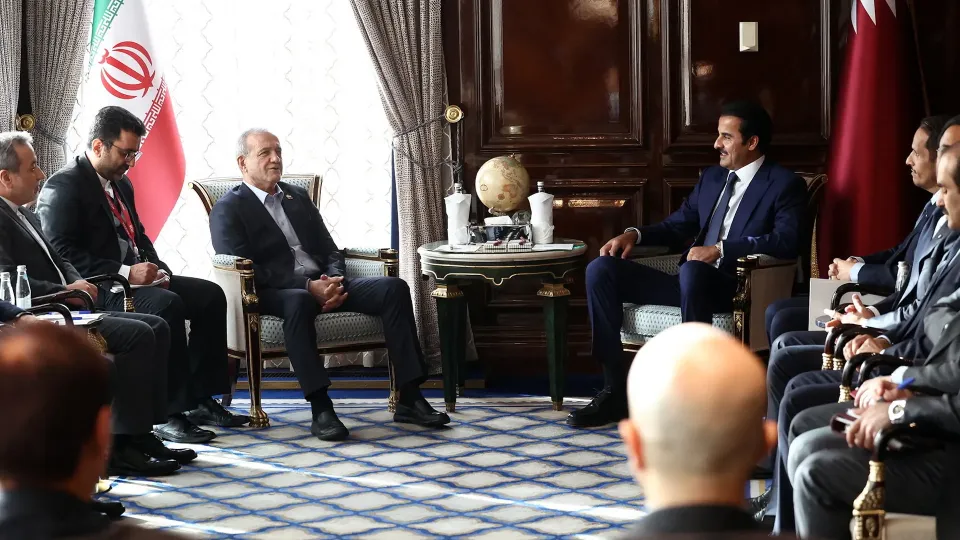
Iranian President Masoud Pezeshkian and Qatar’s Emir Sheikh Tamim bin Hamad Al Thani met in Moscow on October 27, discussing regional negotiations, the Strait of Hormuz and energy supplies as gas exporters confronted risks to trade and infrastructure. (diwan.gov.qa)
Key Facts
- The leaders met at the Qatari emir’s Moscow residence before the eighth GECF summit. (diwan.gov.qa)
- The summit convened in Moscow on October 27, 2026. (gecf.org)
- Official accounts announced no bilateral agreement or timetable for further energy measures. (diwan.gov.qa)
Article Body
Qatar’s Amiri Diwan said the meeting covered the latest negotiations, regional developments, the Strait of Hormuz, energy supplies and the summit agenda. Iranian state media separately emphasized trade, bilateral political and economic ties, energy cooperation and coordination among gas-exporting countries. (diwan.gov.qa)
The wider summit declaration expressed concern that Middle East tensions were disrupting gas supplies, increasing investment risks and driving price volatility. GECF members backed crisis-response consultations, uninterrupted commercial operations, freedom of navigation and protection of pipelines, production sites and LNG carriers. (gecf.org)
The bilateral talks therefore joined two connected tracks: Qatar’s regional diplomatic role and the shared interest of major gas producers in keeping export routes open. Neither government’s account identified a new project, binding commitment or implementation schedule. The consequential question is whether the meeting leads to concrete coordination before another disruption tests regional energy flows.
What to Watch
The next signal is whether references to Hormuz and energy supplies produce a defined Iran-Qatar initiative on shipping security, gas-market coordination or regional negotiations rather than another broad commitment to cooperation.