India’s Siang dam push turns a China strategy into an Indigenous security crisis
The proposed 11,200-megawatt project remains at an investigative stage, but security-backed surveys have made the process itself the conflict, weakening the local cooperation India would need to advance its strategic response to China.
Overview
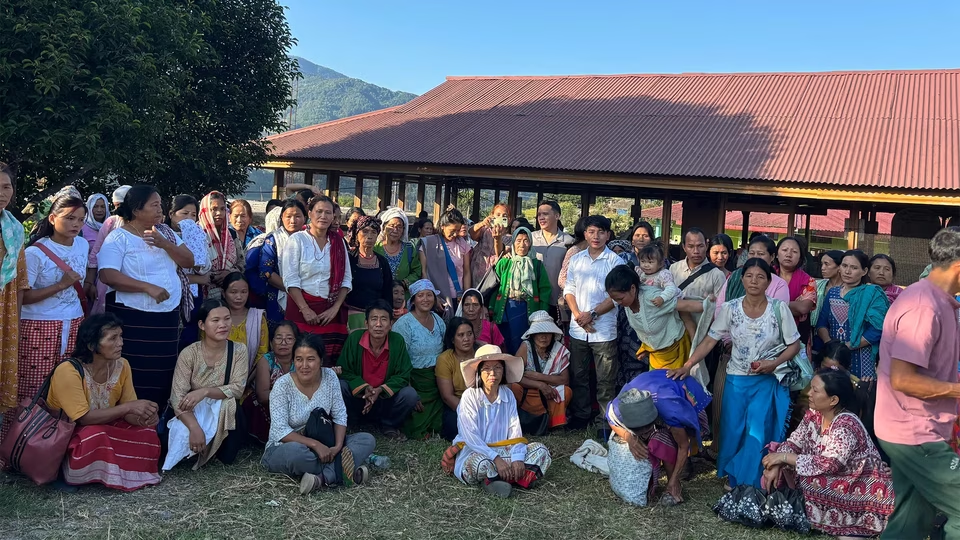
India’s Siang Upper Multipurpose Project is caught in a legitimacy trap. New Delhi and Arunachal Pradesh frame the proposed dam as protection against China’s upstream hydropower development, while Indigenous opponents see the survey process as the beginning of an irreversible loss of land, livelihoods and cultural identity. The project has not been approved for construction. Yet arrests, force deployments and violent confrontations have made a preliminary investigation feel consequential to affected communities, increasing the risk that India’s strategic rationale will be undermined by conflict over how the project is pursued.
Facts
- The proposed Siang Upper Multipurpose Project is listed by India’s government as an 11,200-megawatt project in Arunachal Pradesh; it is not under construction. (sansad.in)
- NHPC submitted a 2022 pre-feasibility report examining Uggeng, Ditte Dimme and Parong, after which a government technical committee requested further geological drilling. (nhpcindia.com)
- On September 28, 2026, Arunachal Pradesh established a committee to coordinate surveys, community engagement, site readiness and security arrangements. (egazette.servantsofknowledge.in)
- Protests intensified during September and October 2026, with arrests, demonstrations and reported damage to public and private property. (indianexpress.com)
- Four protesters detained in October were released on November 7, while other detainees and criminal cases remained unresolved in the available reporting. (theweek.in)
- China formally began constructing a five-station hydropower project on the lower Yarlung Zangbo on July 19, 2025. (english.www.gov.cn)
The central contradiction in the Siang dispute is that the government describes the project as preliminary while mobilising institutions normally associated with implementation and public order. Arunachal Pradesh Chief Minister Pema Khandu said in early November that a pre-feasibility report was neither final approval nor a decision to build. That distinction is technically important: no final site, environmental clearance or construction approval has been established. (sansad.in)
But the September 28 state resolution did more than organise geological work. It created an empowered committee responsible for site readiness, community outreach, coordination with security agencies and monitoring law and order. It also authorised spending for logistics and activities intended to ensure that surveys proceed smoothly. Those provisions do not constitute project approval, but they help explain why opponents regard the survey as a decisive political step rather than neutral data collection. (egazette.servantsofknowledge.in)
That perception has been reinforced by coercion and violence. Security personnel were deployed to survey areas, protesters were detained under a state unlawful-activities law, and demonstrations escalated. On October 23, a protest in Pasighat ended with reported arson and damage involving an NHPC office, police facilities and political residences. Protest organisations subsequently demanded releases, withdrawal of forces and cancellation of cases, while authorities called for peace and dialogue. Violence by protesters is a material counterpoint to claims that the security response was wholly unprovoked; equally, property damage does not resolve whether the underlying survey process has meaningful community legitimacy. (indianexpress.com)
Strategic urgency meets an information gap
India’s rationale is not imaginary. The Siang is the Indian reach of the river called the Yarlung Zangbo in Tibet, and China formally announced the start of a vast five-station project in its lower reaches in July 2025. Arunachal officials argue that large storage inside India could help manage extreme upstream releases while producing electricity. (english.www.gov.cn)
Yet the strategic case remains incomplete because publicly available Chinese information does not establish detailed operating procedures or the range of downstream flow changes. Without those parameters, the size and design of an effective Indian countermeasure cannot be treated as settled. Even India’s own process is still comparing sites and conducting geological investigations. The credible counterargument is that waiting for complete information could leave India exposed as China builds upstream. But urgency cannot substitute for engineering evidence or local cooperation: a dam intended to reduce external vulnerability may be delayed or destabilised if its preliminary surveys produce a sustained internal security confrontation.
The November 7 release of four detained protesters and the government’s renewed invitation for talks created a limited opening. It did not settle demands concerning other detainees, criminal cases or security deployments. The conflict therefore remains centred not only on whether the dam should be built, but on who has authority to determine when investigation becomes commitment. (theweek.in)
Context / evidence
The present dispute predates the latest confrontations. India’s Power Ministry acknowledged local concerns over biodiversity, displacement and ancestral homes in an August 2024 parliamentary answer, while describing the project as being at a preliminary investigative stage. NHPC records show that the technical process has also remained unsettled: its 2022 report considered three alternative sites, and further drilling was requested before one could be selected. China’s July 2025 groundbreaking strengthened India’s strategic argument, but Beijing’s public announcement disclosed five cascade stations and investment figures rather than the operating rules and downstream-flow data required for a detailed Indian risk assessment. (nhpcindia.com)
Impact
The immediate effects are already visible: shutdowns disrupted schools, markets, offices and transport; arrests drew students and wider community organisations into the agitation; and violent incidents damaged property and hardened official security concerns. (economictimes.indiatimes.com) For Adi opponents, the contested issue is not limited to compensation for land. They describe the Siang and its riverbank settlements as foundations of livelihood, ancestry and collective identity. Al Jazeera’s reporting recorded fears for ancestral territory, culture and livelihoods, but no completed social or environmental assessment yet establishes the project’s eventual displacement or ecological footprint. (aljazeera.com)
Outlook
De-escalation depends less on another broad promise of consultation than on observable procedural changes. Key indicators will be whether the government and protest organisations hold direct talks; whether remaining detention and criminal-case disputes are resolved through transparent legal processes; whether security deployments are reduced; and whether survey access becomes voluntary rather than confrontation-driven. Publication of the survey scope, site-selection criteria and a credible consent process would test the government’s claim that no construction decision has been made. Renewed drilling under heavy security, further arrests or another shutdown would instead indicate that the conflict is moving ahead faster than the project’s technical assessment.