Huang’s return leaves Nvidia running two competing national-security judgments
Nvidia has restored Jensen Huang to its top job while keeping its independent investigation open, separating confidence in his leadership from unresolved security and compliance questions.
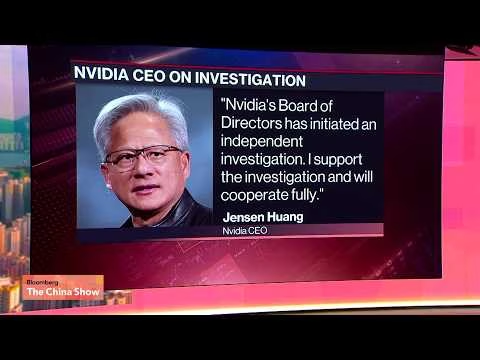
Nvidia’s reinstatement of Jensen Huang as president and chief executive has resolved its immediate leadership crisis without resolving the security questions that created it. The board’s November 23 decision amounts to a calculated separation of two judgments: that Huang remains uniquely valuable to Nvidia, and that allegations involving a suspected Chinese intelligence operation, semiconductor diversion and the company’s internal controls still require investigation.
That distinction is central to understanding the decision. Nvidia did not announce that its independent inquiry had cleared Huang. It said directors voted unanimously to restore him after discussions that satisfied them about his candor and ability to lead. The board also said it received input from senior levels of the US government and was confident that his return posed no national-security risk. At the same time, it confirmed that the independent investigation would continue to its conclusion. (investor.nvidia.com)
The company is therefore operating with two concurrent risk assessments. One concerns whether Huang may resume command of a company central to the global artificial-intelligence infrastructure. The other concerns what happened before his brief departure: whether a foreign intelligence effort obtained valuable access, whether export-control safeguards worked and whether Nvidia accurately represented relevant risks to officials, investors and its own leadership.
Those questions emerged publicly after Huang admitted to an affair amid reporting that Alice Huang, formerly an executive at Singapore-based Megaspeed, was suspected by US officials of links to Chinese intelligence. Nvidia initiated an independent investigation, and Huang resigned on November 12 before being reinstated eleven days later. The Justice Department had not reached a public conclusion that Alice Huang was a Chinese spy as of November 23, according to the Associated Press. Nor has the government publicly established that Jensen Huang committed unlawful conduct or transferred protected information. (apnews.com)
The documented export-control inquiry nevertheless predates the personal scandal. The Commerce Department began investigating Megaspeed in 2024 for potential violations after identifying suspicious activity involving possible semiconductor diversion. Investigators requested records from Nvidia in May 2025. Nvidia placed Megaspeed on its no-sell list the following month, when US and Singaporean officials conducted an end-use check and interviewed Alice Huang. The Justice Department subsequently assumed the lead role in a criminal investigation of Megaspeed. That chronology establishes an active enforcement concern, but it does not by itself prove that Megaspeed violated the law or that Huang’s relationship affected Nvidia’s decisions. (justice.gov)
Nvidia’s response indicates that directors recognize the vulnerability extends beyond one executive’s conduct. The board created an independent National Security and Export Control Committee, said it would retain specialist advisers and began searching for a chief compliance officer who will report to a board committee. These measures increase formal oversight, but their effectiveness will depend on authority, access to internal records and whether compliance staff can challenge commercially important decisions involving major customers or politically sensitive markets. (investor.nvidia.com)
There is a credible case for restoring Huang before every inquiry is complete. Nvidia’s board can reasonably distinguish an unresolved investigation from a finding of wrongdoing. Huang’s technical standing, relationships and role in directing Nvidia’s strategy may be difficult to replace quickly. Government input may also have reduced directors’ concern that his return would create an immediate counterintelligence risk. The new committee and compliance position could, if genuinely independent, strengthen controls without depriving Nvidia of its founder’s leadership.
The counterpoint is that reinstatement changes the incentives surrounding the unfinished investigation. Huang again commands the company whose records, employees and decisions the inquiry must examine. Nvidia says the investigating committee consists solely of independent directors and has independent counsel, but its eventual report will need to show how evidence was protected and whether investigators could examine senior management decisions without interference. Government assurances about the risk of Huang returning are not equivalent to findings about earlier conduct, disclosure practices or export compliance.
External scrutiny will continue irrespective of Nvidia’s internal structure. California Attorney General Rob Bonta issued an investigative subpoena on November 19 seeking information about whether advanced chips or confidential information reached China and whether Nvidia misled investors or the public. The subpoena is an information-gathering measure, not a finding that either event occurred. (oag.ca.gov)
Congress has established its own near-term tests. Huang is scheduled to give a transcribed interview to three House committees on December 1, followed by Nvidia general counsel Tim Teter on December 2. A separate House committee has requested briefings from Nvidia and the Commerce Department by December 2 concerning export compliance and security controls. (intelligence.house.gov)
The operational question is no longer simply whether Huang remains chief executive; Nvidia answered that on November 23. It is whether the company can demonstrate that restoring him does not compromise the inquiries surrounding him. Observable evidence will include the scope and publication of the independent investigation’s findings, the powers assigned to the new security committee, the chief compliance officer’s reporting authority, congressional testimony and any enforcement action arising from the Megaspeed investigation. Until those records emerge, Huang’s return should be read as a board judgment about present leadership—not as exoneration over the events that forced his departure.