Albanian Prime Minister Blames “Foreign Hands” as Student Protests Escalate
Albanian Prime Minister Edi Rama has accused unspecified “foreign hands” of instigating increasingly violent student-led protests demanding his resignation, amidst escalating clashes across the country.
The Lead
On October 16, 2026, Albanian Prime Minister Edi Rama publicly accused external actors—“foreign hands”—of driving the violent wave of student-led protests demanding his resignation.
Article Body
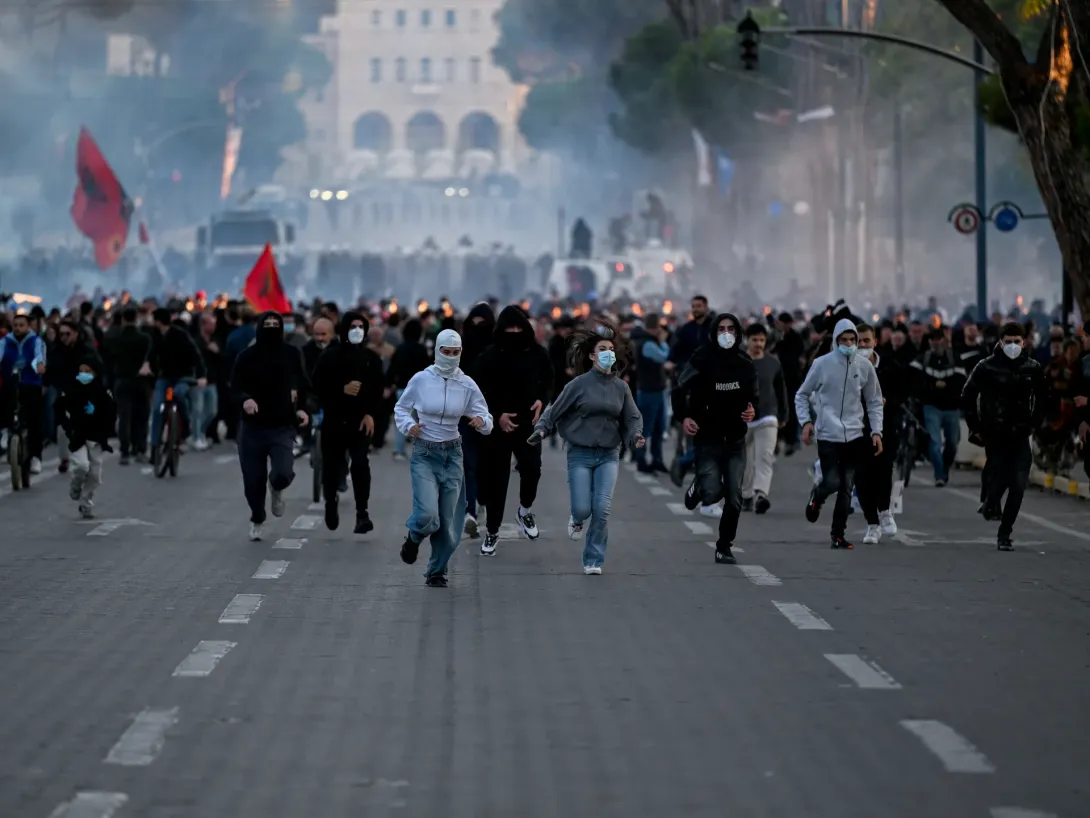
Clash of Narratives — On October 16, 2026, Prime Minister Edi Rama in a video address insisted that the surging student protests “have absolutely nothing to do” with legitimate domestic grievances, blaming unspecified “foreign hands” for the unrest. He urged calm and reaffirmed his intent to discuss education-cost concerns, while rejecting resignation demands. This came on the fourth consecutive day of protests in Tirana and across Elbasan, Shkodër and Korçë, where thousands rallied and clashes with police intensified. Riot police used water cannon and tear gas amid reports of vandalism, fires and dozens of arrests.
The protests began in May, centering on opposition to a luxury coastal resort development tied to Jared Kushner and Ivanka Trump. The issue evolved into wider public discontent with corruption, jobless graduates and deteriorating university conditions, with demonstrators demanding Rama’s resignation and systemic reforms. Police reported detaining around 160 people during Thursday’s clashes; injuries among civilians and officers have also been tallied. Corruption and organized crime are seen as complicating Albania’s EU accession ambitions—even as Rama’s government vows to push for membership by 2028.
Political Stakes — Rama framed resigning as a betrayal of the strong electoral mandate given to him and essential to concluding EU negotiations. His claim of external interference, while unsupported by evidence, echoes earlier rhetorical strategies linking protests to hostile foreign actors, including Russia or Iran. Whether the narrative will diffuse protest momentum or bolster international support for demonstrators remains unclear.
What happens next hinges on whether security forces escalate their response, protest leaders consolidate demands into a clear platform, or external observers—particularly the EU—intervene with requests for restraint and dialogue.