El-Sayed’s projected Senate win shows the limits—not the end—of anti-Muslim campaigning
The Michigan result demonstrated that attacks on a candidate’s Muslim identity need not be electorally decisive, but it did not establish why voters rejected them or whether such tactics will recede.
Overview
Abdul El-Sayed’s projected victory in Michigan establishes a clear limit to religious exclusion as an electoral strategy: Republican attacks portraying the Democratic nominee’s Muslim faith as a security threat did not prevent his election. It does not prove those attacks were harmless, or that voters rejected them specifically. The more consequential test begins in the Senate, where El-Sayed’s ability to turn symbolic representation into coalitions and policy influence will determine the institutional significance of his breakthrough.
Facts
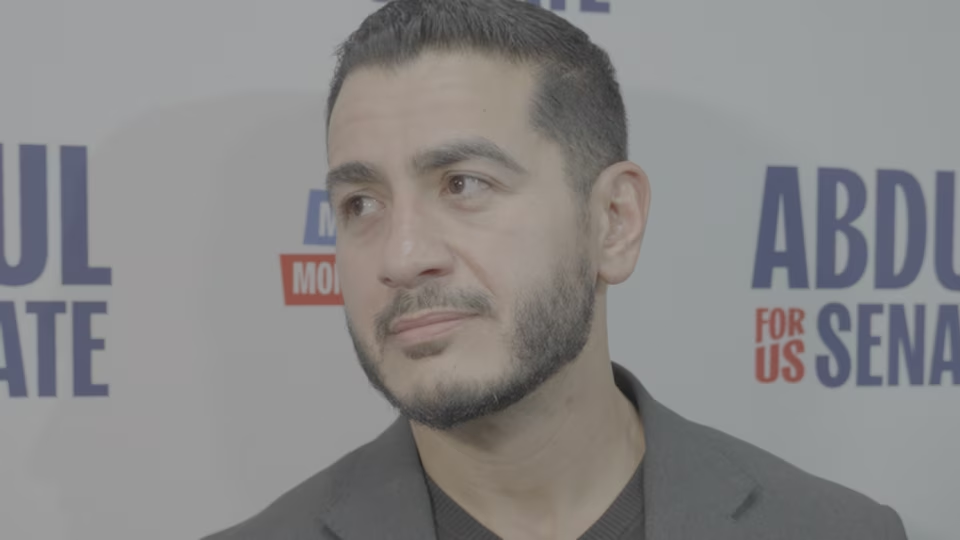
- Al Jazeera interviewed El-Sayed in Wyandotte before the November 3 election as he pushed back against attacks focused on his Muslim faith. (aljazeera.com)
- Donald Trump, Mike Rogers and other Republicans portrayed El-Sayed as an extremist; AP reported no evidence that he was affiliated with the Muslim Brotherhood. (apnews.com)
- CBS News projected on November 4 that El-Sayed had defeated Rogers. The Senate Employment Office subsequently listed him among the 2026 senators-elect. (cbsnews.com)
- Michigan’s Board of State Canvassers faced a November 23 deadline to certify the results, two days after this analysis’s reporting cutoff. (michigan.gov)
- AP reported on November 19 that El-Sayed and Vice President JD Vance were preparing to meet after exchanging sharp criticism during the campaign. (apnews.com)
The central significance of El-Sayed’s projected win is not that religion disappeared as a political dividing line. It is that a campaign built partly around casting his faith as evidence of danger failed to achieve its minimum objective: keeping him from the Senate.
Before the vote, Al Jazeera reported that El-Sayed was resisting attacks on his Muslim identity as religion became a flashpoint in the race. The attacks went beyond disagreement over healthcare, Israel or the proper limits of US power. Trump called him a “jihadist,” while Rogers and allied Republicans amplified allegations connecting him to extremism. El-Sayed denied any Muslim Brotherhood affiliation, and AP reported that there was no evidence of one. (aljazeera.com)
That rhetoric attempted to change the standard by which voters evaluated him. Rather than asking whether his policies or record qualified him for office, it placed the burden on El-Sayed to demonstrate that his identity was compatible with holding power. His strategic response was to treat the allegations as diversion rather than accept their premise. That helped keep his campaign connected to healthcare and economic concerns while allowing him to present his faith affirmatively instead of apologetically.
The election outcome does not establish that this response caused his victory. Michigan voted amid a broader national backlash against the governing Republican Party, and El-Sayed’s economic platform, campaign organisation and Democratic affiliation may have mattered more than the identity dispute. His candidacy also generated substantive opposition among some Jewish voters over Israel, his associations and comments after an attack on a Michigan synagogue. Treating every criticism as religious prejudice would erase those distinctions and overstate what the result proves. (apnews.com)
Nor is there yet sufficient voter-level evidence to conclude that the attacks backfired. They may have mobilised both supporters and opponents, shifted particular communities or simply been overwhelmed by other issues. Certification was also still pending at the November 21 cutoff, although national news organisations projected El-Sayed’s victory and the Senate Employment Office identified him as a senator-elect. (cbsnews.com)
The bounded conclusion is nevertheless important. A Muslim candidate subjected to a nationally amplified campaign questioning his loyalty won a battleground-state Senate election. That changes the institutional baseline: Muslim identity can no longer be treated as an automatic barrier to statewide federal office. It does not remove prejudice from campaigning, but it raises doubts about its reliability as a winning strategy.
The rapid shift after Election Day reinforces that point. Vance, who had called El-Sayed “very, very evil” during the campaign, subsequently signalled willingness to work with him, and the two sides began arranging a meeting. (apnews.com) That does not erase the rhetoric. It shows how electoral legitimacy can compel political institutions to recognise an opponent whom campaign strategy had sought to place outside the acceptable boundaries of power.
Context / evidence
The Constitution prohibits a religious test for federal office, but it cannot prevent campaigns from treating faith as a proxy for loyalty, ideology or security. (constitution.congress.gov) The Michigan contest illustrated that distinction. Republican criticism included policy objections and scrutiny of El-Sayed’s statements about Israel, but it also included unsupported allegations connecting him personally to terrorism or the Muslim Brotherhood. Jewish voters interviewed by AP expressed genuine concerns about his positions, while Arab American leaders—including some who had supported Trump in 2024—objected to attacks based on religion. (apnews.com)
Impact
The immediate observed effect is representational: El-Sayed is positioned to become the first Muslim member of the US Senate when the new Congress convenes. (apnews.com) That gives Muslim Americans a form of institutional visibility previously limited to the House and may affect how both parties assess the electoral risks of nominating Muslim candidates. The broader implication is conditional. If the campaign’s religious attacks are viewed by strategists as ineffective or counterproductive, parties may place greater weight on policy criticism; if they conclude the rhetoric mobilised supporters despite the loss, similar tactics could persist in other races. The result alone cannot distinguish between those interpretations.
Outlook
The first observable test is procedural: Michigan’s canvass and any recount request will determine when the projected result becomes final. The next is institutional. El-Sayed is due to enter the Senate in January and has already supported Chris Van Hollen in the Democratic leadership contest, placing him inside an immediate argument over party direction. (apnews.com) His planned contact with Vance will test whether post-election bargaining can replace campaign delegitimisation. Longer term, committee assignments, legislative partnerships and Democratic recruitment decisions will show whether his victory broadens access for Muslim candidates or remains an exceptional result produced by Michigan’s particular electorate and the 2026 political environment.