Debt Ceiling Standoff Could Roil Treasury Markets: McHenry
Patrick McHenry warns of potential turmoil in Treasury markets amidst political maneuvering over the U.S. debt ceiling.
Overview
Patrick McHenry, a key political figure, predicts that ongoing debates around the U.S. debt ceiling could lead to significant disruption in Treasury markets, surpassing previous crises. The strategic dynamics at play in Congress may influence financial stability.
Facts
- McHenry stresses urgency in addressing the debt ceiling before the 2026 midterms.
- Treasury market volatility occurred during past political standoffs.
- McHenry suggests Republicans are playing defense in political races.
- Debt ceiling conflicts historically create political leverage.
Main narrative
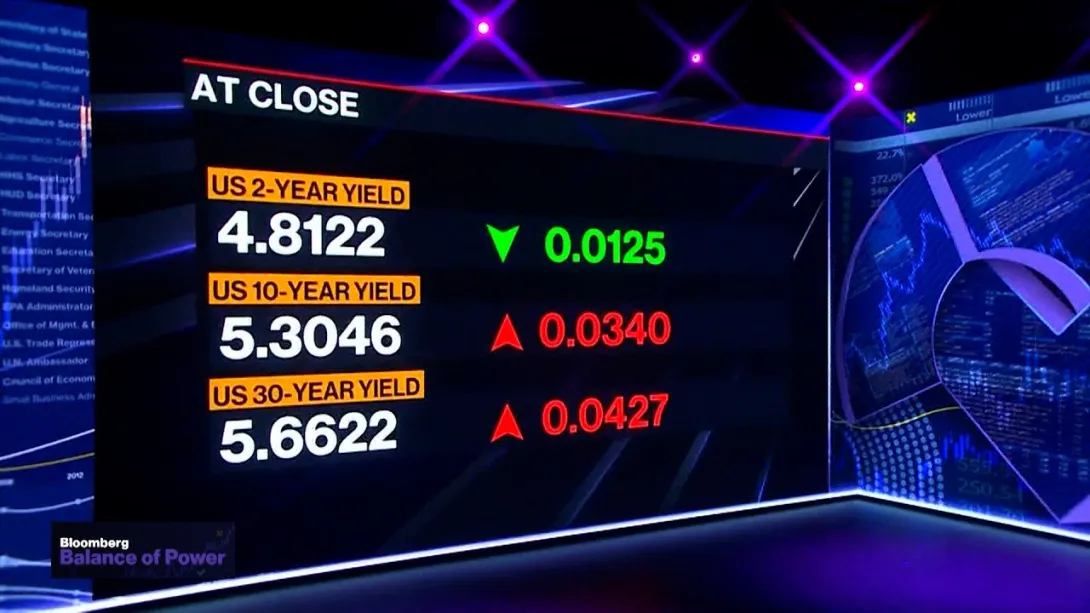
Patrick McHenry, former Chair of the House Financial Services Committee, recently highlighted the pressing issue of the U.S. debt ceiling and its potential implications for Treasury markets. Speaking on Bloomberg’s "Balance of Power," McHenry provided insights into the political strategies surrounding the debt ceiling and the consequent risks to financial stability. With Republicans finding themselves on the defensive approaching the 2026 midterm elections, McHenry stresses the necessity of addressing the debt ceiling promptly.
Political Leverage and Market Uncertainty
The debt ceiling has long been a political tool, granting leverage primarily to the party not holding the presidency. This structural peculiarity provides minority parties the opportunity to influence fiscal policy by negotiating concessions in exchange for agreeing to raise the ceiling. McHenry's warning is grounded in this dynamic, suggesting that if the debt ceiling is not addressed while Republicans control Congress and the White House, Democrats might later use it as a leverage point, potentially exacerbating market uncertainty.
Historically, debt ceiling conflicts have often led to significant market anxiety, as evidenced in previous standoffs. For instance, in 2011, a protracted debate resulted in Standard & Poor's downgrading the U.S. credit rating, which sent ripples through financial markets worldwide. McHenry’s alarm signals a parallel risk: renewed conflict could lead to more severe turmoil in Treasury markets, especially given current global economic uncertainties.
Assessing Financial and Political Stakes
The implications for Treasury markets are particularly concerning. These markets play a crucial role in global finance; hence, their stability is paramount. Treasury securities are considered a benchmark for other financial assets, and their yields impact interest rates across the board. Instability in this market due to political impasses could lead to unpredictable fluctuations in borrowing costs for both the government and private industries.
Moreover, as campaign dynamics shift funding towards races perceived as critical, addressing financial stability becomes a core concern. McHenry suggests Republicans should utilize their current Congressional authority to preemptively manage the debt ceiling to avoid crisis points. This strategy underscores a broader political calculus: maintaining financial stability might reinforce voter confidence and political capital as Republicans gear up for upcoming elections.
Long-Term Financial Implications
Cognizant of McHenry's warnings, the broader economic implications should not be understated. A protracted debt ceiling conflict could undermine international confidence in U.S. financial policies, potentially leading to increased costs of borrowing if U.S. Treasury securities are viewed as less reliable. Therefore, the need for preemptive negotiation and resolution is critical.
However, McHenry's perspective, while cautionary, also rests on the assumption that past trends will continue. There's a counterargument suggesting that increasing global economic interdependence might smooth out market reactions due to diversifying investment strategies and portfolios. Nonetheless, U.S. fiscal policy remains a pivotal determinant of international market behavior, making the debt ceiling a matter of considerable concern. McHenry's stance reinforces the urgency of strategic political action to safeguard economic stability.
Context / evidence
Historical precedents like the 2011 debt ceiling impasse caused Standard & Poor's to downgrade the U.S. credit rating, leading to market instability. McHenry's warnings echo these past events, emphasizing the potential for exacerbated financial turmoil.
Counterpoint / knowledge gaps
One potential counterargument is that past debt ceiling conflicts have concluded without catastrophic market effects. Historical evidence shows that while these standoffs create volatility, the U.S. economy has thus far weathered them without long-term damage. Moreover, increasing global investor confidence might act as a buffer, absorbing the initial shocks of market turmoil.
Impact
McHenry's cautionary message underlines the delicate interplay between political strategies and financial markets. The potential for Treasury market disruptions highlights the need for Congress to prioritize fiscal responsibility to avert global economic repercussions. Addressing the debt ceiling remains a critical challenge that requires bipartisan cooperation to ensure market stability and maintain international investor confidence.
Outlook
Treasury markets remain sensitive to debt ceiling standoffs, with potential investor reactions posing risks. Ongoing Congressional maneuvering will likely continue to influence financial volatility.