Afghanistan’s opium rebound exposes the political limit of the Taliban’s crop ban
Cultivation remains far below pre-ban levels, but its sharp 2026 rise shows that enforcement cannot preserve the Taliban’s signature drug policy without viable rural incomes.
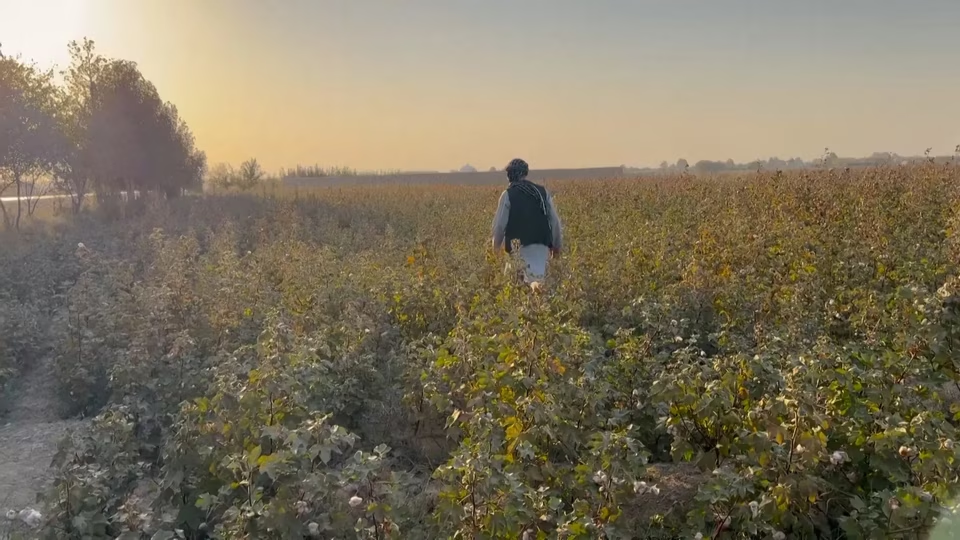
Afghanistan’s renewed opium cultivation is testing whether the Taliban can sustain one of its most consequential policies through coercion alone. Farmers interviewed by Al Jazeera in October said deteriorating economic conditions, water shortages and weak returns from crops such as cotton were pushing households back toward poppy despite the prohibition imposed in 2022. Subsequent UN and World Bank assessments strengthen the underlying economic case, although the scale of the resurgence remains disputed.
The United Nations Office on Drugs and Crime estimated that land under poppy increased from 10,200 hectares in 2025 to 43,300 hectares in 2026. Its estimate carries a wide 95 percent confidence interval of 31,700 to 61,200 hectares, but even the lower bound indicates a substantial reversal after three years of historically low cultivation. Estimated opium production rose from 296 metric tons to 1,466 metric tons, while cultivation appeared in 16 of Afghanistan’s 34 provinces, compared with 11 in 2025.
The increase does not mean the ban has collapsed. Cultivation remains far below the 233,000 hectares recorded in 2022, the final harvest before the prohibition took full effect. Nor is the increase geographically uniform: approximately three-quarters of the estimated 2026 crop was concentrated in the northeast, particularly Badakhshan. The evidence instead points to a ban becoming harder and costlier to enforce as farmers, financiers and traders adapt around it.
UNODC found small plots concealed inside cereal fields and walled compounds, with planting and harvesting staggered to reduce the risk of detection. In Helmand, where the crop remains only a fraction of its pre-ban extent, the agency estimated that more than 90 percent of poppy fields were concealed. Such practices change the institutional problem. Authorities are no longer confronting the highly visible, industrial-scale cultivation that previously covered large parts of southern Afghanistan; they face a dispersed illicit economy embedded in ordinary agricultural land and household financing arrangements.
That adaptation is being rewarded by unusually high prices. UNODC estimated an average dried-opium price of about $500 per kilogram in 2026, down from approximately $570 in 2025 but still more than three times the seasonal average before the ban. First-level opium sales generated an estimated $525 million for traders, according to the agency. These figures do not establish that individual farmers receive most of the proceeds. Landowners, creditors, traders and outside financiers can capture substantial shares, particularly when growers depend on advances, rented land or loans repaid in opium. But high prices make the crop attractive precisely where legal agriculture produces insufficient or delayed income.
A stronger harvest has not removed the incentive
A credible counterpoint is that Afghanistan’s wider agricultural economy improved in 2026. The World Bank estimated that agriculture expanded by about 8 percent after the 2025 drought and generated almost 90 percent of the country’s projected economic growth. That should have reduced some pressure to cultivate poppy.
Yet aggregate production did not translate into broad household security. The World Bank projected overall economic growth of 3 percent but a 3.3 percent decline in output per person as population growth, including large-scale returns from neighbouring countries, outpaced the recovery. In September, casual labourers obtained 14 percent fewer working days than a year earlier, while their weekly earnings purchased 27 percent less wheat flour. The bank also estimated that capital spending would amount to only about 1.3 percent of gross domestic product, limiting the authorities’ capacity to finance irrigation, storage, rural roads and other infrastructure needed to make legal farming reliably profitable.
FAO and the World Food Programme projected that 19.2 million people would face acute food insecurity during the November 2026-April 2027 lean season, despite the stronger harvest. They identified high input and transport costs, low crop prices, scarce employment and reduced humanitarian assistance as continuing pressures. This explains how a national agricultural recovery can coexist with renewed illicit cultivation: farmers respond to the income and liquidity available to their household, not to national output alone.
Alternative-development programmes demonstrate that legal transitions are possible but also show the scale of the gap. UNODC reported in July that its programmes had supported more than 6,000 former poppy-growing farmers in Kandahar and Helmand through irrigation, seeds, orchards, livestock-related activities and market infrastructure. Those interventions may improve resilience in participating communities, but the reporting does not establish that assistance has reached enough households to offset the national income shock created by the ban.
The Taliban authorities reject UNODC’s central estimate. Their Interior Ministry said the survey relied excessively on satellite imagery and insufficient ground validation, and it reported clearing more than 26,000 hectares of narcotics-producing crops in 2026. UNODC, which included the authorities’ methodological objections in its report, said more than 85 percent of the eradication recorded in data supplied by the authorities occurred before its satellite images were acquired and was therefore largely reflected in its cultivation estimate. The disagreement leaves the precise total contested, but it does not erase evidence that clandestine cultivation expanded.
The political choice is becoming sharper. Intensified searches and eradication could suppress fields, but more intrusive enforcement risks conflict with rural communities and may drive cultivation further behind walls or across borders. Relaxed enforcement would protect some household incomes but weaken a policy the Taliban presents as a major governing achievement and could replenish international heroin markets as older opium stockpiles diminish.
The more durable option requires cooperation that the Taliban cannot deliver through policing: investment in water management, credit, storage, processing and dependable access to markets. That, in turn, depends partly on international financing and on political decisions—including restrictions on women’s education and employment—that continue to constrain Afghanistan’s economic integration. The 2026 resurgence therefore represents more than evasion of a crop prohibition. It shows that the survival of the ban now depends on whether the authorities and external donors can make legal rural livelihoods competitive before high opium prices and household distress turn a limited rebound into a broader restoration of the illicit economy.